Showing posts with label Nottinghamshire. Show all posts

Tuesday, 16 February 2010

Old Moor, Budby, Birds


Paid a visit to Old Moor at the weekend, good birds, good shop, good times. No stellar species around, Ringed Plover was about the best of it, lots of courting Goosanders, bountiful Lapwing flocks, and an entertaining female Kestrel (pictured) in the car park that dropped down after prey right beside our car. The Yellowhammer comes from the Tree Sparrow Farm area of the reserve where long-staying Brambling weren't playing ball.
Wath Ings hide had a Common Snipe several birdwatchers were convincing themselves was the Jack report a day before, it's one of the pitfalls of reading the sightings news that I'm pretty sure was susceptible to once upon a time.

Also been Budby way, as always nice views of several Green Woodpecker, a handful of Crossbills went over, otherwise hardly a dicky around. Better was Carburton were ploughed fields have proved magnetic for numbers of Greylags I've just never seen there before, and among them there be scarcer geese. Four Pinkies, and I found a surprise lifer in a White-front (#229), it looked dark to me but other guys with more experience we're happy it was a Russian race bird. We simply don't get many of either in the East Midlands, although a few birds were seen in North Notts not long after mine.

Wednesday, 6 January 2010

The Bleak Midwinter


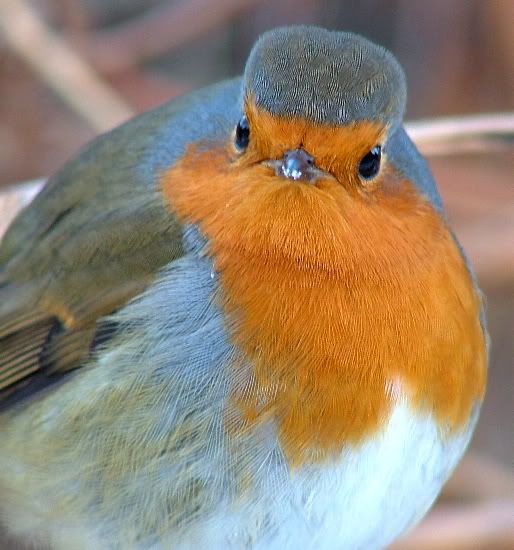
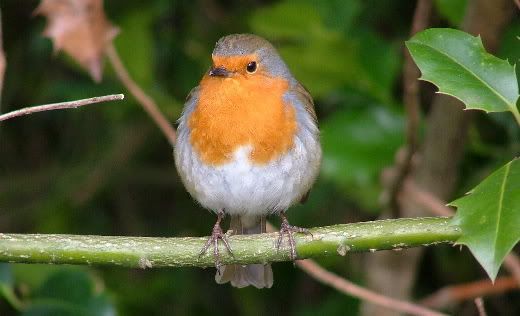
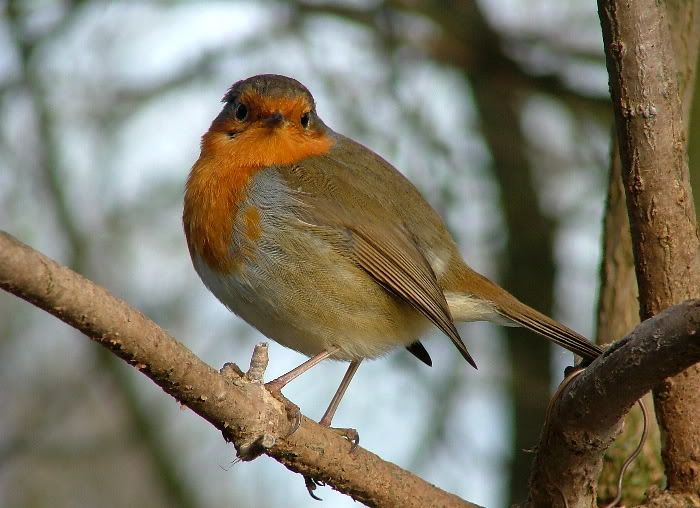
Haven't posted for a while so I'll quickly round up the last month. Bagged two lifers in that time, the first came with the dozens of Common Crossbill at Broomhead Reservoir near Sheffield. Just wasn't getting any luck with well known local sites like Sherwood Pines or Matlock Forest, and learnt about Broomhead on Birdforum. Brilliant places, loads of Crossbills - saw a dozen or so and heard more - mixed in with Goldfinch, Siskin and some entertaining tit flocks. Seemed to disturb a Tawny Owl that flew through the wood around midday. Hand-fed a desperate Robin in the layby where we parked the car.
Peaceful place.

A corking Firecrest (#228) accounts for the other lifer, a now well watched bird at Moorgreen Reservoir. Apparently they are present most winters, the word just hadn't gotten out before. Locals speak of Lesser Woodpecker and some other interesting birds in there too. Looks worthy of more attention.

Both species bogey passerines I'm very happy to have finally cracked.
Dipped however on a Siberian Stonechat at Bevercotes Pit Wood near Ollerton in Notts. Several European Stonechats around, none quite so dandy as the Sib. Went a day late for that one.

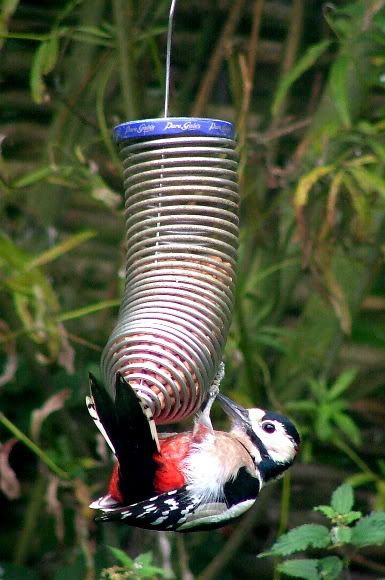
A lot of action in the garden at the moment. About eight inches of snow will do that around here. Numbers of Reed Bunting have hit at least 11, lots of the common finches, Redwing and Fieldfare have been through, Great Spotted Woodpecker too, and next door's apple trees are being vigourously defended by a Mistle Thrush. Late one day a Yellowhammer came and went very briefly - noticed it among a very busy flocked mostly by the very horizontal perching shape. This morning 150+ geese were heading north-west while I had my breakfast, no chance of a defo ID but really they had to be Pink-feet.

Nothing up at Pleasley Pit at the moment, at least nothing on the water, it's been frozen for a fortnight, the last birds I saw were Snipe evacuating elsewhere just before Christmas. The winter thrushes remain, as do a single female Stonechat and lots of Yellowhammers.

Very quick visit to Rufford with family earlier this week where I managed a few photographs. Wild birds are so tame there it's difficult to go away without a decent image or three.


Tuesday, 9 June 2009

Nightjar!


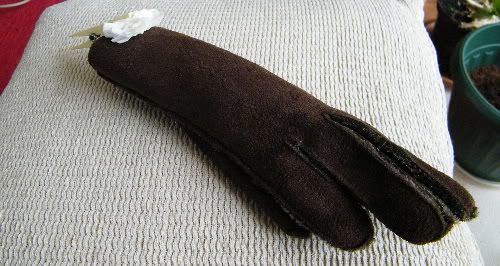
Check out the picture, if it looks like a glove with a tissue pegged to it you're only partially right. What you actually see is our successful Nightjar mimic.

It all began on Saturday night with the Nightjar Walk the delightful rangers at Sherwood Forest Country Park put on at the start of every June. This was our second time on that walk and wow, we had decent views of the Nightjar, Cuckoo, Woodcock and some Tawny fledglings dazzled by our torches at the end of the night. We also got some top tips for a return visit, on how to get our own close encounters with Nightjars (without attracting them with recordings which by the way is illegal). Hence the glove. As they patrol at dusk males see the white spot and in the gloom it looks to them like the markings on a potential rival, and in they come for a closer inspection.
Well, this we tried last night not long after sunset, this time just the girlfriend and me there, and WOW. With the glove sat on a fence post in came the male, we had it circling within 10 feet of us, 10 feet! Wafting by in that strange floating flight action, it seemed to be looking at us looking at it. Better yet when we began to leave in he sailed again and landed on a fencepost not very much further away and sat there chirring. By now it was getting late so we ultimately did head for home, but not without first pegging that tissue to the back of my hat, and wouldn't you know it, another male gave us a couple of passes back out in the middle of the common.

These are magical, half-mythical birds, near impossible to photograph or film during flight so encounters with them tend to be private and personal, related only through story. All of that only makes this odd frog-mouthed, insect voiced, bark feathered bird even more enigmatic.

Here's a video of the chirring from the walk, you'll also hear the ranger trying to attract one in and listen carefully for the hiccup of a roding Woodcock.


I've been birdwatching most of my life and I can't think of a more thrilling encounter than we had last night. I'm still buzzed.

Sad therefore that the Nightjar is declining in number, particularly in the Sherwood Forest/Budby Common area, now they have only two chirring males left these days. Why? Well there is an apparent conflict between local expertise on how the National Nature Reserve should be managed and what the rangers are dictated to do by Natural England's bureaucracy. I don't know the whole story but I hope they sort it all out because these birds are clearly suffering.

Tuesday, 26 May 2009

First Lady


Did Budby Common at the weekend, had promised the girlfriend a Cuckoo. Plenty heard of them and one of the two calling males gave a couple of fleeting views. We've done better there before, but these are always skittish birds. The usual suspects were also around, loads of Tree Pipit, although surprisingly saw only one Woodlark.
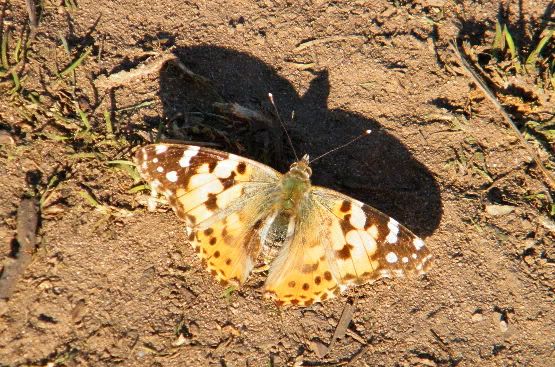
Had our first Painted Lady of the year, a real faint one. Ours was ahead of a big influx that has hit the UK over the past couple of days.

Elsewhere Barn Owls are back for another season of train dodging on one of my local patches, and I'm seeing more Red-legged Partridge on my way to work (which may be bad news for any local Grey Partridge left around here).

Monday, 20 April 2009

Across the Border


This past Saturday we had some time at the end of the day to head into Notts, so we did the Carburton - Budby Common double bill. Buzzards entertained from the pull-in at Great Lake and a small flock of Mandarins clattered around the trees. Give it a month or so for Honey Buzzards and perhaps last summer's Osprey will return too.
The Nuthatch vid comes from Carburton.

To Budby before sunset, again a little early in the season for the best action there, Tree Pipits with that go-bezerk trill at the end of their song were the big feature, Linnet and Yellowhammer among them. Late May to early June we'll definitely return for the Cuckoos, Woodcock and Nightjars, Woodlark ought to be singing too.

Tuesday, 24 February 2009

Yawny Owl?


Little tardy updating here, the owl video is from a couple of weekends ago. The location is... somewhere... along the Trent near Hoveringham, South Notts. Between the large flooded gravel pits and the river that location is a real corridor for birdlife. To add to our Tawny Owl there, Egyptian Goose, Shelduck, Redshank, Goldeneye and Green Woodpecker were the best of a quiet visit. Come the Spring the place will be heaving with Common Terns and Yellow Wagtails.

As for any link between owl and river I think that is purely coincidental on this occasion, however Tawnies do apparently take fish. That said, it'd be one helluva reckless owl that took a dip in a river that large.

Thursday, 5 February 2009

Snow Surprise


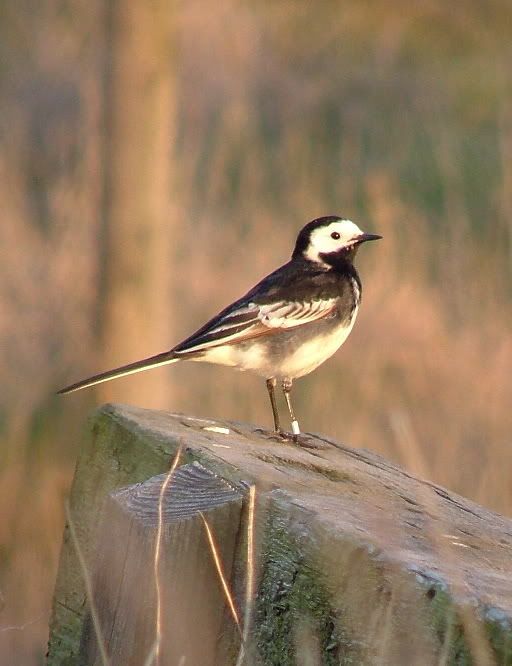
Well that's nice, the first Pied Wagtail in my parents' garden - ever - so far as I can remember and my family has lived here for over 25 years. The bird is still out there now, occupying the rim of the bird bath while more snow is falling.
It's one clear reminder for how providing access to water really can make all the difference for a lot of birds.

Tuesday, 23 December 2008

Spot the Christmas cliche


Had quite a bit on my plate of late so birding has taken rather back seat for the last few weeks. A spot of local patching today though, with an Egyptian Goose providing some interest at Sutton Lawn. GS Woodpecker, Goldfinch, L-T Tits, Sparrowhawk, etc, the usual suspects, but as yet no Brambling there this winter - usually the park is dependable for small numbers, but zip all as yet, not many Chaffinches either for that matter.
What else? Oh dear reader, if you haven't seen a Waxwing yet this winter then that makes at least two of us. Seems everybody else has been enjoying their current irruption, so don't stop looking now!

Merry Christmas bird fans.

Thursday, 2 October 2008

Notts birds in the news (and Senegal)

Two small birds thought to have drowned at a Nottinghamshire nature reserve last summer have been found nearly 3,000 miles (4828 km) away - in Africa.

The pair of Common Terns - which were too young to fly - were among chicks living on a specially-built platform at Attenborough Nature Centre.

When rising flood water covered the area last year it was thought all the chicks, which were ringed, had died.

But records from March show two survived and migrated to Senegal.

(BBC NEWS link)

Tuesday, 2 September 2008

Bird Storking

A while since my last post and I wonder where to begin this update. No doubt about it, the honour really does belong to the immature Black Stork [lifer #212], literally a big lifer, had in North Yorkshire over the weekend. The location was Cawood, a small town along the Ouse with fields sparse and wide enough to satisfy this most wary of birds. The wait to see it pop up out a ditch was around 2 hours and well worth it, although enormous thanks go to the birder who yelled us back. The girlfriend and I had just quit for the day, accepting the dip, and had walked no further than 30 yards when the shout came, "HEY, IT's THERE!". Never give up hope folks. Anyway a bird like that though shy gets noticed wherever it wanders, the individual possibly first picked up in Ireland, and now has made its way to Spurn. That's a long long way from Hungary - the region the Black Stork really ought to be in. The girlfriend, upon seeing the bird, she simply exclaimed, 'WOW!'.
Peregrine through too on the day also.

In other news, I have lots of shiny new bird kit. We'd actually headed up to N Yorks to check out some RSPB optics at Fairburn Ings, and only made it for the Stork when I realised it was just another 10 miles motoring on the day. I was after new binoculars on my RSPB volunteer/discount card, and settled for a pair of RSPB BGs. £60 more and I could have had the HGs, but I preferred the cheaper model. They feel a touch lighter and seem just as bright to my eyes. Tried the Viking range too, but for the same price they were dimmer and had a definite blue hue. Weird really, Viking manufacture both its own and the RSPB range, so why the difference?

So bins sorted, it was a scope next. The venerable old Kowa has served us well for 10 years, but using the Swarovskis at ABB events has spoilt me, they are simply too good to go without. Fortunately those of us not rolling money the London Camera Exchange have a wide range of fully serviced secondhand optics, and we found an AT-80 plus 20-60 zoom (and a spare 32x eyepiece). Sure it's a ten year old model but still light years ahead of mid-range scopes from Viking, Kowa, Opticron, etc at the same price. Also, forked out a Viking S1 tripod which is a sturdy animal and very easy to use.
Tried out the new set-up on my well neglected local patch today, King's Mill Reservoir, and straight scored a distant Dunlin (we get maybe three through in a year). I'm sure I would have overlooked the wee wader with the old Kowa, so am I happy with the Swarovski? YES, YES and YES again!

Round-up of for the supporting cast in August goes... family group of Spotted Flycatcher at Carburton/Wellbeck watchpoint and hundreds of hirundine gathering nearby, Yellow Wagtail at Hardwick village in Clumber Park, Red-crested Pochard at Carsington. Nice enough to keep my going in a month I've been at work almost non-stop. Glad it wasn't sunny, that would have been awful!

Common Sandpiper (Carsington)

p.s. Stressed? Tried Birdsong radio here or here.

Wednesday, 11 June 2008

Flying Entry

Big update soon about my holiday away in NW Wales, but for now just a few local notes. Seems a while ago now (three weeks) that I scored with Black Tern back on the local patch at King's Mill Reservoir. This year they've been just about everywhere and seen by just about everyone, so I'm glad I got mine!
Lovely, elegant birds in summer plumage, and very graceful they are too hawking for insects at the surface waters. Their dark tones, relative small size, I don't mind admitting it took a minute or two of sifting through the large hirundine flock to pick out our bird.
It scored well with the girlfriend test, she was well impressed.

Last night we had a unsuccessful forray to Budby Common in search of Nightjar. We heard them all right, at least two, probably three chirring after 10pm, that was the extent of it though. What did show were Woodcock, we more than a dozen sightings of them roding above the treelines with that strange croaking and hiccupping display call. Can't say I'm disappointed after that!
We shall return though, possibly for Nottinghamshire Birdwatchers' Nightjar walk on June 20th.

So stories and pictures from Wales next time...

Monday, 19 May 2008

Budby Common, but its Birds Aren't

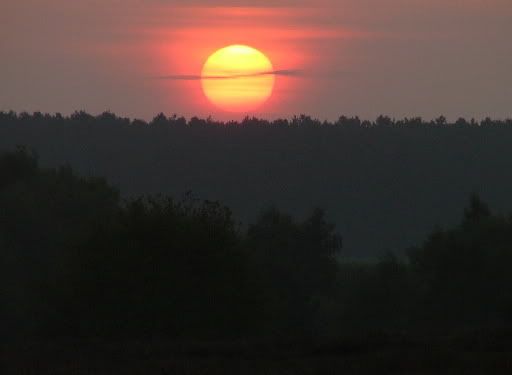
Quick update. My last decent birding foray was an evening stroll around Budby Common/Sherwood Forest Country Park. It's a National Nature Reserve up there, and the wildlife richly deserves that great distinction. Over the expanse of open heathland we saw 3 Cuckoos, several Woodlark, Tree Pipits, a Hobby screamed through, Yellowhammer, Green Woodpecker and Jays were about too, plus Red-legged Partridge and Yellow Wagtail in the farmland nearby. Wasn't all birds either, we spotted a fox, a couple of hares and a stunning sunset too.
The reserve could be the finest wildlife destination in the whole of the county.

In a couple of weeks when the bird are more active the rangers do a guided Nightjar walk, I went on last year's and it was just brilliant. Be sure to give it a go if you can get there.

Friday, 25 April 2008

Brief Round-up

Thought I'd give a little rundown of my recent local birding activities...

Pleasley Colliery is doing a fine craft in attracting small numbers of good county species, twos of Yellow Wagtail and Wheatear, the odd Dunlin and Oystercatcher, suitably supported by the cast Lapwings, Redshank, Skylarks and Green Woodpeckers. It's a little gem across them, far more to the old pit workings than meets the eye.

Meanwhile King's Mill had three of its own Yellow Wags, and the Barn Owls maintain their immaculate presence.

At work (Hardwick Hall), I'm seeing Buzzards on and off, and I was thrilled yesterday watching a pair of male Kestrels in aerial combat. With Nuthatches, Chiffchaffs, Willow Warblers, there's a decent crew in the grounds of the hall, and they make for a lovely lunch break.

Monday, 7 April 2008

Early April Update

Thought I'd do a round-up on my recent birding activities...

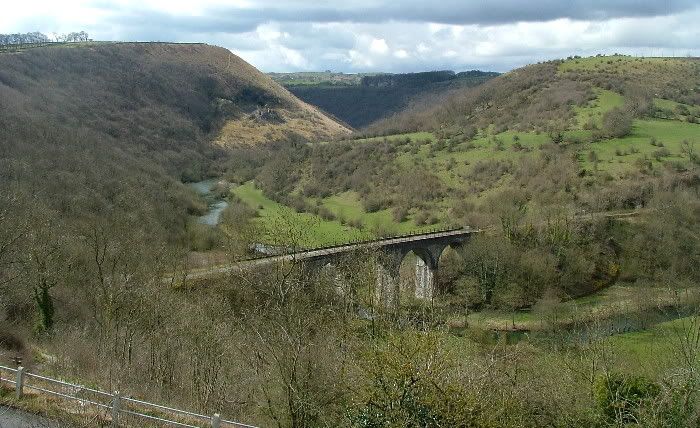
The girlfriend is besotted with the Derbyshire Dales so we headed westward again and made this time for Monsal Dale. It's April, thus we had four seasons in the day, and good smattering of birds even if we found nothing stellar - Buzzards soared over the valley, while in the wooded glades Great Spotted Woodpeckers were ever so noisy (their calls sound to my ear like miniature crow vocalisations), Treecreepers crept up trees, and Goldcrests rushed through their tiny whistling song.

We walked the Monsal and Brushfield circuit - route here - an easy 10km up and down dale. Brushfield Farm was particularly noticeable for its birdlife, with many dozens of tits and finches attracted to the feeders around the farmyard. This makes up for the quieter stretches and rewards the walk.
In in the next couple of months Redstart should be arriving up there soon, and I could scarcely imagine a more dramatic setting to find them in.

Elsewhere, around the Hardwick and Teversal area large-ish flocks of Fieldfare remain with around 200 going over at a time, with smaller flocks of up to 50 Redwing also scattered around. I kick myself that I missed an Osprey at Pleasley by 30 minutes, but feel vindicated for walking so late in the evening at King's Mill Reservoir for we rediscovered the Barn Owls, a pair back at last year's nest site.
They will never lose their glamour with me, and I feel so lucky to have them 10 minutes walk from the house.

In other news, the RSPB will soon launch its new Birds of Prey campaign. Please take time to read about it (here) and sign the pledge of support to protect these fantastic birds from the illegal persecution that still exists in the countryside today.

Tuesday, 12 February 2008

Lathkill Dale

What unseasonal warmth! Did we sleep away the winter so quickly?

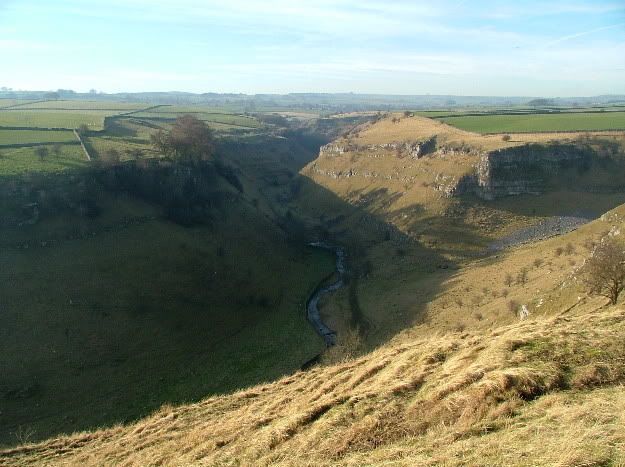
Well, I can tell you, it remains chilly of a morning down in the Derbyshire Dales. With my free weekends rapidly running out, the girlfriend and I chose a walk new to us, up and back down Lathkill Dale in the heart of the Peak. For a Sunday it was hardly busy, so the scarcity of birds was somewhere toward surprising. Two pairs of Dipper were skittish dazzlers, and the odd languid Buzzard sailed over late morning, beyond that Great Tits, Robins, Goldcrest and Song Thrush added birdsong to the atmospheric mists. Something about the acoustics up there, the slightest twitter is so rich!
Grey Wagtail were a notable absence, I suppose still huddling for warmth down on the broader reaches of the river where the sunshine can find them.


And now for something completely different... walking my niece to the park yesterday I observed behaviour from a pair of Carrion Crows quite new to me. One of the birds was eagerly pecking under the guttering of a house along the street, making me half-wonder whether it was searching for the eggs of early nesting sparrows. No, that wasn't it. Peck, peck, the crow grabbed and pulled out an enormous cob sandwich! Almost immediately thereafter in came the second bird, chasing away what was evidently an intruder raiding the food stash of the resident pair. It must have been watching them store the items there.
Of course I never have my camera when I really need it.

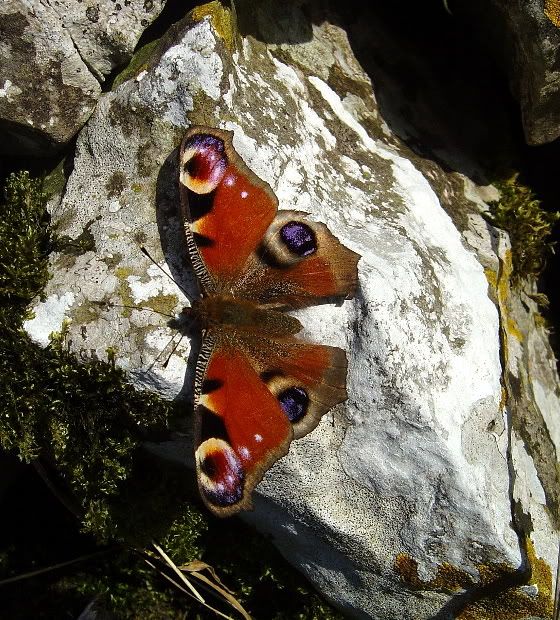
Back up Lathkill Dale, along the ridge above the valley, my first butterfly of the year, a stately Peacock for the Peaks.

Monday, 4 February 2008

The Great Survivor

Ever hear the one about the timid Blackbird? So scared of cats he went completely...

White!

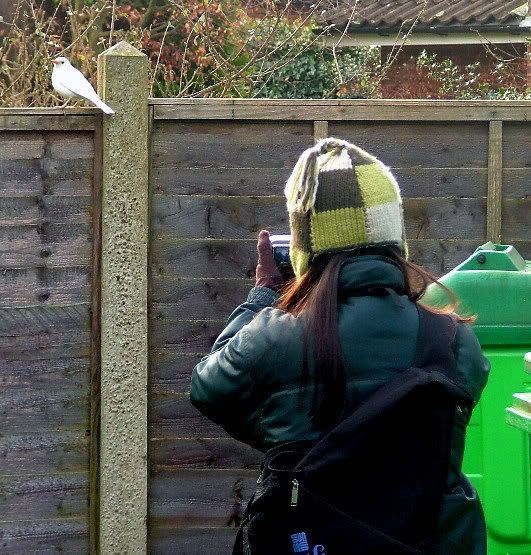
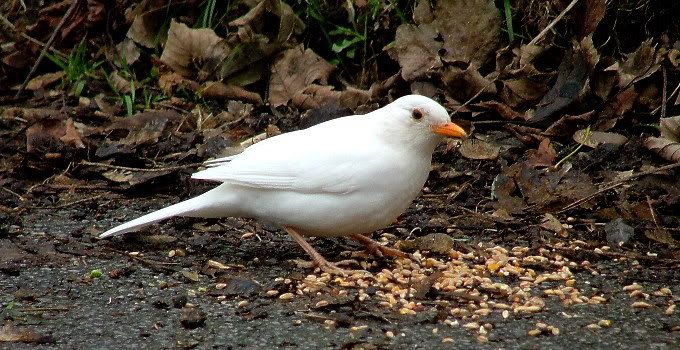
Okay, not really. He's what the experts call an 'albinistic' Blackbird, a partial albino to the rest of us (complete albinos have bizarre pink eyes - like this fledgling sparrow). Some family of mine noticed him last week during a non-birding visit to Rufford Country Park. I knew there had been infrequent reports of a 'Whitebird' at the site since it was discovered in Feb '06 - that makes him at least 3 years old - so quite the survivor. Conventional birdwatching wisdom suggests these eye-catching birds are a more conspicuous target for predators such as Sparrowhawk, a theory which makes his continued presence all the more remarkable.

Here's a brief explanation on how albinism occurs in birds...

Pure albino birds lack pigmentation and because feathers are made from keratin, which is naturally whitish in colour, their plumage is white. The absence of pigmentation also affects eye, leg and bill colour - the eye and legs appear pink owing to the blood vessels showing through, and the bill will be whitish. As well as pure albinos there are partial albinos which simply have a few white patches on their plumage or have white plumage but retain their proper eye or leg colour.

Albinism is usually a genetic condition that causes the absence of pigment, but may also be caused through malnutrition, parasites or injuries. A common belief was that too much white bread was the cause of albinism, but this is not the case. Albinism of varying degrees is quite common in Blackbirds.

from garden-bird.co.uk

In addition, I wonder if these birds are perceived as an unattractive partner by other Blackbirds. Perhaps he therefore avoids the stress, dangers and energy expense of raising a brood each year. Pure speculation on my part, I really have yet to read any research on the matter.

The bird itself is a real show off, posing almost as if aware of his glamour...

The girlfriend takes a picture.

A little donation to his upkeep.


The video: An everyday bird made glorious by the great lottery of life - genetics.

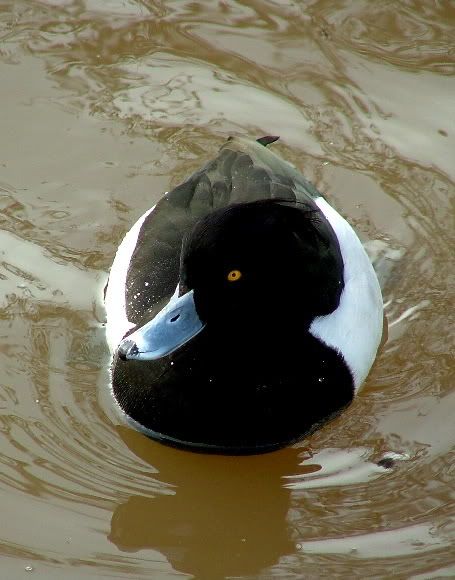
Rufford is itself a pleasant birding destination. True enough that genuine rarities are unlikely to turn up, but Hawfinches can be a notable presence in the car park during winter mornings, and during our visit all the regular woodland species showed, Nuthatch, Chaffinch, a small number of Siskin, many affording very close views. On the lake Great Crested Grebe and Tufted Duck, while Buzzard have also spread to this part of the county and can be seen overhead.

A couple of thumbnails from the day...
Robin

Rufty Tufty


Happy birding everybody!

Saturday, 5 January 2008

Shrike One!

Budby Common

Another successful local rarity tracked down today. Budby Common, an area of sandy heathland immediately north of Sherwood Forest Country Park NNR, has been a traditional site for Great Grey Shrike for years now. This winter has been no different, with at least one being reported since early December. It can go up to a week without apparently being seen, but you can generally be sure there's a shrike out there.

A short walk from Budby village brought us to the heath and almost immediately the GGS showed up, pearching atop a scattering of several small trees. It had obviously read the ID literature because this bird showed textbook behaviour, standing on guard on the highest, most exposed branches and even hovering before swooping down on prey hidden deep in the heather. It was just a completely different story to the aloof Shrike we saw only very at Ogston Reservoir last winter. Perhaps the close proximity of the road at the Derbyshire site influenced the very shy behaviour of that bird.

Back to Budby, and there's a two bird theory among some of the locals, although I'm not so sure myself. We watched our shrike for about an hour and saw it wander quite widely between the two areas it has most commonly been sighted. This movements makes sense as their winter territories can reach 50 ha, and that's pretty damn big.


Here's another murky digi-video-scope for the birdtrail record. Hey it was windy all right? And it's the middle of winter out there!

For a better video try this delightful YouTube offering of a Great Grey Shrike in Israel dispatching a mouse. These birds are hardly the size of a Song Thrush, but ferocious enough to deal with all kinds of prey, birds up to the size of Fieldfare and mammals as large as Stoats! Just a real marauder of bird species, making the black highwayman's mask very fitting plumage.

In Britain the Great Grey Shrike is strictly a winter and passage visitor, most of ours probably coming from Scandinavia or possibly Russia. Perhaps 50 or so are present in the UK each year, with a tendency to turn up practically anywhere there is suitable habitat - including but not exclusive to heathland, peat bogs, the edges of pine woodland, and coastal dunes. Basically wherever they are, it's a top notch species, always special.

Elsewhere on the common were Jay, Green Woodpecker, Meadow Pipit, Kestrel and in adjoining farmland a Skylark warbled and a Buzzard cried as it sailed into woodland. A birder who walked from the Sherwood direction noted a pair of Stonechat.
Otherwise, Budby Common is best in spring/summer, as during a July afternoon you have better than not chances of see Nightjar, Cuckoo, Woodcock, Woodlark and Tree Pipit (blog entry from last year). If you can give it a day, you could scarcely find a more rewarding site in the whole of the East Midlands, and they have ice cream at Sherwood Country Park visitor centre!

Monday, 17 December 2007

Willow Tits: On The Brink

Quite a cold snap at the moment, so a good time to get out around my alternative local patch Brierley Forest Park and make sure the feeding stations are well stocked.

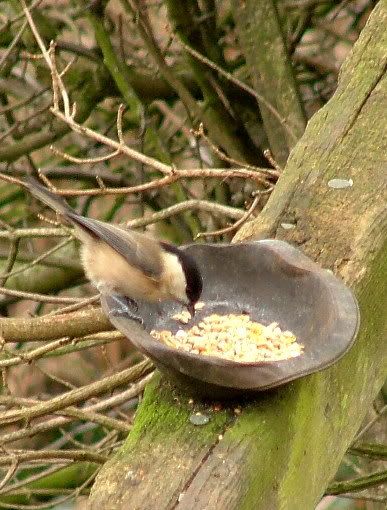
Plenty out and about there, although the transient winter finch flocks, Redpoll and Siskin have moved on. Blackbird numbers are notably high with loose gatherings of 20 birds in several areas. Most gratifying birds to see, however, were Willow Tits, with 4 or 5 individuals congregating around the seed pots and hanging fat feeders.

The recent story of the Willow Tit is shocking both for the extreme decline in their numbers and for the lack of awareness of it. Just take a look at what happened to them in Kent. In 1996 there was estimated to be 500-900 pairs in the county, and now, it's probably none. There's a similar story over most of the south-east, East Anglia, much of Wales, indeed few are the regions in which they are not crashing or already extinct- Nottinghamshire/Derbyshire probably being their stronghold these days.

It may be that the very similar Marsh Tit, declined significantly itself since 1960's although probably levelling off now, provide the sort of ID confusion that lead birders to think there are Willows present in areas where they have lately disappeared from. The best way to tell between them is their call ( try listening at the RSPB website) - although even those can vary enough to be confused, and the slight plumage details aren't always sure fire either. General advice is to look for a slight wing-bar on the Willow Tit.

The national figures say it all really, a decline of 72% in the years 1994-2002, nearly three quarters gone in only eight years! Little wonder it was recently added to the Red List of species of greatest conservation concern.

There is still much debate over the cause of this catastrophic dip. The Willow Tit's weakness is its choosiness, only very wet young plantations of willow, birch and alder scrub, and occasionally pine, will do, so on sites where plantations are maturing, drying up or are being cleared of scrub, Willow Tits suffer quite badly. One influence on this change is the national boom in deer populations, Roe and Muntjac in particular will nibble away the undergrowth these birds rely upon. Coupled with general habitat loss to development and urban sprawl, and Willow Tits are running out of breeding sites.

The other theory that's given a lot of credence proves how difficult biodiversity can be to manage. Despite having an abominable 2007 when the heavy rains washed away all their caterpillar food, Blue Tits are generally on the increase in areas where Willow Tits are losing out. The evidence suggests to some that Willow Tits, the only tit species in Britain to excavate its own nest cavity, are muscled out of their territories and nest sites by the other tits. Mainly Blue Tits, but also Marsh and Great Tit will do this. Great Spotted Woodpecker are another additional pressure, as they will raid nests for chicks.

Studies are ongoing and we don't really have any answers just yet, and I'd suppose there won't be just one reason for the crash. I tend to wonder about the future and climate change. With dryer summers degrading their habitat further, more competitor species making it through milder winters, the future looks bleak for the Willow Tit, real into oblivion stuff.

Thankfully we still have them locally, chiefly due to all the old colliery sites around here that have been returned to nature and planted up in the last 20 years, sites such as Brierley.
They are also present at Carsington, and I'm volunteering there tomorrow. I just might begin adding Willow Tit to the conservation spiel I give to visitors.

Friday, 14 December 2007

The Roost of the Wagtails


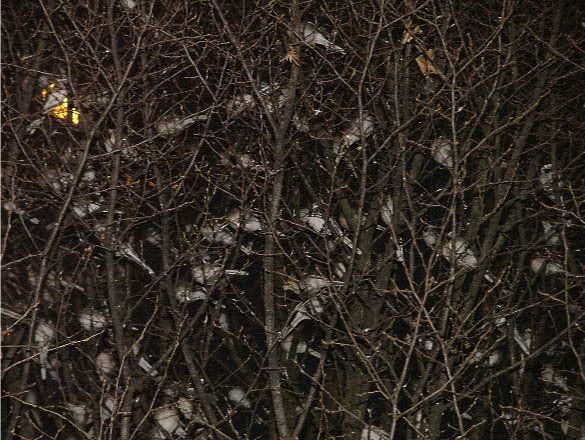
Here's a surprise treat, something I discovered during my walk to the bus station, it's an urban Pied Wagtail roost, in Mansfield. I knew there was one around the town centre, and there it is, in the lone beech tree tucked behind the closed down Tesco. Noticeable first because about half an hour after sunset, when the wagtails descend from the surrounding buildings there's quite the cacophony, almost giving the impression of a pet shop aviary given the high street location.


Quite difficult to photograph in the gloom though, so here's a dodgy video of the action.

For ten or twenty minutes before the wagtails came down to roost they circled quite high, gathering their numbers and emitting that familiar 'chiswick' call. Rather like Starling, they appear quite nervous, unwilling to be the first individual to touch down. Eventually it happened, half a dozen birds flitted into the roost, and then came a continual flurry for the next twenty minutes, getting louder and louder.
Difficult to estimate the total number, but by the end perhaps 120 birds came in, give or take. A quick explanation of this behaviour is that the birds find safety in numbers during the night and choose these urban settings because the micro-climate in our towns and cities tend to be a couple of degrees warmer than their more rural surroundings. The roosts are often traditional sites, with one used for at least 30 years, and some can contain thousands of birds. The largest one I'm currently aware of in my part of the world is in the centre of Nottingham, with reports of 850 individuals joining the roost. I try not to imagine the kind of mess them must leave below them.


Neater still, as I photographed the scene, shoppers stopped to look and listen to the spectacle, a couple of them venturing to ask me what birds there were. 'Lovely', and 'I would never have thought', were the sort of things they were saying.
And what else to say, but again it's a bird triumph, they wowed us again!

In other news, the girlfriend and I enjoyed a night at the cinema this week, as we went to see the exceptional new French version of Lady Chatterley. I mention this for two reasons, it's full of birds, and, here's the terribly nerdy part, I spent moments during the film mentally noting the location errors - for example, we don't have Black Kite in this part of Nottinghamshire (I live where the story is set), despite the bird of prey depicted soaring over the woods. Heck, I really wish we had them!
Anyway, is it really, really, terribly sad to be noticing these things? Awful, I'm sure of it. I suppose that's how birders are, we never really switch it off.

That's all for now, but here's a couple more videos of the wagtail roost...

Video 1 - Wagtails
Video 2 - Wagtails
Video 3 - Wagtails

Wednesday, 24 October 2007

Starlings!


Stick with it, eventually they descend into the reeds.

Just a snippet of an entry, a video of the Starling roost at one of my local patches, Kings Mill Reservoir. Perhaps only 250 birds and yet still a display worth getting away from the TV to go watch. Amazing how they all coordinate to form such dynamic flocks. There's some insight from a study (here) in Rome that goes some way to explaining the phenomenon. Lots of techno-babble in there, but the gist seems to be that each individual bird orientates itself against only the handful of other birds around it. Multiply that by a thousand or a million and hey presto, one of the more remarkable behaviours to be found anywhere in the natural world.

Speaking of Starling roosts, I'm at Carsington at the weekend, not only will it be an Aren't Birds Brilliant event, we have Feed The Birds Day too(!). At the end of the day in the autumn/winter months there's a significant roost in a nearby village called Kirk Ireton, of upto 100,000 birds. No news on it yet this year, so perhaps I'll go have a look for myself.