Showing posts with label barn owl. Show all posts

Wednesday, 24 November 2010

GND

So I've been at Carsington a bit more often than normal, more Date With Nature days mainly. We're currently trying to make sure everyone has the opportunity to sign up to our Letter to the Future campaign, and let the politicians who can do so much to provide a healthy environment for future generations know just how much we all care about this stuff. If you haven't done it yet, follow this link which tells you all about it.


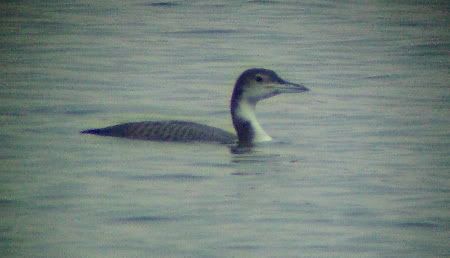
As ever the reservoir remains a brilliant place to be doing this work with some cracking sunsets lately and smattering of tasty birds. I regret I missed the recent Black Redstart (some small consolation that I saw the one last November) , but the Great Northern Diver is settling in now and easy to find most days.
Another juvenile bird so bang goes any theory that we get the same birds returning each year, this isn't site fidelity, Carsington is just a natural magnet for any GNDs that end up this far inland. It'll be a sad winter when we don't have one.

And because these divers are such fantastic birds, check out these Youtube videos....

Voices: Common Loon
Loon joins scuba divers

...Common Loon being the given North American name for the same species.

Then there are the surprises that happily occur while on site. Closing things up at the end of another DWN event I had a Barn Owl sail by the Wildlife Centre. In other areas of the reservoir you can expect them, especially the areas with unimproved grassland the STW rangers look after so well, so it was more than pleasant to see it comfortable enough to quarter the busier parts of the water's edge.
If it weren't for the volunteering I'd never be up and out there so regularly and I'd miss so many of these things. The rewards they are manifold.

Thursday, 16 July 2009

Still here


Apologies for the paucity of posts lately, not been out birding as often as I prefer. Still it's been nice to get up to the pit a few times in the week to check out the Little Owls ferrying prey to wherever their young are hiding out. Occasinally we have had the ridiculous situation of looking high and low for the birds only to look around and find one on the telegraph pole a few yards behind us. Gotta smile.
Also had a Barn Owl do a circuit of the place last week.

In the garden it's delight to be ticking off big sexy invertebrates species, blue damselflies, and ringlet and gatekeeper butterflies new in over the past couple of days. Seems to help that I've let the lawn grow into a meadow as all these creatures have taken to resting in the long grass. Read somewhere that you increase invertebrate life fifty-fold if you simply stop mowing, and I'm beginning to believe it.
The video there features another newcomer, bird species #37 for the garden, it's a juvenile Great Spotted Woodpecker - check out the red crest.

Off camping on the Isle of Mull next week, Eagles, Otters, etc, that should probably warrant a post or two here when I get back.

Recently added to my Youtube channel:
Pretty damn dark silhouette of a Little Owl
How to unwrap a slug Blackbird style
Wolf Spider with egg sacks
Redshank at Carsi

Monday, 7 April 2008

Early April Update

Thought I'd do a round-up on my recent birding activities...

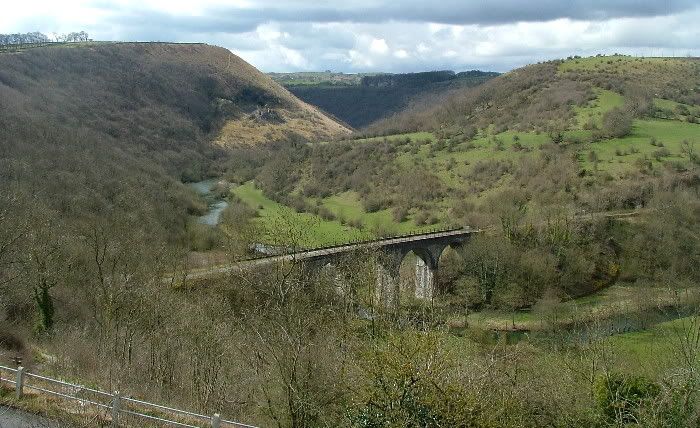
The girlfriend is besotted with the Derbyshire Dales so we headed westward again and made this time for Monsal Dale. It's April, thus we had four seasons in the day, and good smattering of birds even if we found nothing stellar - Buzzards soared over the valley, while in the wooded glades Great Spotted Woodpeckers were ever so noisy (their calls sound to my ear like miniature crow vocalisations), Treecreepers crept up trees, and Goldcrests rushed through their tiny whistling song.

We walked the Monsal and Brushfield circuit - route here - an easy 10km up and down dale. Brushfield Farm was particularly noticeable for its birdlife, with many dozens of tits and finches attracted to the feeders around the farmyard. This makes up for the quieter stretches and rewards the walk.
In in the next couple of months Redstart should be arriving up there soon, and I could scarcely imagine a more dramatic setting to find them in.

Elsewhere, around the Hardwick and Teversal area large-ish flocks of Fieldfare remain with around 200 going over at a time, with smaller flocks of up to 50 Redwing also scattered around. I kick myself that I missed an Osprey at Pleasley by 30 minutes, but feel vindicated for walking so late in the evening at King's Mill Reservoir for we rediscovered the Barn Owls, a pair back at last year's nest site.
They will never lose their glamour with me, and I feel so lucky to have them 10 minutes walk from the house.

In other news, the RSPB will soon launch its new Birds of Prey campaign. Please take time to read about it (here) and sign the pledge of support to protect these fantastic birds from the illegal persecution that still exists in the countryside today.

Thursday, 10 January 2008

Best of 2007

It occurred to me that I failed to make an end of year appraisal for 2007, so here's a quick best of round-up...

Best birding site visited... difficult to choose, it'd have to be the North Norfolk Coast, and those magical dawn moments of thousands of roosting Knot, thousands more commuting Pink-feet, Shore Lark below the dunes and Barn Owl quartering closer than you'd dare imagine.

Best bird seen... for rarity value, the juvenile Night Heron at Fairbun Ings in July. Rumour has it this may have been the first true wild bird of the species hatched in the UK.

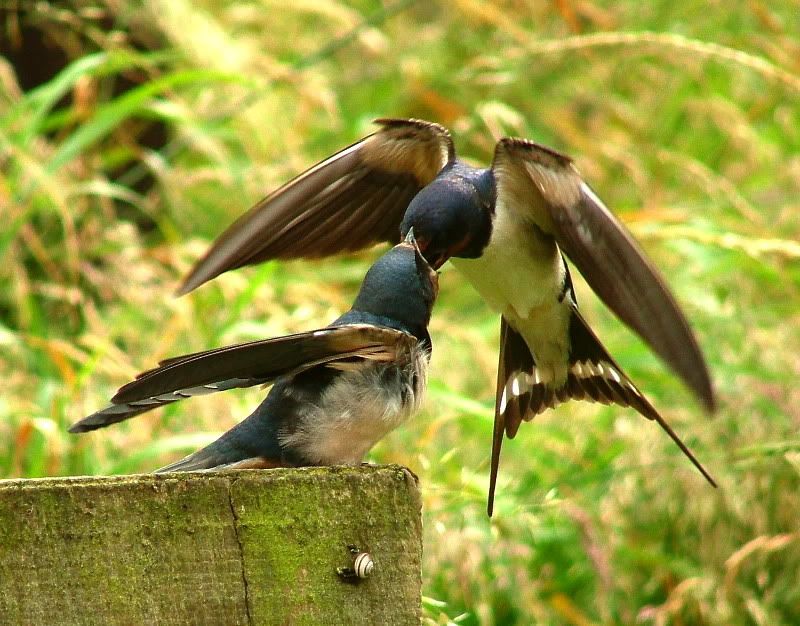
Best bird photograph...

This Swallow fledgling feed at Bempton Cliffs RSPB, also in July.

Best bird video...

Barn Owl at Holkham NNR, late August.

Best local find... not a classic year, but a pair of Whinchat at Brierley Forest Park stirred interest in the place during April. They would probably breed were it not for the dogwalkers. According to BirdTrack these were earliest birds reported in my region for the year.

Best memories... too many to mention, a shortlist list would include the Starling roost near Carsington, wintry days and rare ducks at Hoveringham, Osprey days at Rutland, magical Montagu's Harrier in Lincolnshire, the Nightjars of Sherwood Forest, 3 lifers in one day with Long-tailed Skua/Sabine's Gull/Red-necked Grebe, picking up a stranded Little Auk at Snettisham, and really I could go on and on.

Best decision... getting involved with the RSPB, volunteering at their Aren't Birds Brilliant(!) events at Carsington Water in Derbyshire, where I educate the public about the RSPB, conservation and birds in general. A genuinely worthy cause, I get to watch and talk about birds all day long, and it's a great crew down there too. That moment when you see it click within a kid, the gasp and dazzle of discovery when they realise how amazing the birdlife is out there, it'll never get old.

The numbers:

190
species on the year list
18 lifers

For the foreseeable future my prediction is 2007 will be my best year for sheer numbers of birds seen. Between moving house, rising petrol prices, and the intention of greenifying my birdwatching activities, I should be cutting back on the travel for 2008/9.

Sunday, 9 September 2007

Owls of Intrigue

Nipped down at last light to King's Mill Reservoir this evening, wondering what might turn up in the roost. Recently a 1st-year Med Gull has been reported, which poses both a nice tick and an ID challenge in a gull roost of a few hundred BHs. No luck tonight, and none earlier in the week.

What I did find on Friday in good light was a Tawny Owl leaping away from Barn Owl bridge. This was surprising first because obviously Barn Owls are associated with it (since they bred there), and I've never seen Tawny Owl around any manner of concrete or rock artifice - certainly never heard of them roosting in man-made structures. The whole thing is puzzling to say the least.

I'm left to hypothesise that the Tawny was attracted to the activity of the Barn Owls, particularly since I saw a Barn Owl back at the nest site this evening. Some Tawny behavior is still little known, indeed it wasn't until relatively recently it was documented that they caught fish, so who know what else they could get up to?
What I am certain of is that I saw something special.


Tuesday means an ABB event for me at Carsington this week, so expect a post.

Wednesday, 29 August 2007

Normal for Norfolk


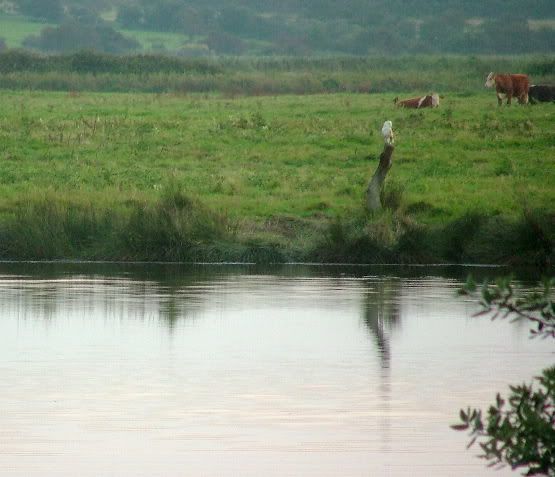
Barn Owl at Holkham NNR

Short of a warmly unseasonable September (figures crossed for it), August ban holiday marks the last chance for a summer camping break, and with a decent weather forecast the girlfriend and I headed for Norfolk. For the most part it was a beach holiday, to enjoy the sun, sea and sand, but you can't escape the birds of Norfolk, should you lose your mind and want to.

In the pinewoods behind the dunes at Holkham there had been reports of migrants right out of the top drawer - Wryneck, Red-backed Shrike, and one of the many Greenish Warblers turning up in Norfolk this August. Alas, carrying a beach tent and windbreak (essential items for a day on the Holkham sands) and other beach-going paraphernalia made birding a wee bit difficult, and day reports on Birdguides suggest all the aforementioned star birds had left anyway. The best I could find was a Kestrel hunting toads on the dunes, and a family of Willow Warbler. For all the world I willed one of them to have the pale wing-bar of a Greenish Warbler, but no.
What made up for any disappointment in the pines was the Barn Owl hunting over the open pasture and across the marsh. Splendidly close views of a bird it is forever special to see. Other birds along the walk back to the car park included Coal Tit, Little Egret and Curlew. Nothing to quite compare with the Spoonbill in April though. As we drove out we had another sighting of the Barn Owl as it nonchalantly whisped across the car park.

On the Monday the north winds blew, too cool for the beach, so we gambled on which of the North Norfolk birding sites to head for. We chose first NWT Cley Marshes. and there was plenty around; large numbers of Black-tailed Godwit, Ruff and Avocet, in the early afternoon a flock of 50 Golden Plover came in, many in still summer costume. Marsh Harrier is a speciality there, and I counted at least three males and three females, yet no juveniles. There wasn't much else to pick out though, and a Common Sandpiper was the only single wader of any note.

In the evening we had time for a quick stop at Titchwell Marsh RSPB, also a good place to get close views of waders. It was much the same as at Cley, plus a few Spotted Redshank, one Knot, a few Grey Plover, and my first Greenshank of the year (#176) was in the marshland just west of the reserve. It is always worth walking out on the beach at Titchwell, and although it was too hazy offshore to scour for skuas and shearwaters, many Sanderling, Turnstone, Dunlin and Oystercatcher pottered around on the surf line. I have always kept a soft spot in my heart for Sanderling - in their white winter plumage, they look somehow dainty and pure, perhaps spirit-like wardens of the tide.
Finally in to roost came six Little Egret. I'm still a kid really and even I'm old enough to remember how special that once would have been prior to their colonisation of these isles. Heck, it's still special!

Pictures from the weekend:

That Barn Owl again.

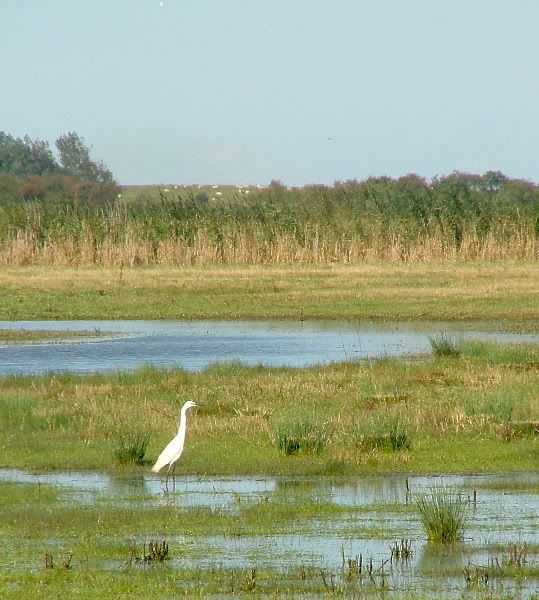
Little Egret at Holkham.

Greylag Geese at Holkham, many groups of 4-10 birds passed over heading east, presumably for a roost.

3 Black-tailed Godwit and a Ruff, at Titchwell.

The Titchwell scene.

And a couple of digi-scoped videos by the girlfriend:

Video 1 - Ruff at Titchwell
Video 2 - Little Egret Roost at Titchwell
Video 3 - More of the Holkham Barn Owl

Finally on the drive back home through the Norfolk farmland a Barn Owl was illuminated in our headlights. Fortunately veered right into the field beside the road and then kept pace with us for a 50 yards or so. Impressive really, because we were zooming along at a steady 40pmh at the time. Pretty swift stuff for a delicate owl.

Norfolk, it never disappoints.


Friday, 3 August 2007

Owl-tastic!

Blink and you'll miss it, a 4 second digi-video-scope of one of the King's Mill Barn Owls...


With that graffitied backdrop, you perhaps see what I mean about these being owls with a considerably urban taste in territory.
There were three yesterday often hanging out very close to the busiest road out of town. And showing very well too, in what looked like evening playtime. I called the rest of my family down to watch and just like with the Carsington Little Owls, there was that word again, 'Wow!'.
Aren't Owls Brilliant?

(Video courtesy of the girlfriend, with luck we'll manage something better before the owl family disperses.)

Wednesday, 1 August 2007

The King's Mill Owls

Summery evenings, we hardly knew ye, but now you're back we're determined to enjoy you.


My walk with the girlfriend to King's Mill Reservoir was lovely, and promised the possibility of a Barn Owl (more on that later). Surprising really that so few people were out there with us, it makes you want to knock on front doors and invite folks away from their television. Are you mad, it's beautiful out here?

At the 'res', the bird roosts are already beginning to develop. Up to a couple of hundred Black-headed Gull commuted in late on, and by the reed bed 150+ Coot settled in for the night, with many more elsewhere around the fringes of the water.

Around the hedges an ever moving troop of 20 Long-tailed Tits chattered among each other. I confess I don't actually know that's the collective noun for Long-tailed Tit, I choose it because for me their behaviour always draws comparison with a troop of monkeys searching for fruit in the jungle canopy. Their breeding activities, whereby related non-breeders will help a pair raise their brood, bares more similarity to the forest apes too.

Now a Barn Owl family has drawn whispering attention to King's Mill since breeding was discovered there a couple of months ago. This is the first known record of nesting at the site and according to the reports it's been a great success, with at least 2 juveniles present at the moment. What makes this discovery more thrilling is this territory is relatively urban; you have a averagely large reservoir popular with walkers and water sports enthusiasts bordering on one side, the busy A617 to Newark road on another, and an 'adventure base' for children on yet another, and through all of that dissects a railway line. So this isn't some dirt quiet back road in the wilds of rural Lincolnshire. If only more people knew that Barn Owl could live so close to a large number of people, basically within our conurbation, how much prouder we'd all be of our oft derided and half forgotten district of Nottinghamshire?

Anyway, we watched in the last light of the evening for 5 minutes as an adult swooped along the railway and then off into the wheat field, while in front of us a late calling Reed Warbler sung in a small patch of reed bed near the car park.
That Barn Owl, by the way, is 107 for my carbon neutral list. The girlfriend loved seeing the bird, and it soon put at end to the complaints that I refused to let her stay sat by the ducks!

Speaking of Barn Owl, news today comes from the RSPB that the species has been voted Britain's favourite farmland bird, by the people who wrote in to them or visited their website. Who could possibly fail to agree?

And for more on Barn Owls in Nottinghamshire try reading the diaries of the Rushcliffe Barn Owl Project. Who knows? It may even have been the offspring from their successful efforts that have found a home at King's Mill, though with average young dispersal being around 7-8 miles, I freely admit we'd really be at the high end of their reach.
Wherever they came from, here's to the owls!
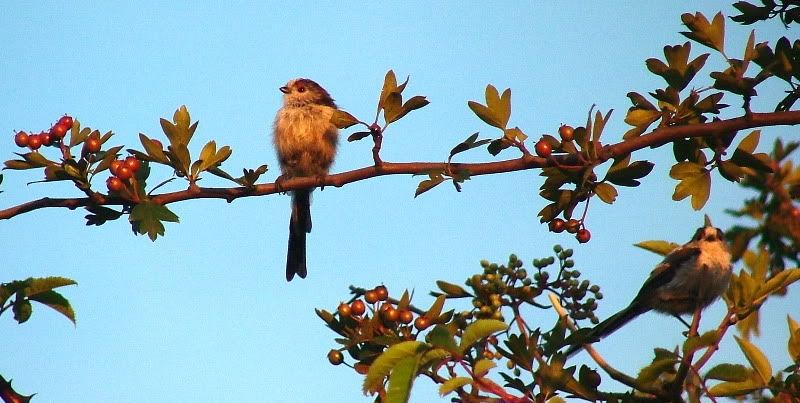

Those little monkeys.
Thursday, 10 August 2006

Holkham NNR


I find late summer is lovely time for birding, it's the families. Just the other day I watched a gang of half a dozen Redstart darting after each other as much as food, a nice find for the East Midlands.

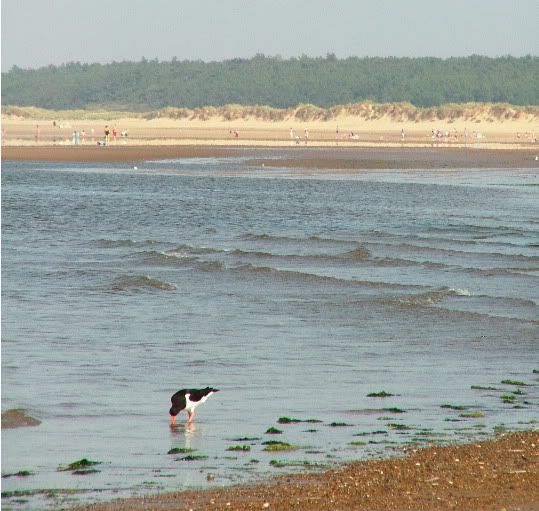
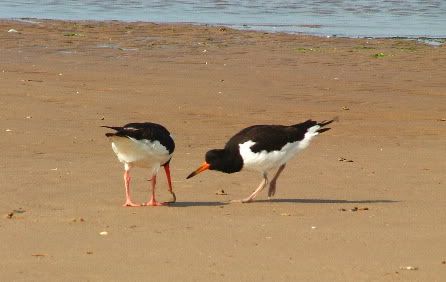
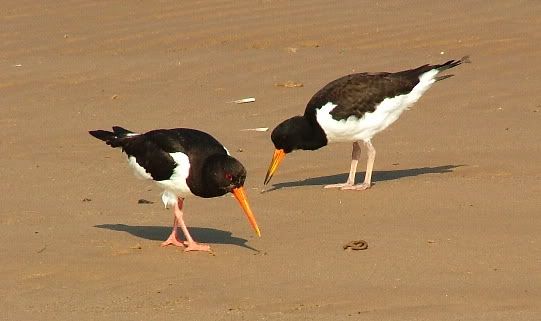
A couple of weeks ago we camped for a weekend down on the North Norfolk coast, very nearby to Holkham National Nature Reserve. The site comprises a sandy shore, extensive dunes, saltmarshes, pinewoods, and some reclaimed marshland a little further inland. I was beach-holidaying with my girlfriend so didn't devote as much time to the reserve as I'd have wished but still found stunning and close views of Marsh Harrier, enough to excite any birder. Below them species like Sedge Warbler could be heard. Underfoot the dunes were full of toads, and out on the beach Little Terns skimmed the surfed, and a pair of Oystercatchers babied their one remaining chick.
We plan to make future visits, give the reserve the attention it deserves. Also not a long drive west along the coast are both Titchwell Marsh and Snettisham RSPB reserves. This part of England really is very rich for birders.


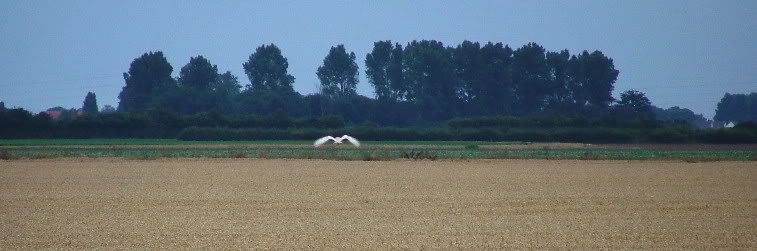
Driving back home through the quiet farm roads brought us across this Barn Owl patrolling over one of the vast Norfolk wheatfields. We've found travelling along such lanes to be a marvellous birding tactic. It may not be very eco-friendly but there seems few other ways to cover so much rural habitat in a mobile bird hide.