Paid a visit to Old Moor at the weekend, good birds, good shop, good times. No stellar species around, Ringed Plover was about the best of it, lots of courting Goosanders, bountiful Lapwing flocks, and an entertaining female Kestrel (pictured) in the car park that dropped down after prey right beside our car. The Yellowhammer comes from the Tree Sparrow Farm area of the reserve where long-staying Brambling weren't playing ball. Wath Ings hide had a Common Snipe several birdwatchers were convincing themselves was the Jack report a day before, it's one of the pitfalls of reading the sightings news that I'm pretty sure was susceptible to once upon a time.
Also been Budby way, as always nice views of several Green Woodpecker, a handful of Crossbills went over, otherwise hardly a dicky around. Better was Carburton were ploughed fields have proved magnetic for numbers of Greylags I've just never seen there before, and among them there be scarcer geese. Four Pinkies, and I found a surprise lifer in a White-front (#229), it looked dark to me but other guys with more experience we're happy it was a Russian race bird. We simply don't get many of either in the East Midlands, although a few birds were seen in North Notts not long after mine.
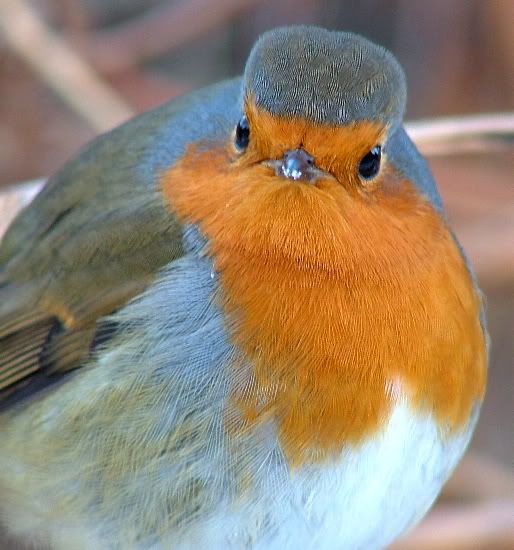
Haven't posted for a while so I'll quickly round up the last month. Bagged two lifers in that time, the first came with the dozens of Common Crossbill at Broomhead Reservoir near Sheffield. Just wasn't getting any luck with well known local sites like Sherwood Pines or Matlock Forest, and learnt about Broomhead on Birdforum. Brilliant places, loads of Crossbills - saw a dozen or so and heard more - mixed in with Goldfinch, Siskin and some entertaining tit flocks. Seemed to disturb a Tawny Owl that flew through the wood around midday. Hand-fed a desperate Robin in the layby where we parked the car. Peaceful place.
A corking Firecrest (#228) accounts for the other lifer, a now well watched bird at Moorgreen Reservoir. Apparently they are present most winters, the word just hadn't gotten out before. Locals speak of Lesser Woodpecker and some other interesting birds in there too. Looks worthy of more attention.
Both species bogey passerines I'm very happy to have finally cracked. Dipped however on a Siberian Stonechat at Bevercotes Pit Wood near Ollerton in Notts. Several European Stonechats around, none quite so dandy as the Sib. Went a day late for that one.
A lot of action in the garden at the moment. About eight inches of snow will do that around here. Numbers of Reed Bunting have hit at least 11, lots of the common finches, Redwing and Fieldfare have been through, Great Spotted Woodpecker too, and next door's apple trees are being vigourously defended by a Mistle Thrush. Late one day a Yellowhammer came and went very briefly - noticed it among a very busy flocked mostly by the very horizontal perching shape. This morning 150+ geese were heading north-west while I had my breakfast, no chance of a defo ID but really they had to be Pink-feet.
Nothing up at Pleasley Pit at the moment, at least nothing on the water, it's been frozen for a fortnight, the last birds I saw were Snipe evacuating elsewhere just before Christmas. The winter thrushes remain, as do a single female Stonechat and lots of Yellowhammers.
Very quick visit to Rufford with family earlier this week where I managed a few photographs. Wild birds are so tame there it's difficult to go away without a decent image or three.
"The RSPB are in the bird observation hide, it's fantastic!", said the well impressed member of the public to her friend as I passed on my way to the loo.
She was talking about this week's mid-week ABB event, and what more is there for me to say about it? Well, being the school holidays in some counties we had plenty of families through the centre, with plenty of very cool kids and their wonderful descriptions of the birds they saw through our scopes. For one girl Chaffinches were a particular favourite, and she may be onto something - with the splash of colour on the male bird, perhaps we undervalue them.
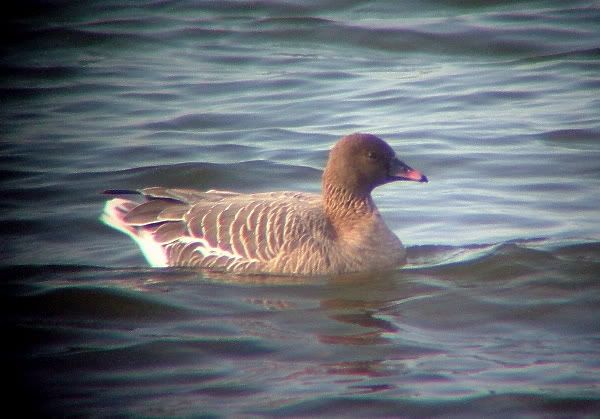
The bird life was varied enough to supply plenty of interest. Willow Warblers and their descending songs are the latest arrivals to promise that warmer weather can't be far away now, and Blackcaps twittered in similar hope of milder skies. The glamourous Great Northern Diver showed well during the event, as did our Little Owl, and elsewhere around the water a lingering, lonely, lost Pink-footed Goose associated itself with a small gathering of Canadas (it's a long way to its Greenland summering grounds for that bird). On the migrant hot-spot of Stones Island 3 Yellow Wagtails were a colourful addition to the black, grey and white of the Pieds, so intense is that yellow hue the birds might have been crafted our of mounds of lemon rind.
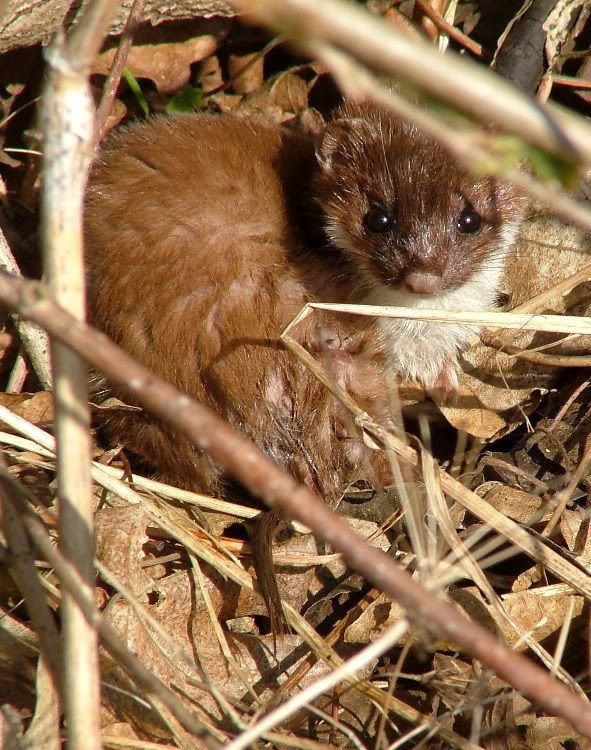
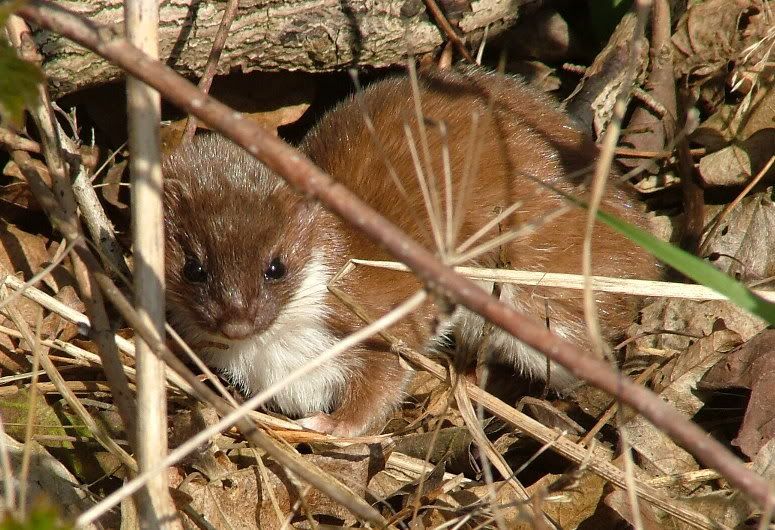
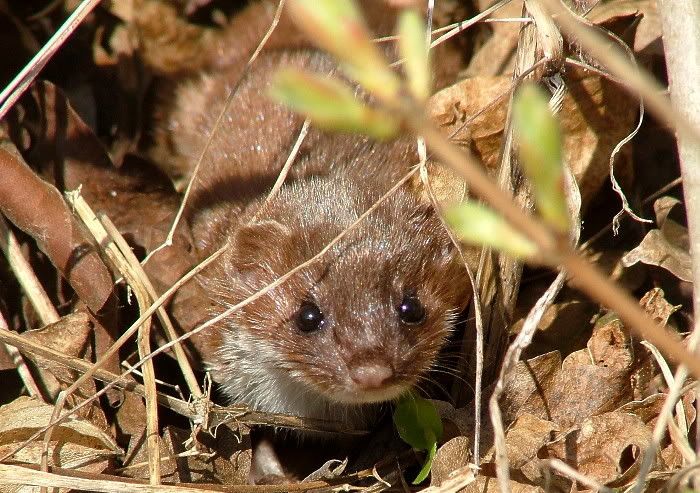
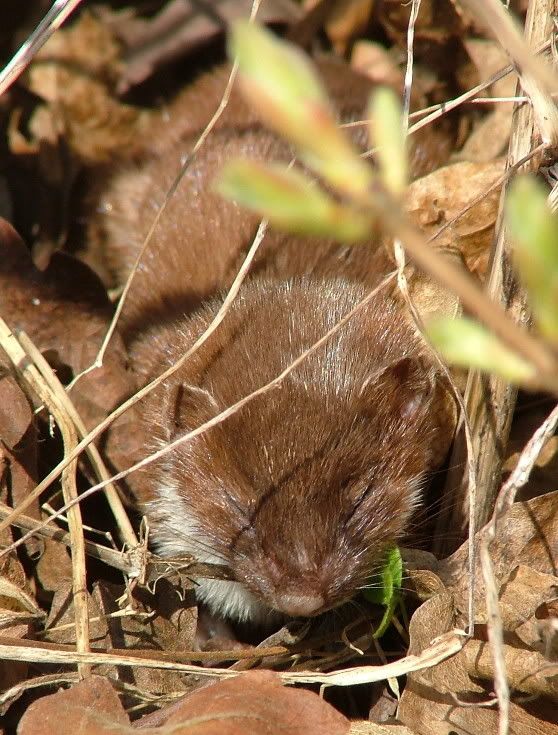
And then there is one more character to make note of, a Weasel, and a particularly fearless one that I discovered sunbathing in the leaf litter beside a path. I approach slowly, with high caution, but really I needn't have because it soon became apparent this small mustelid was as interesting in me as I was in it, as the creature repeatedly popped its head out from the undergrowth to watch me watching it. By the end of the interaction the weasel was within arm's reach and I was rustling, dare I say playing with, the leaves in front of me in game with this curious animal that I didn't quite understand the rules to. After 15 minutes I had to break away as I was already late for the ABB event, leaving the little dude behind. No regrets though, it was a truly memorable encounter for me, and I think if there is a moral to this story of countryside and wildlife it is this, get out there because you can get so so lucky! The pictures from the day...
It's Thursday and I'm still tired from the weekend, but what a weekend! For our autumn getaway I promised my girlfriend we'd go find a true birding spectacle; the great goose and wader flocks of the Wash. The destination was easy enough to pick, it had to be Snettisham RSPB reserve.
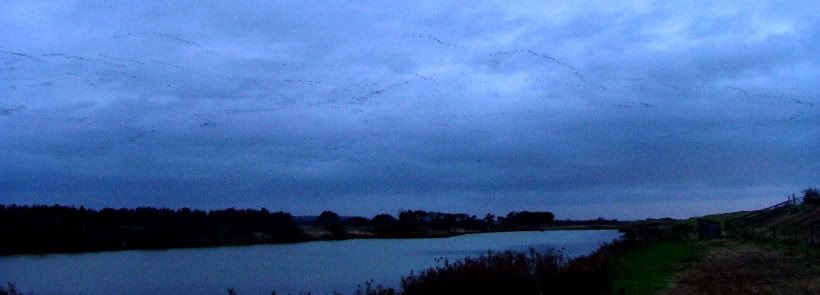
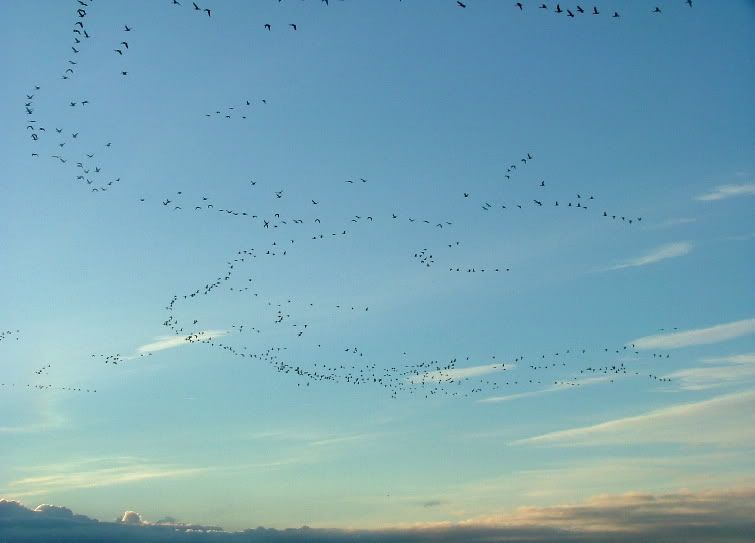
From Saturday through Monday we visited the reserve each morning (5:30am starts - ouch!) and twice in the evening, I suppose we just couldn't get enough. We were lucky on several counts, firstly because the Pink-footed Geese came down to their British wintering grounds earlier than is usual this year so the flocks flying from and to their roost were at their probable maximum, around 40,000 birds, perhaps more - you begin to guess with so many birds. Morning seemed the best time to watch them going over because they leave in good light, whereas it was upto an hour after sunset when they flew into roost on the mudflats. The whole thing lasted over 30 minutes, with numerous skeins leaving almost all the time for the fields inland, mostly to nibble on left over roots of post-harvest sugar beet and potato crops, as apparently farmers are encouraged to leave a little something for them. That's why they gather in Norfolk in numbers you just wouldn't have seen a few mere decades ago.
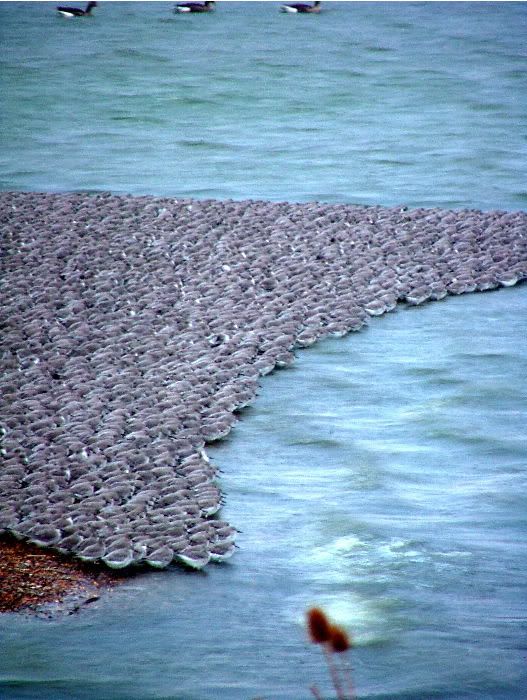
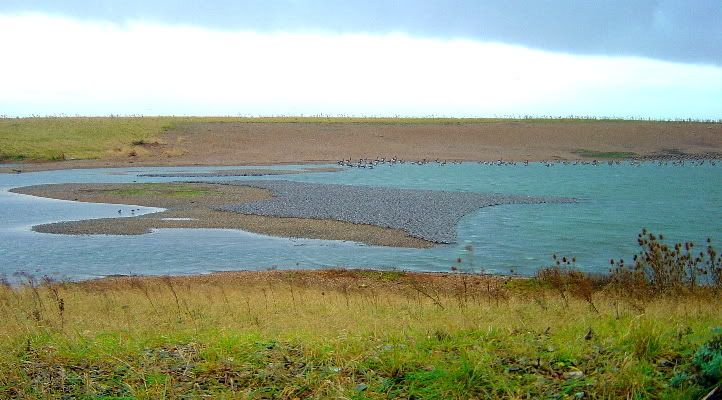
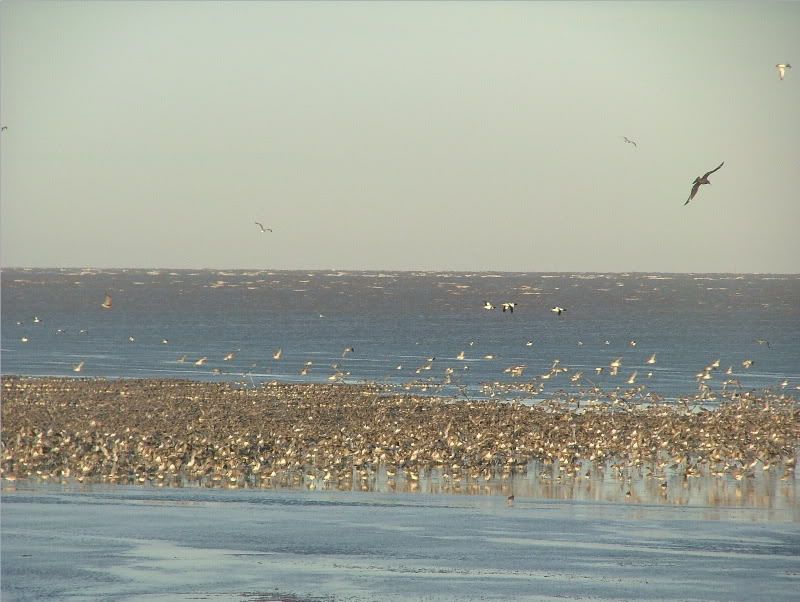
The other bird that are around Snettisham in big numbers are of course the Knot, with a roost of around 10,000 birds covering the islands and banks of the lagoon behind in the dunes. The mass of greyness almost looks like a large patch of gravel at a distance. They are only in during high-tide so that meant for our visit we missed them gathering but were able to watch them depart at daybreak. Sort of a double spectacle with the geese going over at the same time. In among the roost were occasional interlopers, a few Bar-tailed Godwit, Dunlin and Redshank on the edges of the huddle. Once the Knot went, that was it, whoosh and everything snaked over out onto the mudflats, leaving us with a few Dabchicks and Goldeneye left on the water, as well as a couple of hundred lazy Oystercatchers. It was exciting watching, waiting, for that moment of grand départ.
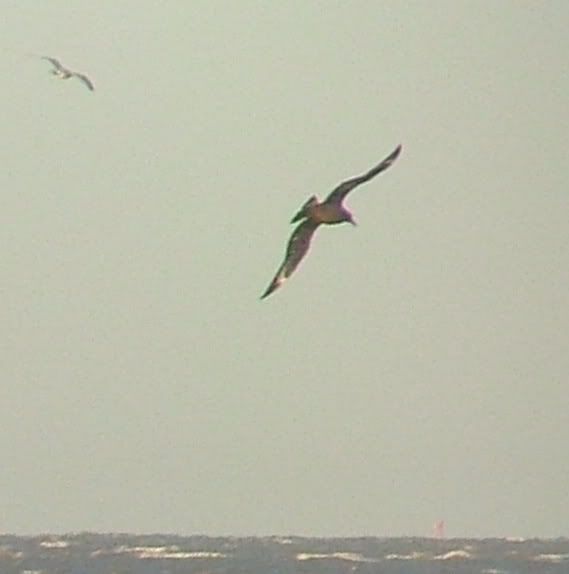
Other birds of note at Snettisham were a nice Barn Owl hunting in the pre-dawn gloom (ask for your money back if you go to Norfolk and don't see one), a couple of Merlin winged through on the wind, similarly a Great Skua was around, a few flushed Red-legged Patridge, and of the passerines a few Fieldfare battled the gusts, as well as Skylark, Meadow Pipit, Linnet and a Stonechat around the car park. On the mudflats, a good typical mixture of Golden Plover flocks, solitary Grey Plovers, lots of Dunlin, Curlew, Turnstone and Sanderling, a handful of Avocet. As well as the Pinkies wildfowl-wise there were also plenty of Greylag, Brent and Canada Geese, Shelduck, surprisingly large numbers of Mallard, and the one Scaup went through too.
On our final morning at the reserve, something rather special occurred, we found Little Auk bobbing in the high tide just off the beach, part of the Great Little Auk Wreck of '07. It began with 4 of them, but that was just the beginning of the story. More about that in another entry though, and the other sites we dotted along the coast last weekend, as well as more videos.
A lot of Knot!
Gravel?
Pinkies in the evening...
...and the morning.
Knot and other waders gathering on the receding tide (note Great Skua top left).
Very distinct white wing flashes, has to be a Bonxie.
Just booked a weekend away in Norfolk for mid-November, staying at a place right on the doorstep of the RSPB's reserve at Snettisham. The B&B was a bit steep, but you gotta do the wader roost sooner or later.
Quiet times otherwise, the ABB events are going nicely at Carsington. The Little Owls failed to show at the weekend, however a Kestrel blessed us with about two hours spent sat on the camera pole in front of the wildlife centre. That meant I could prattle on about how the Kestrel's ability to see ultraviolet light allows them to track the urine scented trails of the small rodents they prey on (more on that here), which seemed to particularly impress the visitors I spoke to.
Bird of the day, or birds shall we say, was the 150+ Pink-feet that flew over around one in the afternoon, heading SE. This is apparently a little late, as the bird club report for September explains, "southward records are usually 2hrs after first light, which is the flight time from the Lancashire feeding grounds of Marshside and Martin Mere. Their northward journey is usually at least 4hrs after first light Jan-Mar, reflecting the hundred miles from Norfolk".
Later still, on the way home the girlfriend and I stopped off for a quick scan of Ogston Reservoir. It was there at 17:35 came a lone grey/brown goose, not a Greylag, another Pinky! Must have been a straggler. Isolated and nervous, it made several low passes over the water though never with the confidence to land, and bizarrely made three attempts to merge with 200 airborne Lapwing, presumably such was the bird's instinct to flock. Eventually, I lost sight of it as the gloom of the autumn evening set in.
Can hardly wait now for Norfolk, it'll be the same geese, but by the tens of thousands.
ETA: Incidentally, the Gannet mentioned in my last post, the one I missed by half an hour or so at Carsington. I read that on Monday this week a juvenile Gannet (surely the same bird this far inland), was discovered and taken into care in Mansfield, less than a couple of miles from my home. What a tease that bird has been for me! Good to know it'll be looked after now.
 ying ball.