Showing posts with label Brierley Forest Park. Show all posts

Monday, 17 December 2007

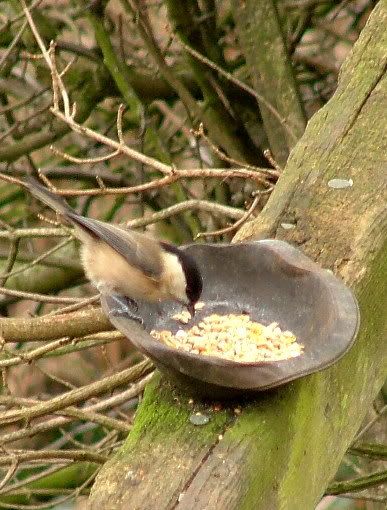
Willow Tits: On The Brink

Quite a cold snap at the moment, so a good time to get out around my alternative local patch Brierley Forest Park and make sure the feeding stations are well stocked.

Plenty out and about there, although the transient winter finch flocks, Redpoll and Siskin have moved on. Blackbird numbers are notably high with loose gatherings of 20 birds in several areas. Most gratifying birds to see, however, were Willow Tits, with 4 or 5 individuals congregating around the seed pots and hanging fat feeders.

The recent story of the Willow Tit is shocking both for the extreme decline in their numbers and for the lack of awareness of it. Just take a look at what happened to them in Kent. In 1996 there was estimated to be 500-900 pairs in the county, and now, it's probably none. There's a similar story over most of the south-east, East Anglia, much of Wales, indeed few are the regions in which they are not crashing or already extinct- Nottinghamshire/Derbyshire probably being their stronghold these days.

It may be that the very similar Marsh Tit, declined significantly itself since 1960's although probably levelling off now, provide the sort of ID confusion that lead birders to think there are Willows present in areas where they have lately disappeared from. The best way to tell between them is their call ( try listening at the RSPB website) - although even those can vary enough to be confused, and the slight plumage details aren't always sure fire either. General advice is to look for a slight wing-bar on the Willow Tit.

The national figures say it all really, a decline of 72% in the years 1994-2002, nearly three quarters gone in only eight years! Little wonder it was recently added to the Red List of species of greatest conservation concern.

There is still much debate over the cause of this catastrophic dip. The Willow Tit's weakness is its choosiness, only very wet young plantations of willow, birch and alder scrub, and occasionally pine, will do, so on sites where plantations are maturing, drying up or are being cleared of scrub, Willow Tits suffer quite badly. One influence on this change is the national boom in deer populations, Roe and Muntjac in particular will nibble away the undergrowth these birds rely upon. Coupled with general habitat loss to development and urban sprawl, and Willow Tits are running out of breeding sites.

The other theory that's given a lot of credence proves how difficult biodiversity can be to manage. Despite having an abominable 2007 when the heavy rains washed away all their caterpillar food, Blue Tits are generally on the increase in areas where Willow Tits are losing out. The evidence suggests to some that Willow Tits, the only tit species in Britain to excavate its own nest cavity, are muscled out of their territories and nest sites by the other tits. Mainly Blue Tits, but also Marsh and Great Tit will do this. Great Spotted Woodpecker are another additional pressure, as they will raid nests for chicks.

Studies are ongoing and we don't really have any answers just yet, and I'd suppose there won't be just one reason for the crash. I tend to wonder about the future and climate change. With dryer summers degrading their habitat further, more competitor species making it through milder winters, the future looks bleak for the Willow Tit, real into oblivion stuff.

Thankfully we still have them locally, chiefly due to all the old colliery sites around here that have been returned to nature and planted up in the last 20 years, sites such as Brierley.
They are also present at Carsington, and I'm volunteering there tomorrow. I just might begin adding Willow Tit to the conservation spiel I give to visitors.

Thursday, 5 July 2007

Two and two make Nightjar?


This weather, the wettest month on record, three times the average rainful, I just haven't done very much birding lately. Also helped little that last week I hit a flood damaged path too fast and came off the bike fairly hard, doing a real number on my legs. Haven't really felt like riding since.

During my last circumnavigation of Brierley an elderly gentleman who noted my bins asked whether I'd heard the Nightjar. We don't have Nightjar at the park, so I reasoned he mistook the Grasshopper Warbler's similar reeling call for the much more illustrious species (the warbler has high-pitched grasshopper like call, the Nightar a low chirrrrr, both go on and on). This I attempted to explain yet he was adamant, said he'd even seen them skimming over the lake - probably referring to the Swifts that come in from town. Seems like he put two and two together and came up with Nightjar. Again I tried to explain his mistake to him, still he'd have none of it, and I left wondering whether sometimes it's better to leave chaps like him to enjoy their self-assured ignorance.
Probably not, he's missing out on finding the real thing, which is an amazing thing.

Tomorrow I'm off with the girlfriend to see the Tour de France in London, camping the whole weekend. I think we'll at least get some birding done in the great parks. That leaves just enough time this evening to check out the Barn Owl nest at King's Mill, a secret site I heard about it today on the local birding grapevine. Knew they were about, didn't know where, and I'm told only one of three chicks is yet to fledge.

Thursday, 26 April 2007

Brief update

Decent couple of birds when I passed through the park today, the Grasshopper Warbler showing well, fluffy white throat and all during its song, and speaking of white throats, yes, I thought recognised that chorus, the one that twitters away into nothing, a spirited Lesser Whitethroat (#109 on my carbon list).

Troubling couple of other observations this week too. After I reported the warblers and Whinchats to a couple of sightings websites there were suddenly birders around the place when I'd normally seldom see any at all. Worse, a couple thought nothing of clambering over the fenced off area into our best habitat that we're trying to protect until new bylaws can be passed.
Cannot understand folks who think nothing of trampling on land that clearly isn't meant to be accessed. They don't exactly give birders a very good name, you know?

In the national news, there's a new theory on why urban Robins sing at night. Apparently it's too noisy to bother in the daytime, so they save their efforts for the quiet of after dark.
Maybe it does make more sense that the old streetlights theory. However did we really believe birds couldn't tell the difference between night and day?

Tuesday, 24 April 2007

Weekly Bird Count

Snuck out this afternoon to get around and make a bird count for the park. 37 species on a damp miserable day doesn't seem too bad, most notably 3 Grasshopper Warbler, 2 Whinchat, a couple more Blackcap, many Willow Warbler and Chiffchaff. Yes, the summer warblers are back.
One Grasshopper Warbler did show itself briefly and as ever looked surprisingly large with that big broad tail they have. I should expect the Whinchat [#143] will perform their usual routine of hanging around for two weeks and then disappearing.

Tuesday, 3 April 2007

Species Count at the Park

I'm trying to get in one a week for the rest of the season, just something so I'm able to put an authentic list on the white board in the visitor centre. We're poorly covered by the local birding fraternity so the duty falls down on only a couple of us.

Only 27 species today, down from the mid-30s average, didn't even hear the Green Woodpecker. I put it down to a combination of grotty weather and all the kids around the park during their school holidays. Best birds? Chiffchaff, Bullfinch, Skylark, Yellowhammer.
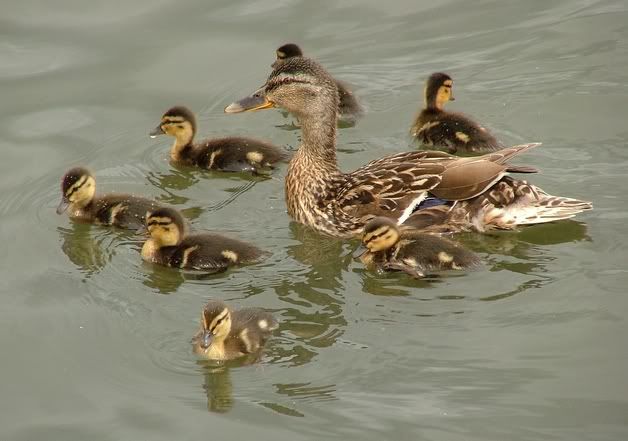
Three Coot have joined the Mallards and Mute Swan on the small lake so we'll look forward to them nesting.

A couple a years ago we had two pairs who clearly patrolled a boundary that ran dead centre down the lake. It was always rather comical to watch their tactical postures as a bird from either pair approached too close to the frontier.

Wednesday, 21 March 2007

Ready Redpoll

Bird of my day has to be (Lesser) Redpoll, clearly a pair and giving great views as they flitted down into a ditch to bathe. I'd cycled to the park to put out some seed, not really planning on spending too much time in the gales and the snow. Delightful sight though, and it gives hope that they might breed this year.
They've been only a winter finch around here lately, so a pair staying on this long might just stay the course. I hope so, Redpoll is one species tumbling in numbers at the moment. They are one of my favourite species too, so stout and smart, looking charmingly officious to me, like a 1950's postman or something.

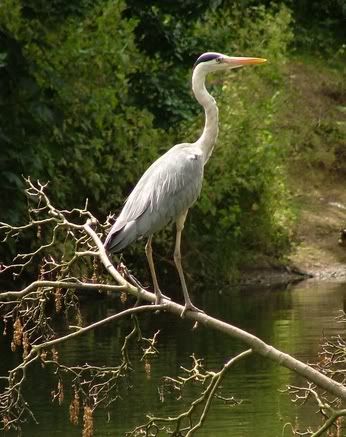
Heron was nice too, plus its shimmering reflection on the small water.
I thought twice about attempting to photograph any of these birds, I wouldn't want to discourage either by getting too close at this time of the year.

Yellowhammer seemed to have paired off too, indeed only the House Sparrow are staying together in a still sizeable and quite vocal flock.

No Little Owl today, they clearly no better than to perch out in this weather.

Saturday, 17 March 2007

First Willow Warbler of the Year

Got down to the local nature reserve today to get in an hour's bird count so I could refresh the sightings board and give visitors an idea of what sort of birds to expect. The short time meant covering only about half of the park, nonetheless we got in 33 species, nice birds too like Linnet, Redpoll, Bullfinch and Yellowhammer, and one or two commoner birds like Moorhen and Kestrel refused to show for the hour.

Without doubt, bird of the day had to be a very confiding Willow Warbler. I half hoped for Chiffchaff, which didn't show, I hardly count myself as disappointed though.
There seem so many signs of an earlier Spring at the moment. Also, the Redwing seem to have all gone, probably about time they did.

Wednesday, 15 November 2006

Another Feed the Birds Day

Our Bullfinches still seem to spur a great deal of excitement among visitors, I suppose it's the close proximity you can get to them. Probably helps the birds watch us scattering seed.
Quiet day otherwise, although Redwing are still around. About a 150 flew in from open farmland to the north of the park late in the day.

Off to Freiston Shore RSPB on Monday. Being so landlocked here in Notts it'll be my first visit to the coast during winter. With any luck it'll be loud with Brent Geese and rolling with flocks of Knot. I can hardly wait.

Video - Brierley Forest Park Bullfinch

Saturday, 11 November 2006

To find a Little Owl

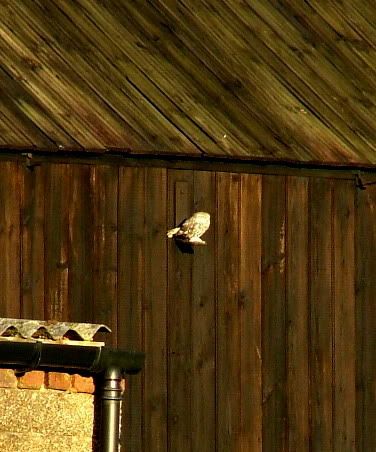
Out on feeding station duties around the local nature reserve yesterday. We'd long heard reports of Little Owls up around the farm buildings on the northern boundary, yet hadn't actually seen them for ourselves. Being a warm afternoon on an otherwise cool day, hopes were high of spotting one of the small characters warming in the low sun, and we weren't to be disappointed.

Now it's well known that Little Owls pick prominent perches, but this bird seemed to have made an extra effort to stick out. Look at the pale dot near the centre of the big dark barn toward the right of shot...

Okay, not a picture to grace the magazines, but enough to confirm ID, and how conspicuous the owl's notably bold behaviour can sometimes be.


They're sort of the emblem bird for the volunteer group at the reserve, and I couldn't think of a more suitable or perky choice.

Thursday, 23 June 2005

General update

My fledgling count went reasonably well, although the Song Thrush decided to avoid showing up until after the deadline. In all for my garden, 3 adult Blackbirds and no young, 8 adult House Sparrows and 7 young, 1 adult Robin and no young, 5 adult Starlings and 7 young. Those were the highest numbers of each at any one time.
These national counts always seems to have a southern bias. Blackbirds don't seem to fledge here for another couple of weeks, there are more Sparrows and Starlings later in the summer too. With an entire month of difference between Spring striking the North and South in this country maybe these surveys are missing out on the real numbers.

Anyway, lots of pictures, and one bird I was particularly happy to finally get a snap of...


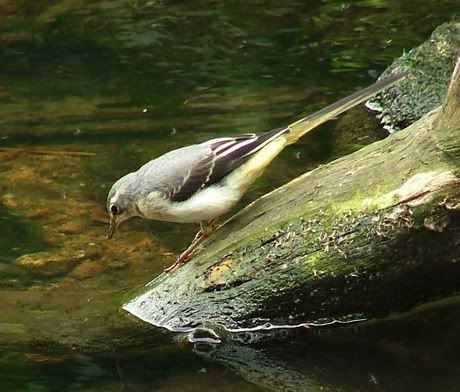
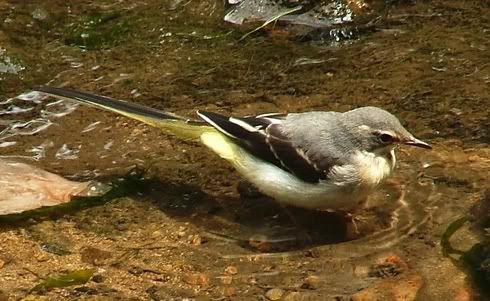
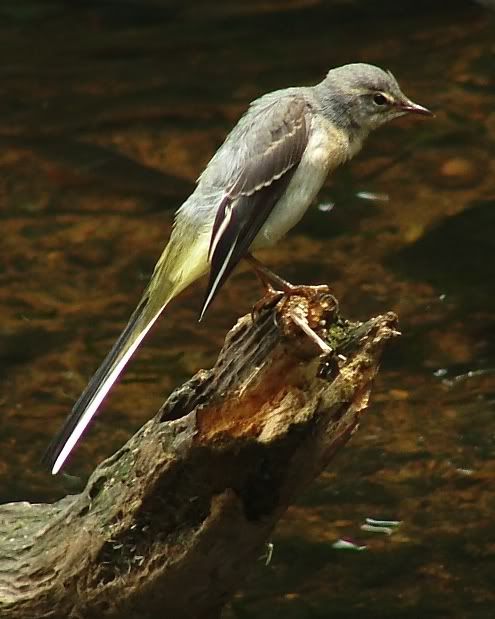
It's a Grey Wagtail. Only a juvenile but a Grey Wagtail nonetheless. As the name suggests they wag their tails, A LOT, and are always on the move, ants in their pants or something, and are quite shy, hence the difficulty snapping them.
No ants actually, the wagtailing is all about constantly moving in order break up their reflection in the water. The birds feed on invertebrates in the stream and need to see them without their own beak shining back up at them.

Anyway, more of him...


More images from the reservoir...


Meanwhile at the local community country park...

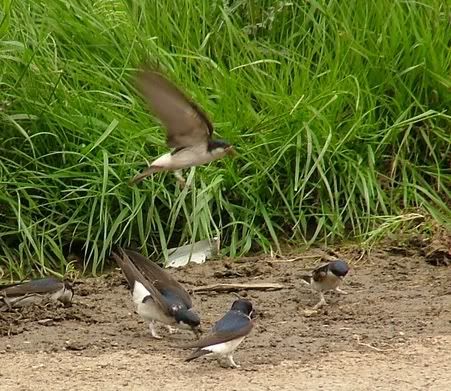
House Martins are just the sweetest of birds, and still nest building, a muddy patch beside the carpark offered a perfect supply of material.

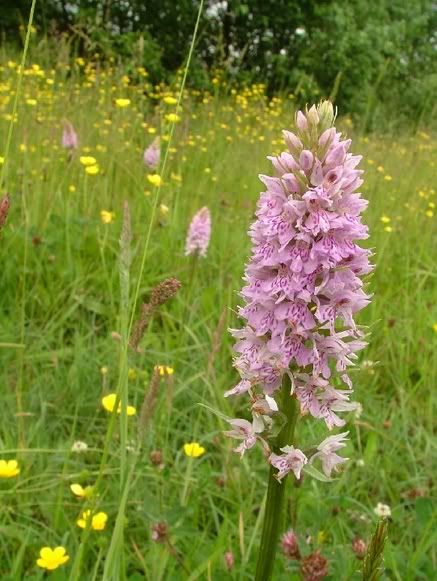
This time of year the orchids are dazzling. These are Common Spotted, yet uncommonly pretty.