Showing posts with label Clumber Park. Show all posts

Tuesday, 2 September 2008

Bird Storking

A while since my last post and I wonder where to begin this update. No doubt about it, the honour really does belong to the immature Black Stork [lifer #212], literally a big lifer, had in North Yorkshire over the weekend. The location was Cawood, a small town along the Ouse with fields sparse and wide enough to satisfy this most wary of birds. The wait to see it pop up out a ditch was around 2 hours and well worth it, although enormous thanks go to the birder who yelled us back. The girlfriend and I had just quit for the day, accepting the dip, and had walked no further than 30 yards when the shout came, "HEY, IT's THERE!". Never give up hope folks. Anyway a bird like that though shy gets noticed wherever it wanders, the individual possibly first picked up in Ireland, and now has made its way to Spurn. That's a long long way from Hungary - the region the Black Stork really ought to be in. The girlfriend, upon seeing the bird, she simply exclaimed, 'WOW!'.
Peregrine through too on the day also.

In other news, I have lots of shiny new bird kit. We'd actually headed up to N Yorks to check out some RSPB optics at Fairburn Ings, and only made it for the Stork when I realised it was just another 10 miles motoring on the day. I was after new binoculars on my RSPB volunteer/discount card, and settled for a pair of RSPB BGs. £60 more and I could have had the HGs, but I preferred the cheaper model. They feel a touch lighter and seem just as bright to my eyes. Tried the Viking range too, but for the same price they were dimmer and had a definite blue hue. Weird really, Viking manufacture both its own and the RSPB range, so why the difference?

So bins sorted, it was a scope next. The venerable old Kowa has served us well for 10 years, but using the Swarovskis at ABB events has spoilt me, they are simply too good to go without. Fortunately those of us not rolling money the London Camera Exchange have a wide range of fully serviced secondhand optics, and we found an AT-80 plus 20-60 zoom (and a spare 32x eyepiece). Sure it's a ten year old model but still light years ahead of mid-range scopes from Viking, Kowa, Opticron, etc at the same price. Also, forked out a Viking S1 tripod which is a sturdy animal and very easy to use.
Tried out the new set-up on my well neglected local patch today, King's Mill Reservoir, and straight scored a distant Dunlin (we get maybe three through in a year). I'm sure I would have overlooked the wee wader with the old Kowa, so am I happy with the Swarovski? YES, YES and YES again!

Round-up of for the supporting cast in August goes... family group of Spotted Flycatcher at Carburton/Wellbeck watchpoint and hundreds of hirundine gathering nearby, Yellow Wagtail at Hardwick village in Clumber Park, Red-crested Pochard at Carsington. Nice enough to keep my going in a month I've been at work almost non-stop. Glad it wasn't sunny, that would have been awful!

Common Sandpiper (Carsington)

p.s. Stressed? Tried Birdsong radio here or here.

Friday, 27 July 2007

The Return of the Honey Buzzard

Some picture posts on the birding I did on my summer break to Bridlington to come soon, first I should make mention of the new tick I picked up on the way north.

For many years Carburton/Wellbeck Raptor Watchpoint, near Clumber Park in Nottinghamshire, has been associated with Honey Buzzards. Since the 70's a small and infrequent population has been present on the vast private shooting estate of extensive mixed woodland. As antithetical as raptor conservation and shooting interests can be (sadly a matter of particular concern for Hen Harrier and Goshawk in Derbyshire at the moment), the arrangement at Carburton has always appeared fruitful.

However, since the early 2000's the migrant Honey Buzzard had been failing to return or stay, a change which some local birders attributed to the increasing population of Common Buzzard at the site creating unprecedented competition for territories. Of this I am dubious, the reasons for failed or successful Honey Buzzard migration is very poorly understood, it is unclear that two species do directly compete, and more indicatively, the Honey Buzzards are back!

Birdguides.com began getting regular reports again a couple of weeks ago and not wishing to miss what is aptly described as 'an
exotic breeding species', so close to my local patch, I made sure to give an hour to the site before heading for the seaside.

I saw the bird twice. First was when it appeared from nowhere very close to the lay-by, indeed it seemed startled and hastily soared back across the opposite hillside. The typical cream underwing and scarce barring was most noticeable (not in itself discerning the bird from a pale phase Common Buzzard), and then the extended head and long narrow tail confirmed it as a Honey. Can't say I noticed the tail barring described in the ID literature, but they say in the field it's seldom very obvious.
My second sighting was much more distant, yet much more spectacular. The bird lunged into great roller-coaster stoops, a typical display flight for the species. Chatting to another onlooker I was told a pair is present, and that is as much as anybody knows. Whatever conservation body is looking after the site remains highly secretive about the activity there, and quite rightly so.

With those sightings that makes #198 for my life list.

A couple of Osprey are also over-summering in the same area, although I sadly had no time for them on the day. Yes, that's two big and very rare migrant raptors at the same site. What are you waiting for?

During my vigil I picked up a lone wandering Raven, another top county bird - it's likely we don't have one breeding pair in Nottinghamshire.

Each of the three species I've mentioned here are on the increase. Whether it's global warming increasing insect/grub food items for the 'Bee Hawk' (up to maybe 200 UK pairs now), the successful reintroduction programme for Ospreys at Rutland, or reduced persecution for the Raven, there's genuine reason for great optimism for these birds. How refreshing is that?
Now all we need is a pair or two of Red Kite to join in the fun. I look forward to them.

Monday, 16 April 2007

Red-throated Diver (rather on the white side)

With all those bird-miles burnt up on the way to Norfolk we're having to keep our weekend forrays closer afield for the remainder of the month. Fortunately a nearby opportunity for a lifer was there for the taking. First reports of this Red-throated Diver on a lake near Clumber Park came in two weeks ago, so it's become bit of a stayer, best bird in the county for a while too, and #191 for my life list. Don't get many of them this far inland in England.
The Diver was a real beauty, showing very well for the hour we spent there. To the eye it looked a very elegant bird, moreso than a camera could capture, and those eyes, black-eyes, like shark eyes, seemed to give the bird even more character.


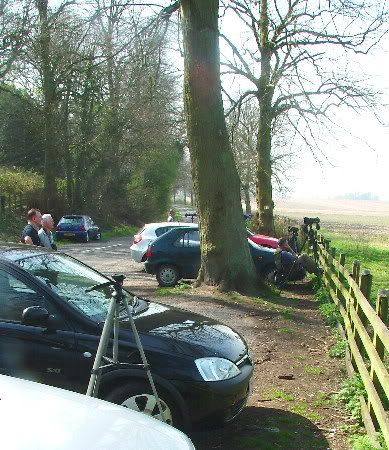
Plenty came to see it. This pull-in is a well-known local raptor watchpoint, formerly famous for Honey Buzzard. Not sure they are seen so often these days though, possibly discouraged by the recent explosion in Common Buzzard numbers which have already made Heron so nervous they've abandoned a nearby colony.


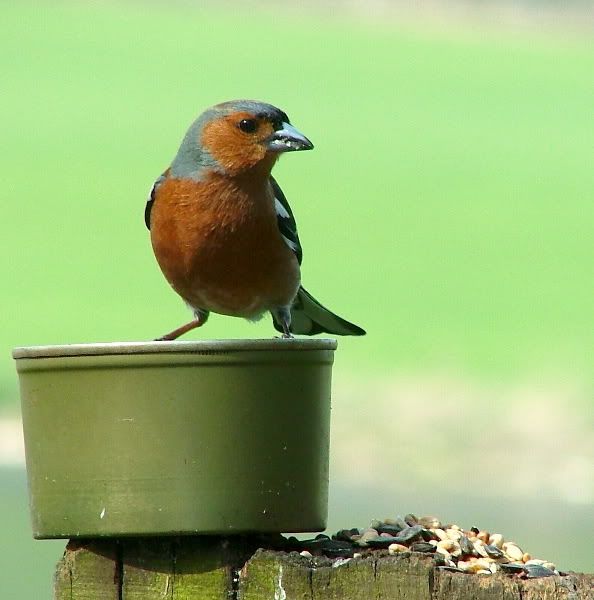
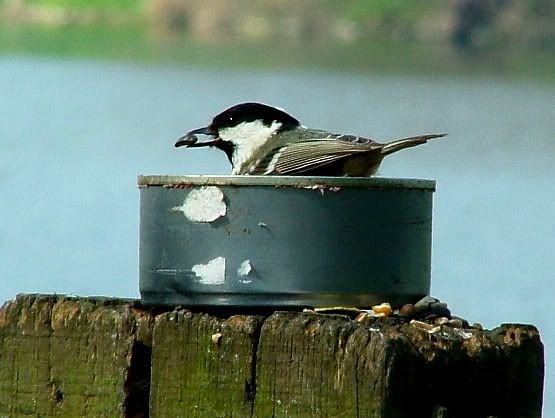
A few thumbnails of the day's other birds...


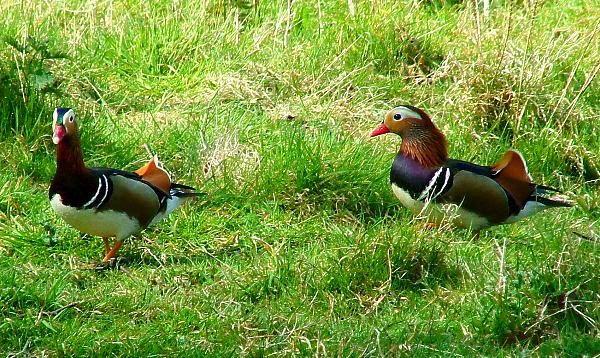
Small numbers of Mandarin hang around the feeding station, probably a nascient 'wild' population ready to grow rather than escape


And finally...

Video - Red-throated Diver

Tuesday, 28 March 2006

Surprises

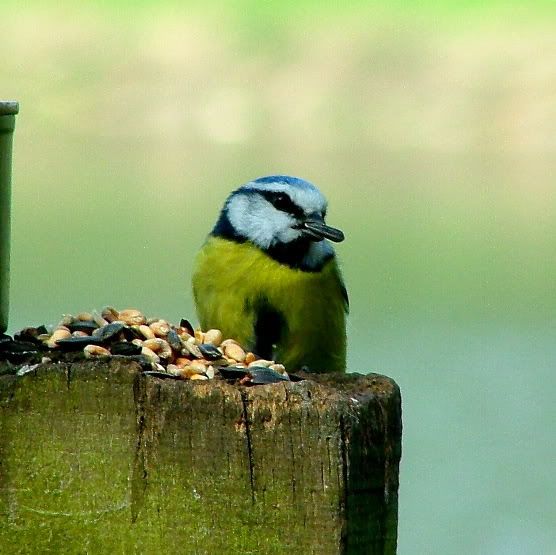
During a birding trip to Clumber Park in Nottinghamshire on an unsuccessful hunt for the park's famed Hawfinches, a couple of surprises presented themselves around a nearby layby used by birders to spot the Honey Buzzards.

We've seen several of these bottle-green-black pheasants along that stretch of road, birds presumably released during the shooting season.

Then along the fence a pair of shy wild Mandarin Ducks turned up, perched along the top feeding from the seed pots.

Pretty, long time and very welcome Chinese interlopers to our countryside, all seen from our mobile Volkswagen birdhide.