Showing posts sorted by relevance for query norfolk. Sort by date Show all posts

Wednesday, 29 August 2007

Normal for Norfolk


Barn Owl at Holkham NNR

Short of a warmly unseasonable September (figures crossed for it), August ban holiday marks the last chance for a summer camping break, and with a decent weather forecast the girlfriend and I headed for Norfolk. For the most part it was a beach holiday, to enjoy the sun, sea and sand, but you can't escape the birds of Norfolk, should you lose your mind and want to.

In the pinewoods behind the dunes at Holkham there had been reports of migrants right out of the top drawer - Wryneck, Red-backed Shrike, and one of the many Greenish Warblers turning up in Norfolk this August. Alas, carrying a beach tent and windbreak (essential items for a day on the Holkham sands) and other beach-going paraphernalia made birding a wee bit difficult, and day reports on Birdguides suggest all the aforementioned star birds had left anyway. The best I could find was a Kestrel hunting toads on the dunes, and a family of Willow Warbler. For all the world I willed one of them to have the pale wing-bar of a Greenish Warbler, but no.
What made up for any disappointment in the pines was the Barn Owl hunting over the open pasture and across the marsh. Splendidly close views of a bird it is forever special to see. Other birds along the walk back to the car park included Coal Tit, Little Egret and Curlew. Nothing to quite compare with the Spoonbill in April though. As we drove out we had another sighting of the Barn Owl as it nonchalantly whisped across the car park.

On the Monday the north winds blew, too cool for the beach, so we gambled on which of the North Norfolk birding sites to head for. We chose first NWT Cley Marshes. and there was plenty around; large numbers of Black-tailed Godwit, Ruff and Avocet, in the early afternoon a flock of 50 Golden Plover came in, many in still summer costume. Marsh Harrier is a speciality there, and I counted at least three males and three females, yet no juveniles. There wasn't much else to pick out though, and a Common Sandpiper was the only single wader of any note.

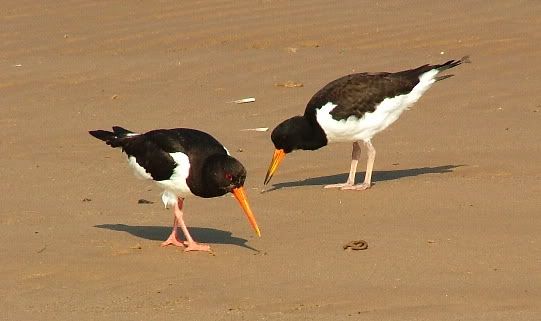
In the evening we had time for a quick stop at Titchwell Marsh RSPB, also a good place to get close views of waders. It was much the same as at Cley, plus a few Spotted Redshank, one Knot, a few Grey Plover, and my first Greenshank of the year (#176) was in the marshland just west of the reserve. It is always worth walking out on the beach at Titchwell, and although it was too hazy offshore to scour for skuas and shearwaters, many Sanderling, Turnstone, Dunlin and Oystercatcher pottered around on the surf line. I have always kept a soft spot in my heart for Sanderling - in their white winter plumage, they look somehow dainty and pure, perhaps spirit-like wardens of the tide.
Finally in to roost came six Little Egret. I'm still a kid really and even I'm old enough to remember how special that once would have been prior to their colonisation of these isles. Heck, it's still special!

Pictures from the weekend:
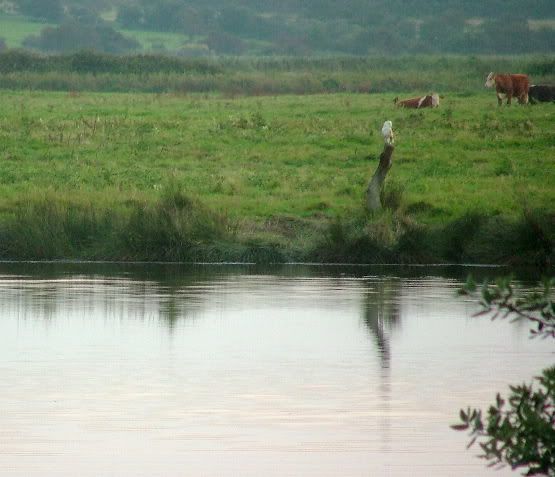
That Barn Owl again.

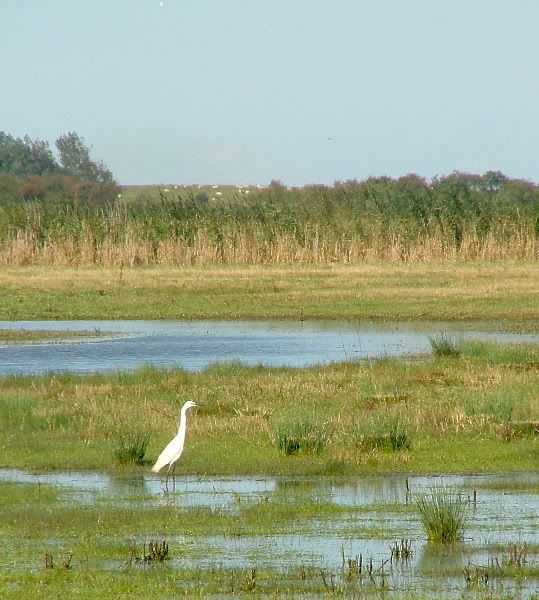
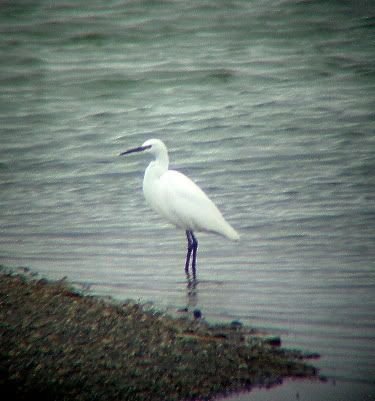
Little Egret at Holkham.

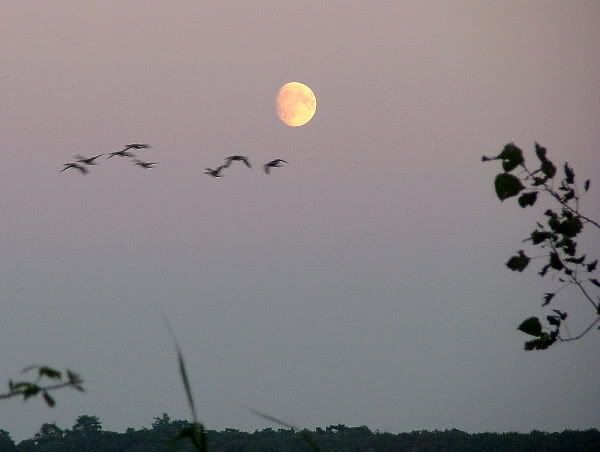
Greylag Geese at Holkham, many groups of 4-10 birds passed over heading east, presumably for a roost.
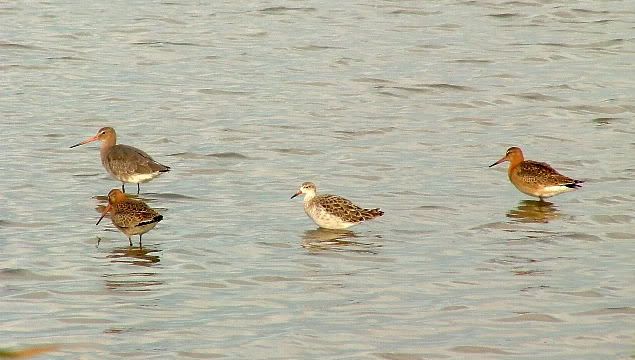
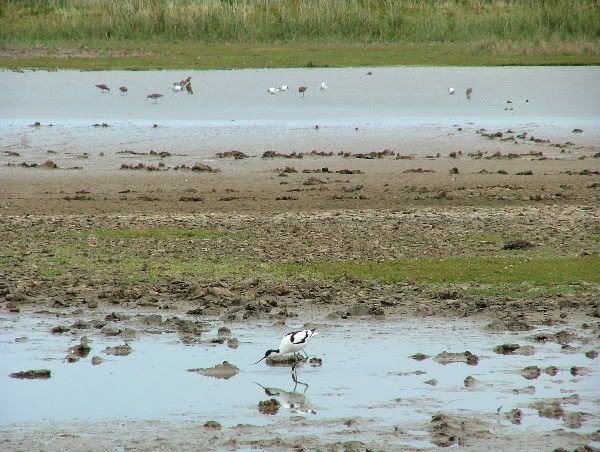
3 Black-tailed Godwit and a Ruff, at Titchwell.
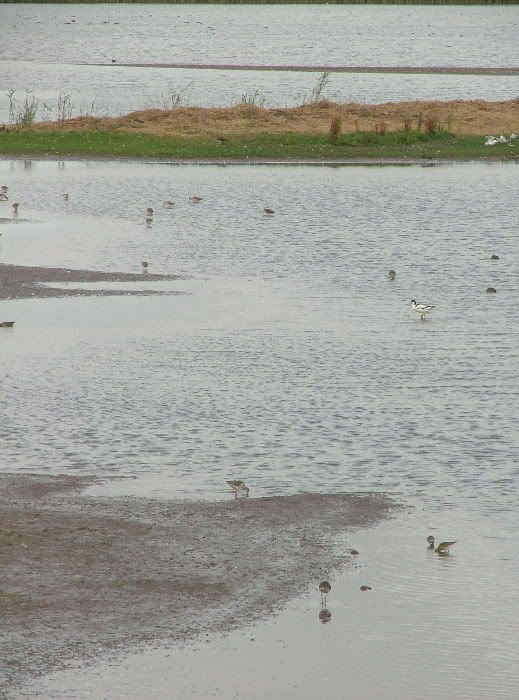
The Titchwell scene.

And a couple of digi-scoped videos by the girlfriend:

Video 1 - Ruff at Titchwell
Video 2 - Little Egret Roost at Titchwell
Video 3 - More of the Holkham Barn Owl

Finally on the drive back home through the Norfolk farmland a Barn Owl was illuminated in our headlights. Fortunately veered right into the field beside the road and then kept pace with us for a 50 yards or so. Impressive really, because we were zooming along at a steady 40pmh at the time. Pretty swift stuff for a delicate owl.

Norfolk, it never disappoints.


Saturday, 14 April 2007

Norfolk Trip Part Five: Cley Marshes

It was time to expand a little, do something away from the bird reserves. In the flat were several leaflets for various boat trips around Norfolk and two of them stood out, a 'seal trip' up to Blakeney Point and an excursion onto the Broads out from Wroxham. Quickly we called around and discovered there would be room on the last boats of the day if only we could manage the 45 minute drive between the two quays without delay and direct through those small maze-like Norfolk farm roads. Somehow we accomplished it.

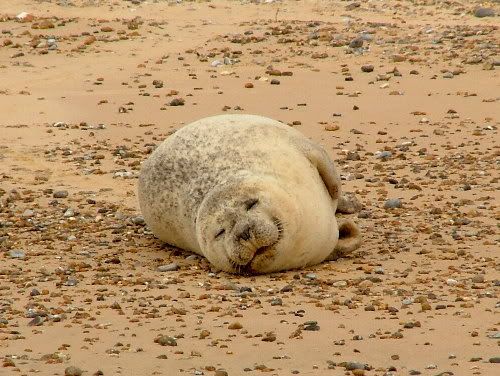
The seal, mostly of the Grey variety were pretty docile.

Among them were the occasional round-head Common Seal, only a few though.
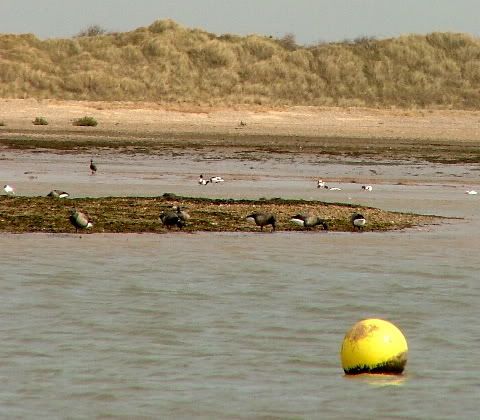
So far as the birds went it was much the same as before, Oystercatcher, Redshank, Black-tailed Godwit for the waders, Brent Geese were scattered here and there. Bird of the day were the first Sandwich Terns, among the hundreds of Black-headed Gull there can't have been more than half a dozen that we could see.

And then the hurried journey down to the Broads tour. Birds were quite few here. I carried slim hopes of seeing the Norfolk Cranes flying over, it wasn't to be though.

What we got were nice views of familiar birds, Heron, Coot, Great Crested Grebe, etc. Our captain told us there were far fewer than a month before. Apparently it was chock-a-block with spectacular numbers of wintering Coot.


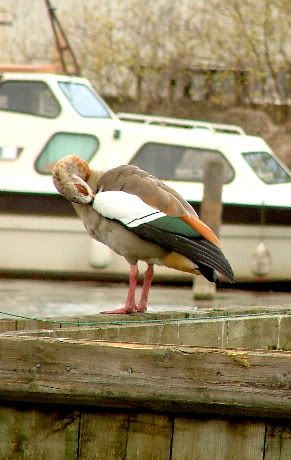
The most notable species was the Egyptian Goose. Plenty of them around, much to the consternation of the (very rich) inhabitants on the Broads. The geese wreck the thatched roofs found on their properties, pulling them to pieces and sometimes nesting ontop unless carefully protected against.


Finally that day on the journey back north along the coast we dotted the villages, stopping for a walk at Winterton Dunes.

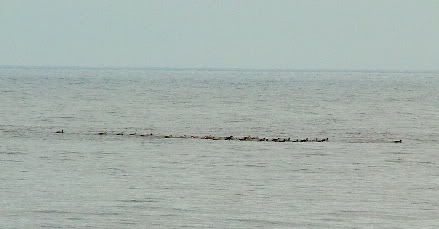
Just off shore a raft of 50 or so Common Scoter bobbed in and out of view, frequently disappearing as they dived en masse.

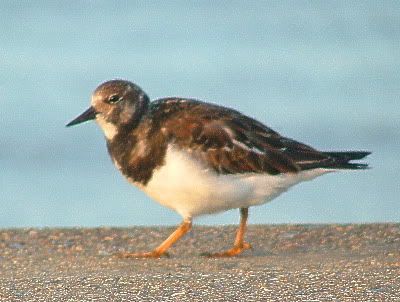
One more surprise awaited us very late in the day. Passing through the tiny coastal hamlet of Walcott we saw birds running and pecking along the top of the cement sea defense beside the road. Pulling over we realised they were Turnstone, still largely in winter costume and barely more than a metre away from the car window.

Video - Turnstone on the sea wall

By now Norfolk seemed to be unfailingly wonderful for birds, even on the quiet days.

Wednesday, 17 October 2007

Pinkies

Just booked a weekend away in Norfolk for mid-November, staying at a place right on the doorstep of the RSPB's reserve at Snettisham. The B&B was a bit steep, but you gotta do the wader roost sooner or later.

Quiet times otherwise, the ABB events are going nicely at Carsington. The Little Owls failed to show at the weekend, however a Kestrel blessed us with about two hours spent sat on the camera pole in front of the wildlife centre. That meant I could prattle on about how the Kestrel's ability to see ultraviolet light allows them to track the urine scented trails of the small rodents they prey on (more on that here), which seemed to particularly impress the visitors I spoke to.

Bird of the day, or birds shall we say, was the 150+ Pink-feet that flew over around one in the afternoon, heading SE. This is apparently a little late, as the bird club report for September explains, "southward records are usually 2hrs after first light, which is the flight time from the Lancashire feeding grounds of Marshside and Martin Mere. Their northward journey is usually at least 4hrs after first light Jan-Mar, reflecting the hundred miles from Norfolk".

Later still, on the way home the girlfriend and I stopped off for a quick scan of Ogston Reservoir. It was there at 17:35 came a lone grey/brown goose, not a Greylag, another Pinky! Must have been a straggler. Isolated and nervous, it made several low passes over the water though never with the confidence to land, and bizarrely made three attempts to merge with 200 airborne Lapwing, presumably such was the bird's instinct to flock.
Eventually, I lost sight of it as the gloom of the autumn evening set in.

Can hardly wait now for Norfolk, it'll be the same geese, but by the tens of thousands.

ETA: Incidentally, the Gannet mentioned in my last post, the one I missed by half an hour or so at Carsington. I read that on Monday this week a juvenile Gannet (surely the same bird this far inland), was discovered and taken into care in Mansfield, less than a couple of miles from my home. What a tease that bird has been for me!
Good to know it'll be looked after now.

Thursday, 12 April 2007

Norfolk Trip Part Two: Snettisham

So onwards from Rutland, we spent the second day dotting up the north Norfolk coast to the RSPB reserves at Snettisham and Titchwell. Always heard big things about both places, had not yet been though. The truth? They're up to their billing.


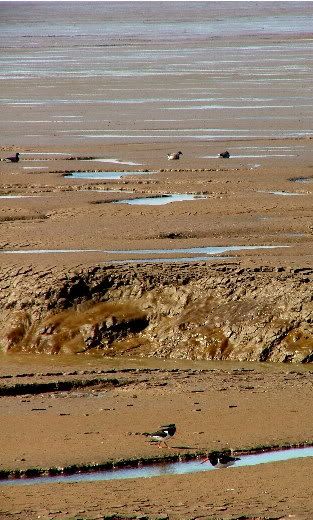
Although the tide was a long way out the mudflats at Snettisham still proved fruitful, sitting on the sea wall we could see among others, crowds of Curlew, Grey and Golden Plover, Black-tailed Godwit, Avocet and Brent Geese stretching into the haze beyond the horizon.


The walk from the car park is pretty long compared to some reserves and that is no bad thing. Along the way we saw Skylark, Linnet, various Geese flying overhead. All of the hides look out onto a lagoon where Black-headed Gull and Avocet were preparing to breed. Geese were plentiful, Greylag, Brent, Canada, a couple of late Pink-feet, Barnacle and two Snow Geese with them. Lots of duck too though nothing special, the regular, Wigeon, Teal, Shoveler, Gadwall, etc.
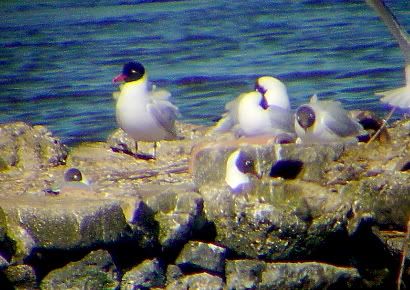
With all those screeching Black-headed Gull around it seemed a good idea to check for Mediterranean Gull and it was worth it. There were at least two, with one bird showing very well. Initially I was a bit confused by the black dots on the wing-tips and eventually settled for calling it s a '2nd summer' bird.

That's him on the left there.
You can see how it stands out against the slightly smaller and ironically browner-headed Black-headed Gull there. It was #189 for my life list.

Bird of the day, Shore Lark, two pairs foraging along the strand line and up to the sea wall, just along from where we sat. That's #190 for me. Marvellous views too, all the detail on the facial mask and true yellow too.

Back toward the car park and a couple more species, Red-legged Partridge showing particularly well. And across the path scuttled a Sand Lizard, it was brilliantly green, like something out of a pet shop.

The only drawback we found were the lack of facilities at Snettisham, no visitor centre, no reception hide, no toilets, nothing really, except the car park and hides. I was quite surprised to find this at such a famous reserve. The only other word of warning is that during our time there Snettisham appeared popular with group visitors, the sort that stick together and occupy an entire hide instead of splitting up to allow space for others, so there wasn't much room to move in some of the hides.
Still, a top visit, and we must return one day for that high tide winter spectacular. It was pretty gratifying to loop the reserve closely behind a man and his young son. The kid looked genuinely enthused.

Then it was onwards for an evening at Titchwell, just ten miles along the A149, leaving behind the famed Black-eared Kite that hangs around the area. It's been a long stayer since November and throughout that time probably the 'best' bird in Britain, a real 'mega'. They apparently belong in China and this juvenile is still the only individual ever to be seen in Western Europe. Damned elusive too though, even for those on all the best rarities paging services.
Not imagining we would find it, I couldn't count myself disappointed when we didn't.

Wednesday, 11 April 2007

Norfolk Trip Part One: Via Rutland

Okay, a lot of updating to do here after our brief Easter sojourn in Norfolk, for the 4 days we managed spot on 100 species, a target I hadn't dared to speak of before totting up the list.

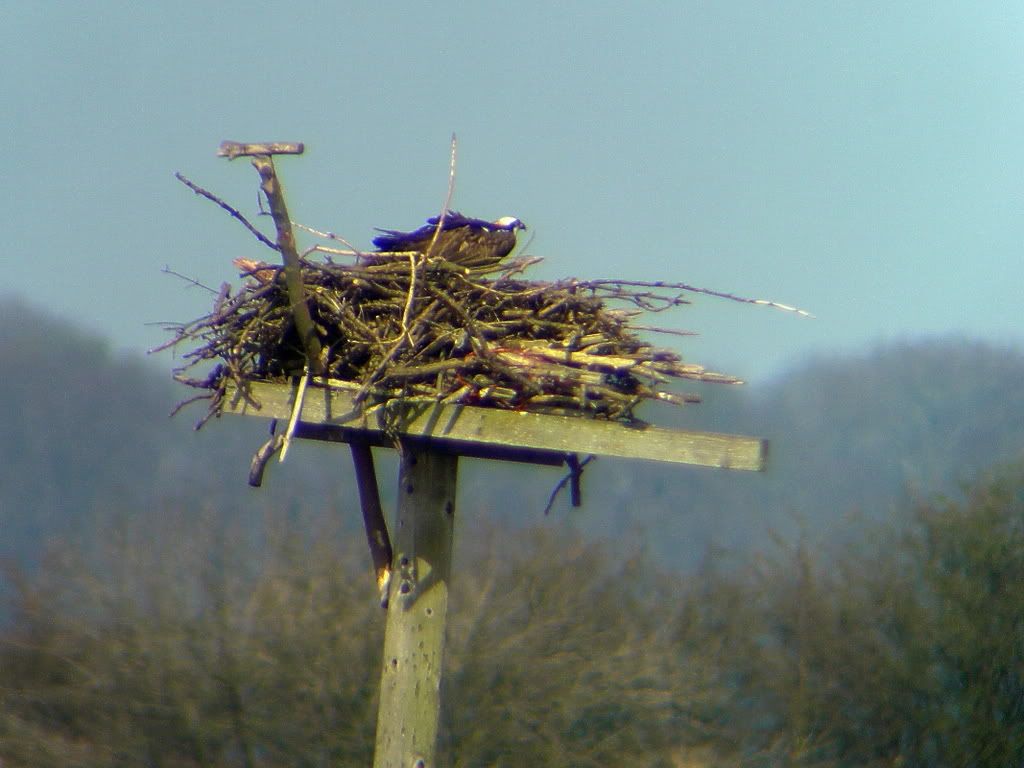
First stop on the way south was Rutland. The local news had mentioned the Osprey were returning so we hit the south side of the reservoir, the Lyndon Reserve where sightings are apparently most likely, it had just opened to the summer public that morning.
As we arrived there was quite the hubbub among the volunteers, they were very excited. Turned out a sixth bird had just returned, a female, and immediately rested into one of the next structures. We headed for the overlooking hides.
That's the female, she was noticeably bigger than the male.


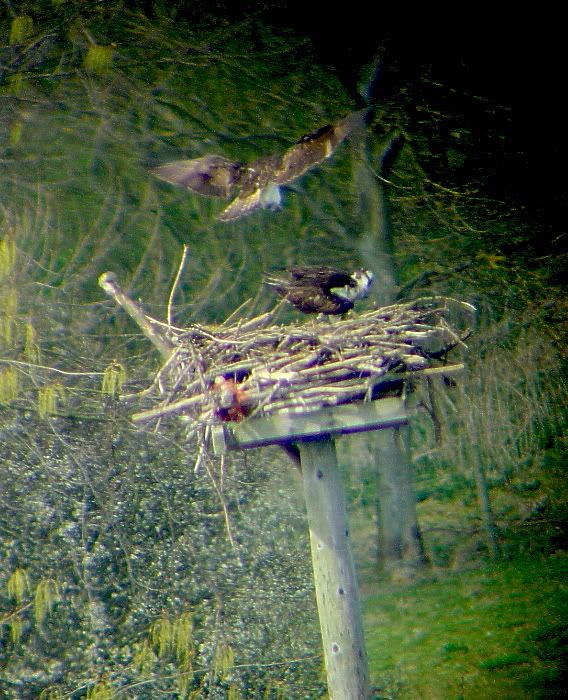
And he was ready to mate, little matter that she'd only just completed her migration all the way from Africa. Three times he mounted and three times she very certainly shrugged him off. So instead the male headed off to collect sticks and grass for the nest.


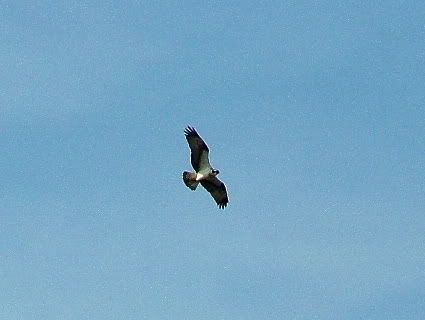
That's him during his display flight (you can read more about this pair here).

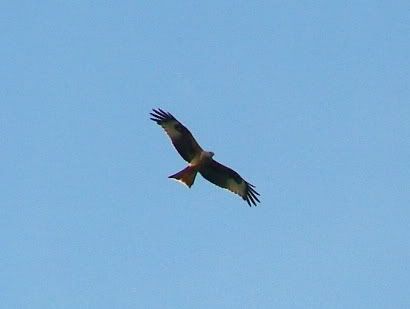
During which he was joined by a couple of Red Kite. Very special sights indeed.

And on the ground in front, two Muntjac nibbled on the reed edges.

In all honesty there wasn't very much else to be seen around the Lyndon Reserve so we headed for the Egleton side where habitat is a bit more varied, with wader scrapes etc. Even there it was pretty quiet, plenty of nice birds, Goldeneye, Pintail, Egyptian Goose, Chiffchaff, my first House Martin of the year, and the Tree Sparrow at the feeding station near the visitor centre.

It was a marvellous first leg to the trip.

Thursday, 15 November 2007

Birds On a Bigger Scale


It's Thursday and I'm still tired from the weekend, but what a weekend!
For our autumn getaway I promised my girlfriend we'd go find a true birding spectacle; the great goose and wader flocks of the Wash. The destination was easy enough to pick, it had to be Snettisham RSPB reserve.

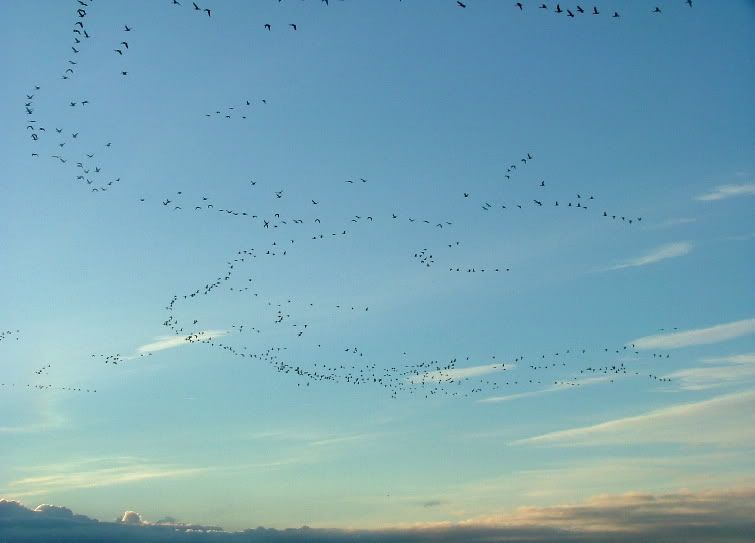
From Saturday through Monday we visited the reserve each morning (5:30am starts - ouch!) and twice in the evening, I suppose we just couldn't get enough. We were lucky on several counts, firstly because the Pink-footed Geese came down to their British wintering grounds earlier than is usual this year so the flocks flying from and to their roost were at their probable maximum, around 40,000 birds, perhaps more - you begin to guess with so many birds.
Morning seemed the best time to watch them going over because they leave in good light, whereas it was upto an hour after sunset when they flew into roost on the mudflats. The whole thing lasted over 30 minutes, with numerous skeins leaving almost all the time for the fields inland, mostly to nibble on left over roots of post-harvest sugar beet and potato crops, as apparently farmers are encouraged to leave a little something for them. That's why they gather in Norfolk in numbers you just wouldn't have seen a few mere decades ago.
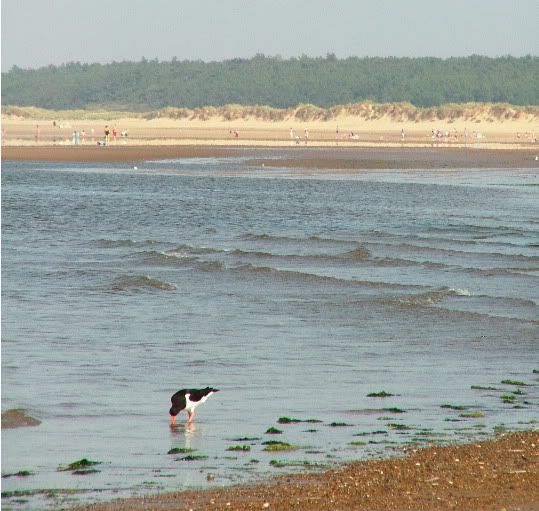
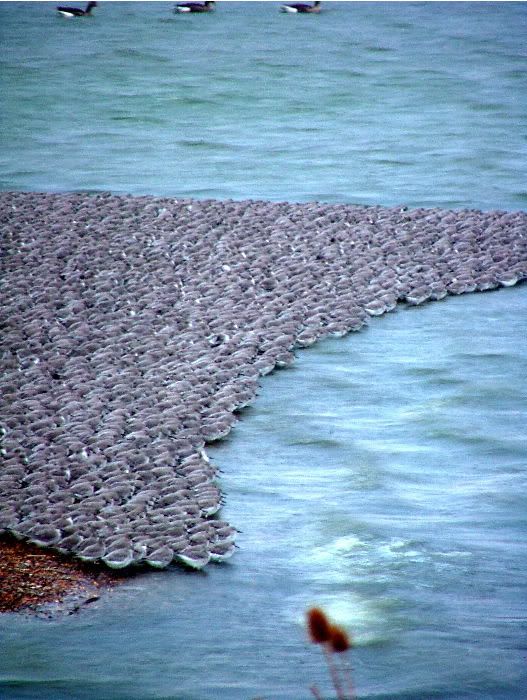
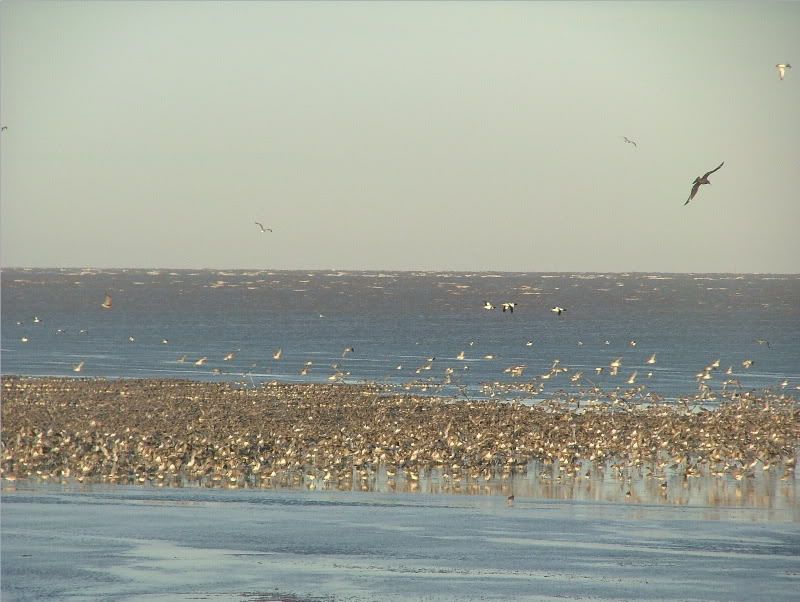
The other bird that are around Snettisham in big numbers are of course the Knot, with a roost of around 10,000 birds covering the islands and banks of the lagoon behind in the dunes. The mass of greyness almost looks like a large patch of gravel at a distance. They are only in during high-tide so that meant for our visit we missed them gathering but were able to watch them depart at daybreak. Sort of a double spectacle with the geese going over at the same time.
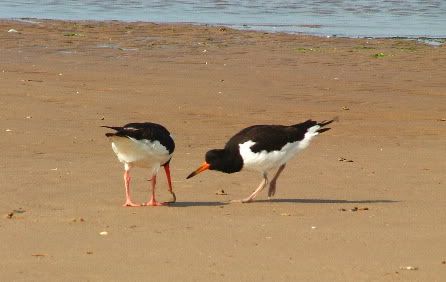
In among the roost were occasional interlopers, a few Bar-tailed Godwit, Dunlin and Redshank on the edges of the huddle. Once the Knot went, that was it, whoosh and everything snaked over out onto the mudflats, leaving us with a few Dabchicks and Goldeneye left on the water, as well as a couple of hundred lazy Oystercatchers. It was exciting watching, waiting, for that moment of grand départ.

Other birds of note at Snettisham were a nice Barn Owl hunting in the pre-dawn gloom (ask for your money back if you go to Norfolk and don't see one), a couple of Merlin winged through on the wind, similarly a Great Skua was around, a few flushed Red-legged Patridge, and of the passerines a few Fieldfare battled the gusts, as well as Skylark, Meadow Pipit, Linnet and a Stonechat around the car park. On the mudflats, a good typical mixture of Golden Plover flocks, solitary Grey Plovers, lots of Dunlin, Curlew, Turnstone and Sanderling, a handful of Avocet. As well as the Pinkies wildfowl-wise there were also plenty of Greylag, Brent and Canada Geese, Shelduck, surprisingly large numbers of Mallard, and the one Scaup went through too.

On our final morning at the reserve, something rather special occurred, we found Little Auk bobbing in the high tide just off the beach, part of the Great Little Auk Wreck of '07. It began with 4 of them, but that was just the beginning of the story. More about that in another entry though, and the other sites we dotted along the coast last weekend, as well as more videos.

A lot of Knot!

Gravel?
Pinkies in the evening...


...and the morning.

Knot and other waders gathering on the receding tide (note Great Skua top left).

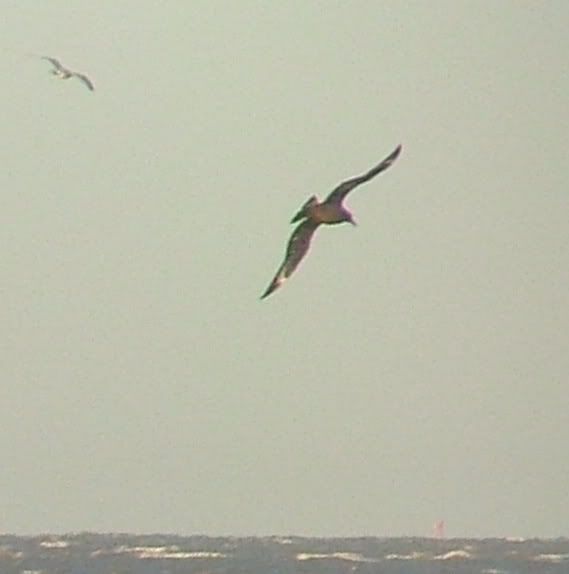
Very distinct white wing flashes, has to be a Bonxie.

Several Little Egret around too.

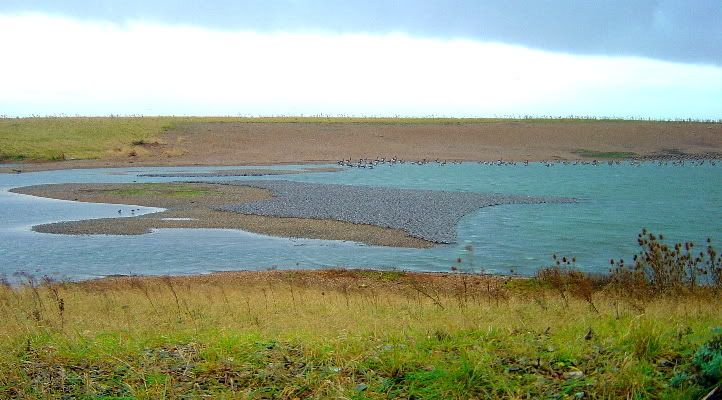
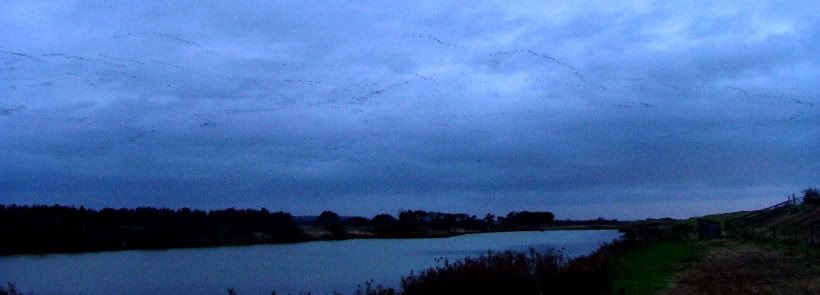
Panorama of the beach.

Tuesday, 5 August 2008

Holiday Birding


Super busy at the moment so this post must fly by almost as quickly as my holidays, both the family shindig up in Bridlington and the week's camping in North Norfolk.

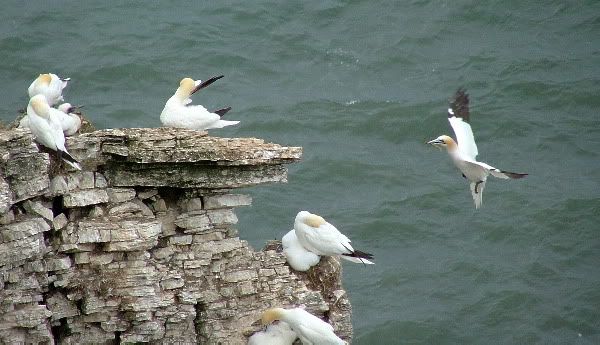
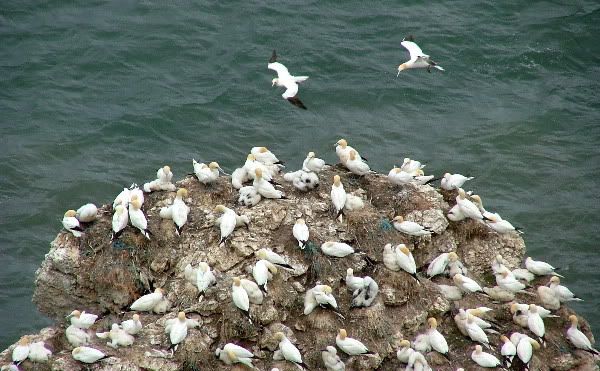
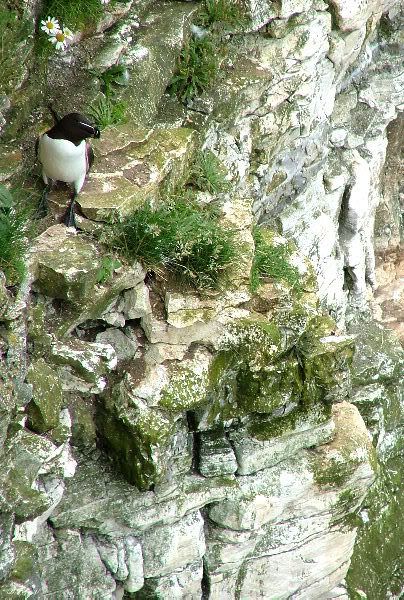
Birdwatcher or not, a holiday to the East Yorkshire coast really does demand you devote one day to the RSPB reserve at Bempton Cliffs. Over 200,000 birds nest on cliffs over 100m high, and the whole cacophany that erupts from that sheer mass of life makes it an inspirational place, inviting philosophy and peace of mind.
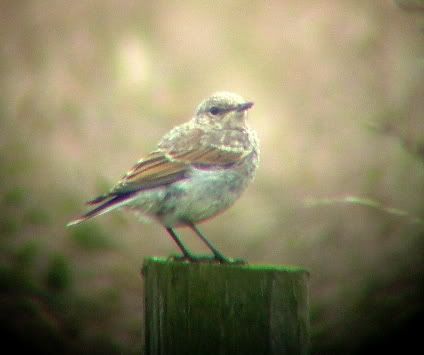
Bloody good birds around too. Gannets, Guillemots, Kittiwakes, Puffins and Razorbills make up the major numbers, with scatterings of the other commoner gulls. In the meadows behind the cliffs notables during our visit in mid-July included a juvenile Wheatear and singing Corn Bunting - that unmistakable jangling keys call.

Back in Bridlington, more Kittiwakes nesting in the streets and more than 60 Turnstones in the harbour added interest to late evening strolls. Here's hoping they will adjust to the construction of the new multi-million pound harbour/marina recently announced by the council. Fingers crossed it doesn't change the character of the town too much either.

Scenes of the day...

The Wheatear (named for its pale rump visible in flight - wheatear is apparently an old country corruption of 'white-arse')


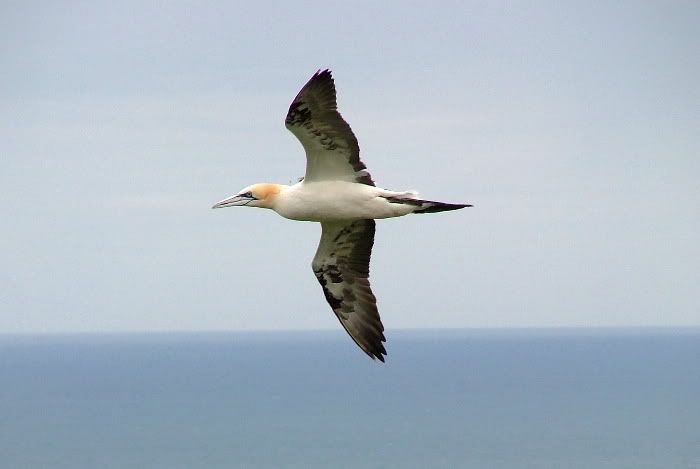
Finally, a video of a show-off Gannet.

My Norfolk post next time folks.

Thursday, 10 August 2006

Holkham NNR


I find late summer is lovely time for birding, it's the families. Just the other day I watched a gang of half a dozen Redstart darting after each other as much as food, a nice find for the East Midlands.

A couple of weeks ago we camped for a weekend down on the North Norfolk coast, very nearby to Holkham National Nature Reserve. The site comprises a sandy shore, extensive dunes, saltmarshes, pinewoods, and some reclaimed marshland a little further inland. I was beach-holidaying with my girlfriend so didn't devote as much time to the reserve as I'd have wished but still found stunning and close views of Marsh Harrier, enough to excite any birder. Below them species like Sedge Warbler could be heard. Underfoot the dunes were full of toads, and out on the beach Little Terns skimmed the surfed, and a pair of Oystercatchers babied their one remaining chick.
We plan to make future visits, give the reserve the attention it deserves. Also not a long drive west along the coast are both Titchwell Marsh and Snettisham RSPB reserves. This part of England really is very rich for birders.


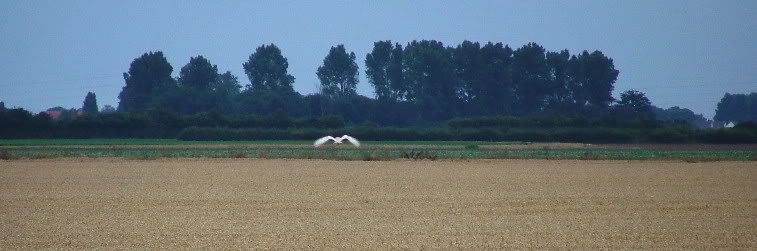
Driving back home through the quiet farm roads brought us across this Barn Owl patrolling over one of the vast Norfolk wheatfields. We've found travelling along such lanes to be a marvellous birding tactic. It may not be very eco-friendly but there seems few other ways to cover so much rural habitat in a mobile bird hide.

Sunday, 15 April 2007

Norfolk Trip Part Six: Holkham and Home


Tuesday had come and the long journey home beckoned. There was just enough time to cram in Holkham NNR, where I could get in a little birding and she could enjoy the beach. From the one hide I visited there was a wide open view across the marshland, out there were plenty more Greylag, a two pairs of Pintails, more Black-tailed Godwit, Lapwing etc. In the hide a couple of the locals were excited by a Ruddy Duck, honestly they could have ours from Notts if they want them. A few Avocet poked around the marsh too, and in the distance a handful of Little Egret flew by.
Without doubt the best bird might almost have been dismissed as yet another distant Egret flying across, made sense to check though when I observed the outstretched neck and broad bill. It was a Spoonbill!
After alerting the rest of the hide one of the local birders told me an individual Spoonbill had been seen on and off for a while now, and generally hung around the Heronry out to the west where it made rudimentary efforts at building a nest. Also several pairs of Egret up there I was told.
Out on the beach meanwhile the passage of Swallows grew throughout the day.


Back into the car and half-way home we stopped at Milton Country Park for the last half hour of daylight. It was here we saw three woodland species, Blackcap, Greater Spotted and Green Woodpecker that brought the species count for the trip up to an even 100.
Unspoken target achieved, just.

So that was our big Norfolk trip, the county really is as good for birds as all the guides say.

Tuesday, 12 August 2008

Sensational Sandpipers!


So many birds, so little time to post anything about them.

A very quick round-up of a successful trip to North Norfolk should really include the Sandpipers at Cley - White-rumped and Pectoral (presumably brought across from North America by the weather system that made for such a warm and windy week at the campsite) , plus a rusty coloured summer Curlew Sandpiper. The girlfriend spoke, in a hide packed full of genuine birders, of how all the small waders looked a like. "A variation of a theme", one chap replied. She was a little more impressed when I suggested at least one of those tiny birds hatched not long ago in the Arctic barrens of Northern Canada.

Spoonbills
have been a regular feature at Cley and five were present for our visit, at least one of them a definite juvenile. Well done to any birdwatchers who saw those birds doing anything other than sleep!

Greenshank
, Spotted Redshank, Green Sandpiper, Little Gull, Knot and a single Brent Goose were the best of the rest at Cley.

Over at Titchwell later in the week Bearded Tits were the clear winner. Superb views of a family group and then a lone male, just a little patience along the path and they popped up hardly five metres away. Don't be too quick to get to the hides, is my advice there.
As per usual it was a great site for close views of Avocet and Marsh Harrier, and unexpectedly out on the beach a raft of eclipse Eiders drifted just offshore.

Elsewhere, family groups of Little Terns fishing in the channels around Wells harbour will remain memorable, a Hobby at Dersingham Bog, Med Gulls made a visit to Snettisham worthwhile even if the tide was well out, and the girlfriend enjoy stalking the Oystercatchers in the PYO strawberry fields.

Invertebrate life was pretty tops too, but I'll post about that another time. For now, what are you waiting for? Pack up, get Norfolk bound, it's brilliant!

Little Gull @ Titchwell

The Eider


The Spoonbills, surprisingly active!