Holidaying at Bridlington makes
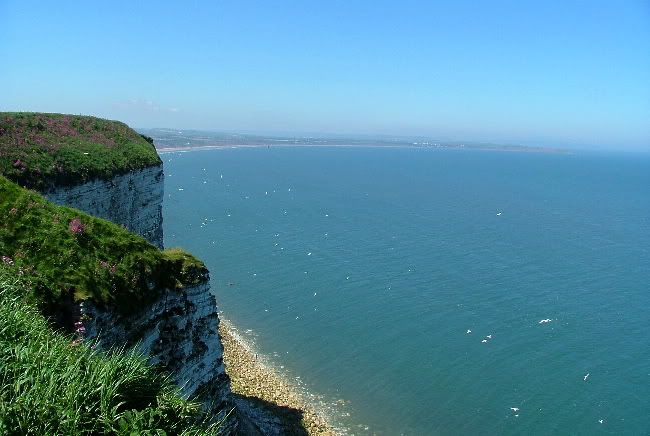
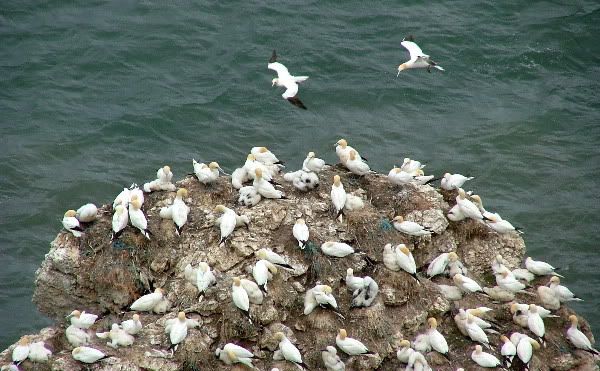
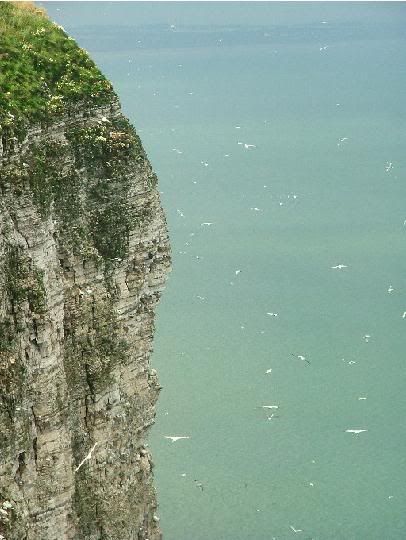
Bempton Cliffs RSPB a must do for any birder, it is after all home to almost a quarter of a million seabirds, the largest colony of any kind in England. They are mostly Kittiwake, Guillemot, Razorbill, Puffin and Gannet, the sheer number is a wildlife spectacle.
Here come the thumbnails...
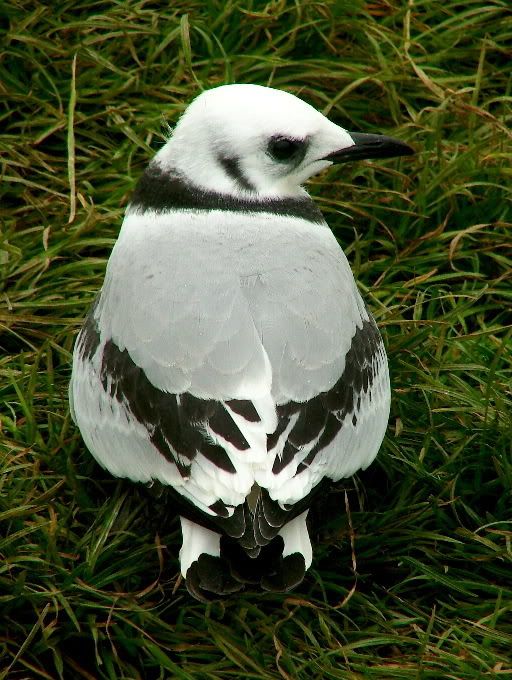
The most numerous species is far and way the Kittiwake, and with that
eponymous call they endlessly shriek you sure know about it. We discovered this young bird on the path above the cliff. It seemed bewildered and a little lost, soon scuttling away into some long grass. I'm sure it soon found its own way to the sea.
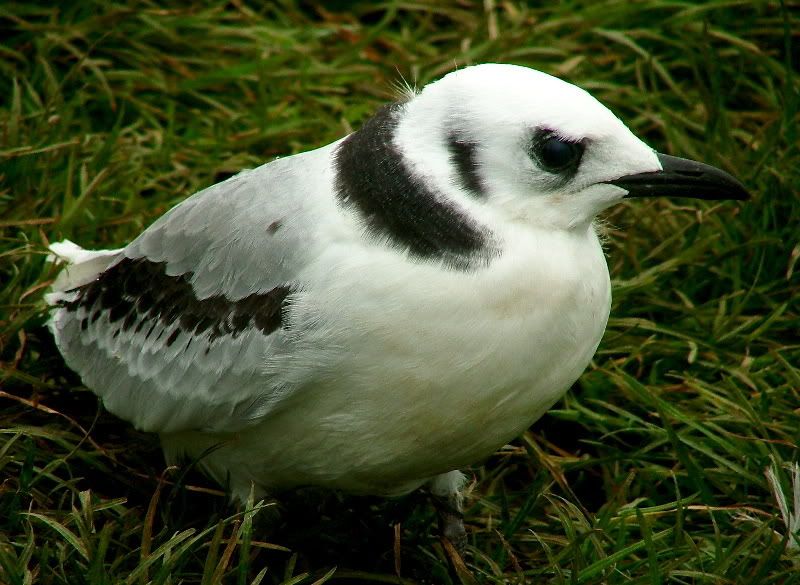
Those dark markings, the wing bar, the collar and those weary black eyes, Kittiwake juveniles can a look a sorry bird in dull weather.

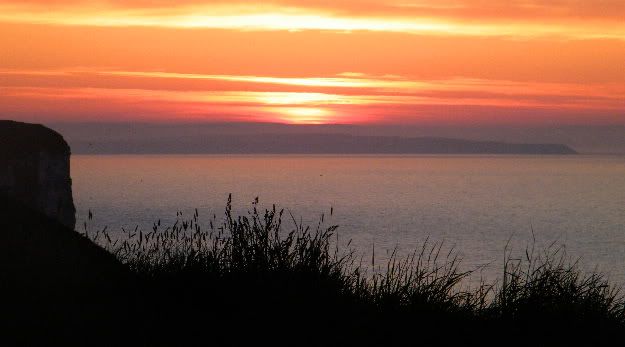
The view to the North.
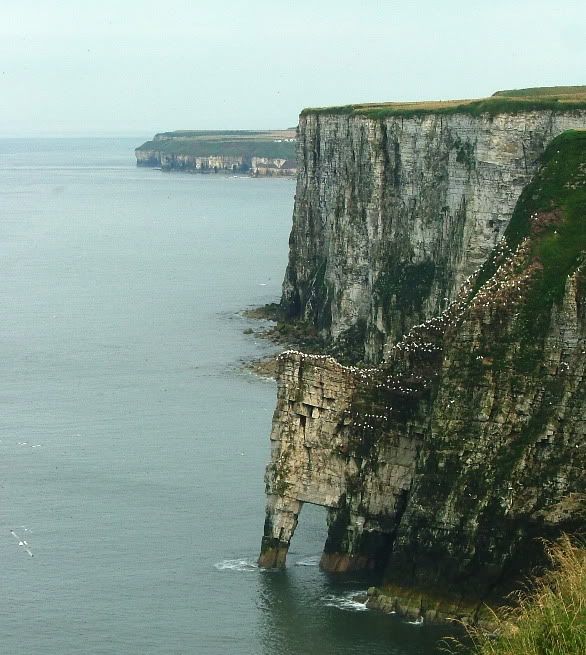
And South.
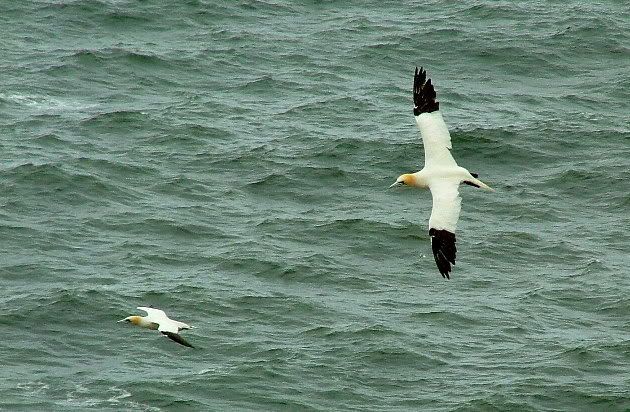
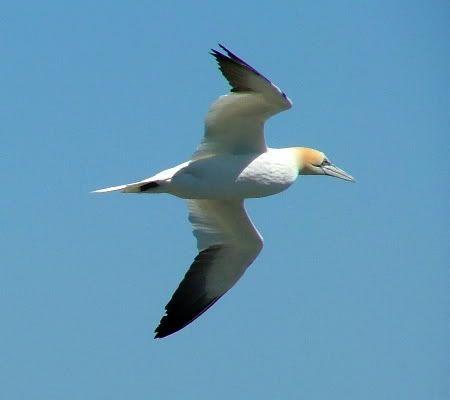
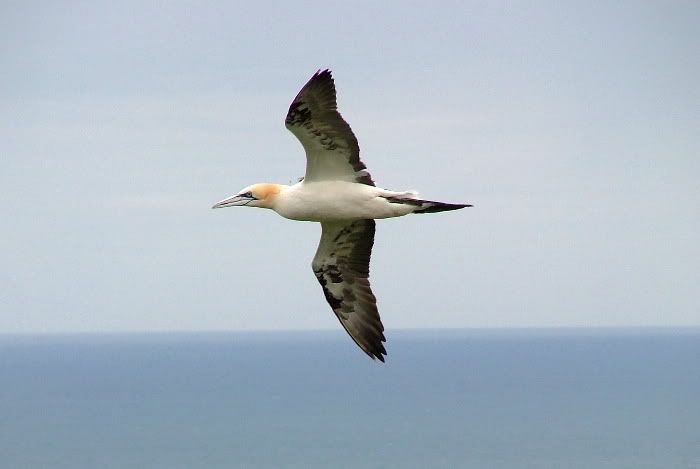
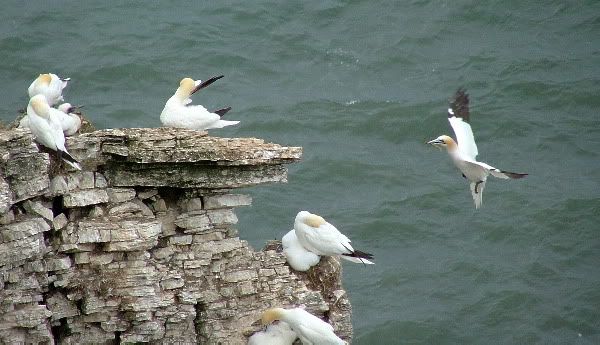
For me the most striking bird of the cliffs are easily the Gannet. Could it be their impressive size, or their airline markings? Maybe it's the strange dinosaur features of their heads, whichever way you choose to look at these birds we have nothing else in Britain quite like the 'Soland Goose'.
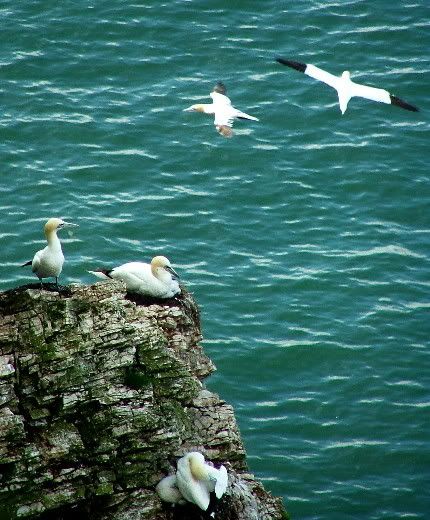

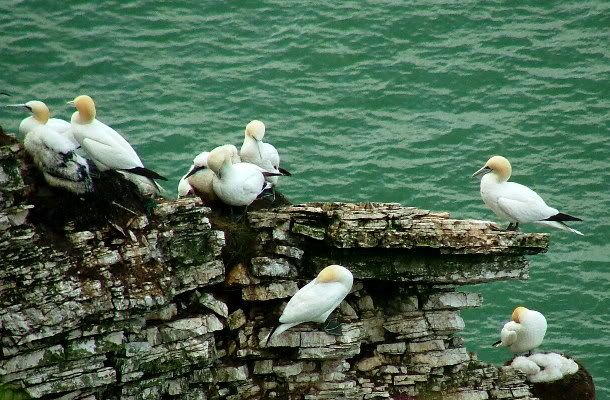
Note the fluffy youngsters on the left.
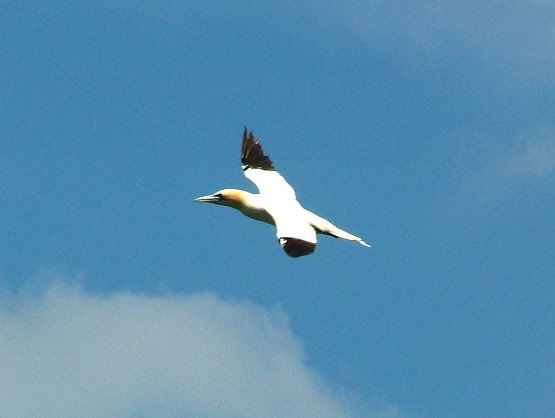
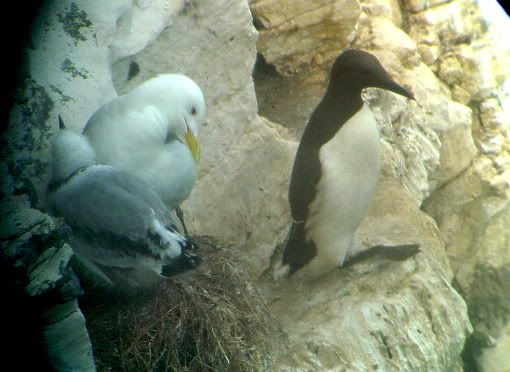
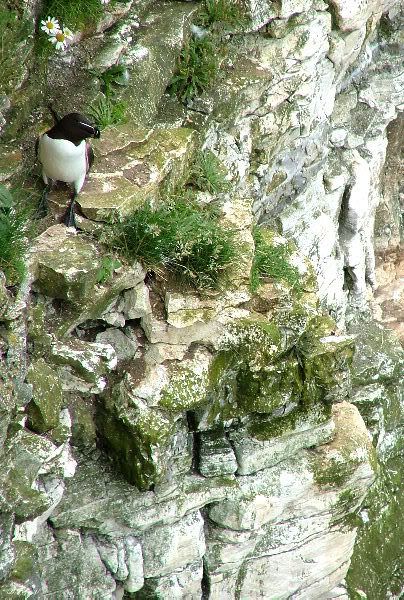
What there were much fewer of were the auks. Puffin, Guillemot and Razorbill only sparsely dotted areas of the cliffs. Hopefully that's not an indication of another bad year for them. They don't seem as able to bounce back from the lean years of the early 2000's in the way the Kittiwakes have managed. The sand eel fisheries may have closed on the east coast, providing time for these seabird's main prey item to restock, there are still problems to solve though. Quick fixes don't exist in nature conservation.
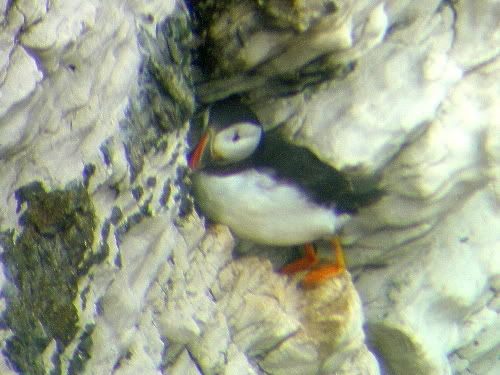
Unusually the Puffins at Bempton don't nest at the top of the cliffs in vacated rabbit burrows as they do elsewhere, instead they choose hidden crevices in the rock face. That makes viewing them trickier than might be imagined. With a keen eye and a scope, you can still get pretty good views of this most charming bird.
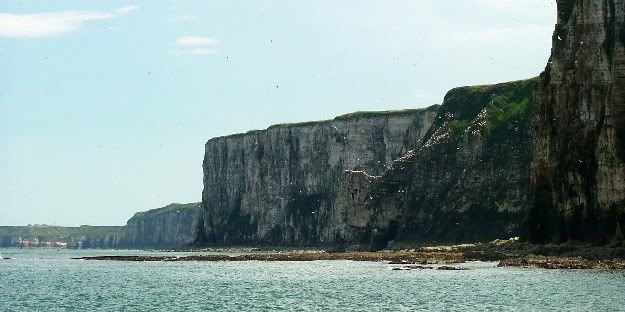
Taking to a boat, we chose the steady
Yorkshire Belle, gives another perspective on the 300+ft high cliffs. Our choice was the three hour cruise from Bridlington harbour, as far as the RSPB reserve and then onto Filey Bay. Frankly, another time we'd opt for the 2 hour boat that turns back at Bempton, there wasn't much to see thereafter and the loud engine noise was far from pleasant.
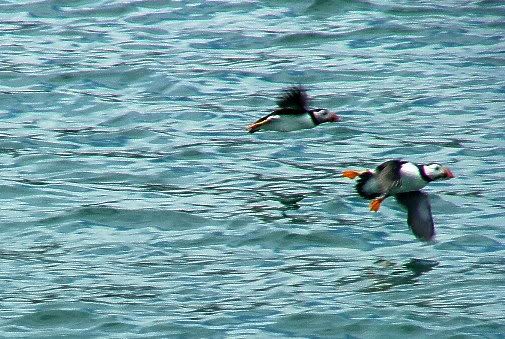
You get closer to the Puffins though.
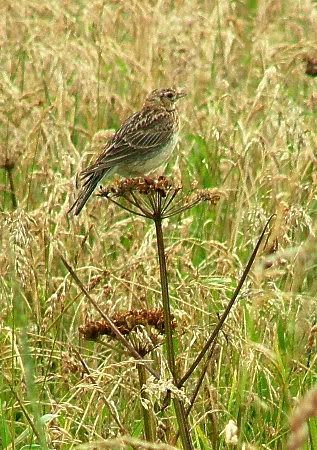
Back at the top of the cliffs the birding in the fields behind can potentially bring up remarkable migrants, but not during our visit, mid-July isn't really the time for passages. Meadow Pipit, Linnet, Reed Bunting and birds like this juvenile Skylark meant there was something worth scanning for.
Truth is we didn't see a great number of species, not even enough to bother counting, the odd Shag and Sandwich Tern, and what remains only a 'probable' and very distant Arctic Skua, was the best of the rest.
The reserve is all about spectacle. Birder or not, to spend time watching individuals busily ferrying into the cliffs among the many thousands of other birds, serves as some sort of reminder about our own lives, our own place in the world, our own importance in the grand scheme of things.
You'll have to go there to understand what I'm getting at. For all the squawking, guano and that relentless wind, it's very... peaceful.
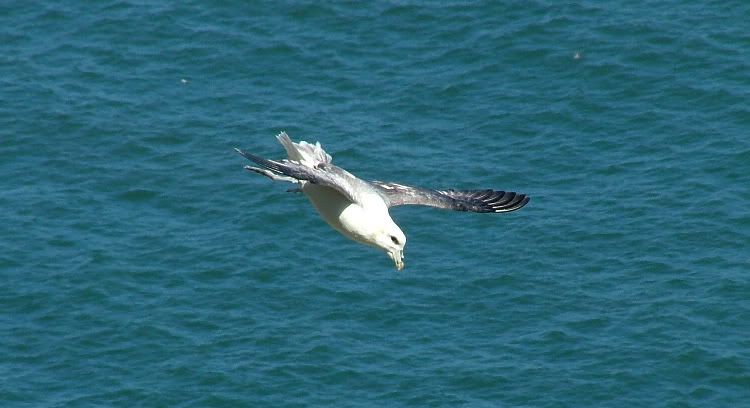
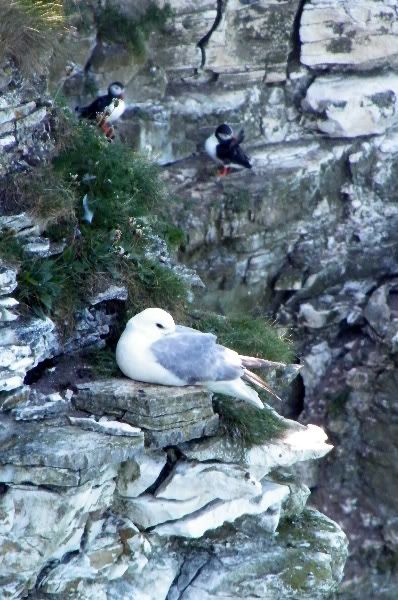 Recently holidayed up around Flamborough/Bridlington, so as a birdwatchers we were attracted as if magnetised to the RSPB reserve at Bempton Cliffs. Late May/Early June practically every Guillemot, Razorbill, Gannet and Fulmar was still on eggs. Still the bird metropolis is an exciting, elevating place to visit. The comings and goings of 200,000+ seabirds, well, you try going there and not feeling philosophical.