Showing posts with label heron. Show all posts

Thursday, 13 September 2007

Carsington, Pleasley and the Green Lagoon

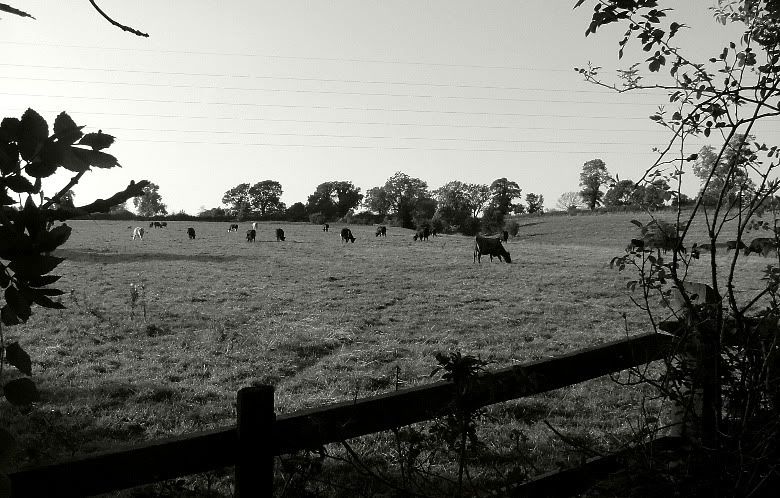
Fields beside Carsington Water

Things are settling down for me at the Carsington ABB events, a routine neatly developing. The vibe was pretty good this week, a quieter day so we could spend more time on each visitor and impress on them all things wonderful about the birds. I didn't stick around to wait for the actual figure, but it's clearly we had a fair number of people signing up not only for the RSPB newsletter, they were going for full membership too. What to say other than, SCORE!

The water level is very low at Carsington which seems at odds with the summer we've had, especially since her sister reservoir at Ogston is absolutely brim full. No complaining from us though, low levels means more exposed mud, and autumn winds permitting a plentiful area for passage waders to feed. That said, the only waders we had on Tuesday were Lapwing and one elusive Green Sandpiper.
Up on the hillside the Little Owls dutifully showed well through a scope, a cosy threesome of eclipse Red-crested Pochard kept in broad view (with at least two more males spread elsewhere), a juvie Common Tern briefly passed through, a pair of Raven showed over distant woodland and a female Shoveller was a blink and you missed it bird for the day list. We ended with 42 species from the Wildlife Centre, which is a about par.
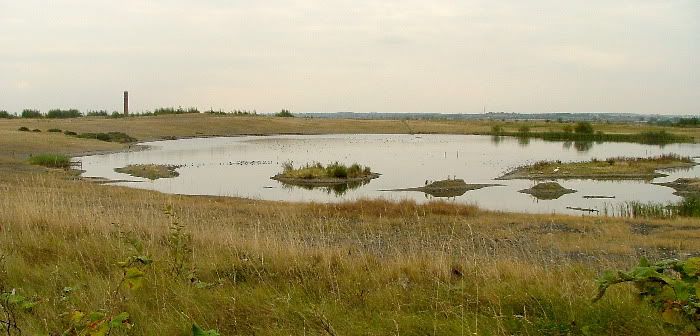

Pleasley Pit

Back at home the local rounds on my bike turned up a Yellow-legged Gull at Pleasley Colliery Nature Reserve. The small lake up there has always been a hotspot for local rarities, although these days with increased visitor numbers - mostly dog-walkers - the nearby birding fraternity seems to have rather turned interests away from it, many grumbling of the constant disturbance. For me it's a pleasant bike ride and at the site I've picked up Ruff, Wheatear, Yellow Wagtail and Little Ringed Plover, so it's clear to my mind it's still worth a regular look, and I think quite under-watched. For the two years I've been visiting I could count on the fingers of one hand how many occasions somebody has been in the members-only bird-hide.
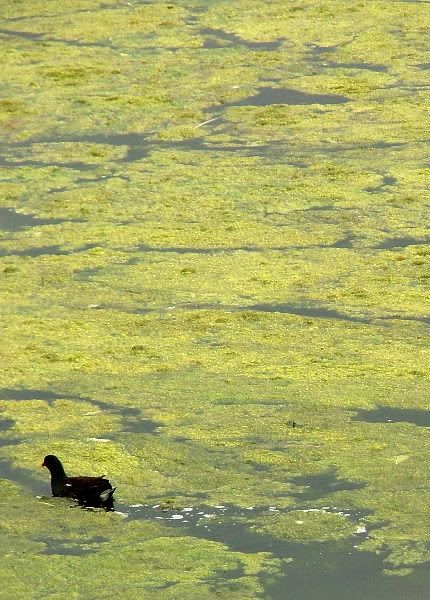


On the other side of town King's Mill Reservoir looks in poor health with another summer bloom of algae. I'll let some minutes from a local council meeting explain the problem:

'Ashfield is not noted for having many large bodies of water, which makes it all the more important that we conserve and protect those few that we have. In Northern Ashfield the past few years have seen a massive problem arising due to repeated seasonal growth of algae, in Kings Mill Reservoir for example, and this problem has repeatedly to be coped with.

The problem arises because of an upset to the very delicate balance between algae, fish, and bacteria in the water. These three denizens of natural water depend upon each other in a triangular relationship which can be upset by pollution.

Algae -- a collection of microscopic plants -- use sunlight to photosynthesise food from nutrients. These nutrients are provided by the bacteria in the water which act upon the waste products from fish, converting them into a form which the algae can use as food. In turn the algae provide food for the fish, and they also serve both the fish and the bacteria by oxygenating the water as a by-product of their photosynthesis.

THE IMBALANCE

What causes the upset is that additional nutrients get into water through pollution, and this causes massive growth of the algae, producing what is often called an algae bloom. This can spread over the surface of the water, and can be made worse by the growth other surface plant life.

It might be thought that this is actually a good thing, for after all it provides more food for the fish, which might therefore be expected to thrive. Such is indeed the immediate effect, but it does not last. The algae grows to such an extent that there is too much of it, with layers of algae growing below other layers. The upper layers of algae shelter the lower layers from sunlight, and the latter cannot therefore photosynthesise their food. They they die. The bacteria in the water then act upon the dead algae, and in the process they use up masses of oxygen from the water.

This de-oxygenation caused by the action of bacteria upon the dead algae obviously results in the death of the fish, which needs that oxygen. The dead fish sink to the bottom, where further bacterial action changes the dead matter into sludge, and further depletes the water of oxygen.

This sludge can, in extreme cases, turn what was once a living pond or lake into actual swampland.'


Periodically new aerating rafts have been placed in areas where road run-off and other sources of pollution reach the reservoir, though clearly that measure just doesn't work well enough. Looks like there are no easy answers to this problem.

For now the bird life can tolerate the algae, although it has been quiet this week. The best bird yesterday was a Snipe for example. Still if you have birds you're never short of action, and the highlight was a meeting of minds between a Cormorant and a Heron...
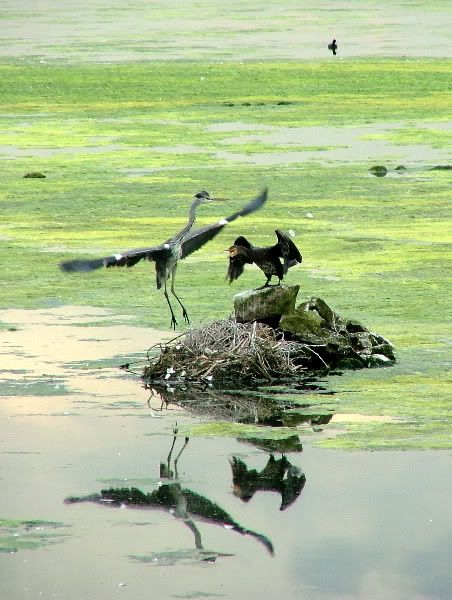
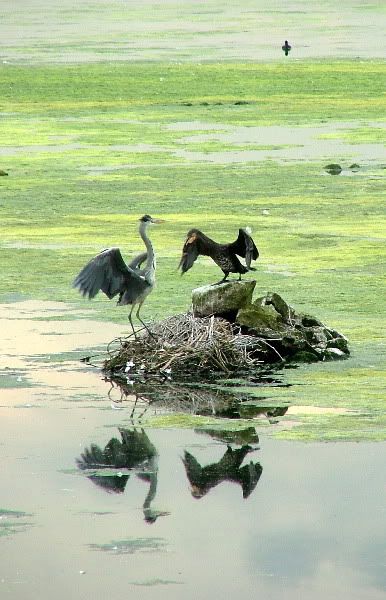
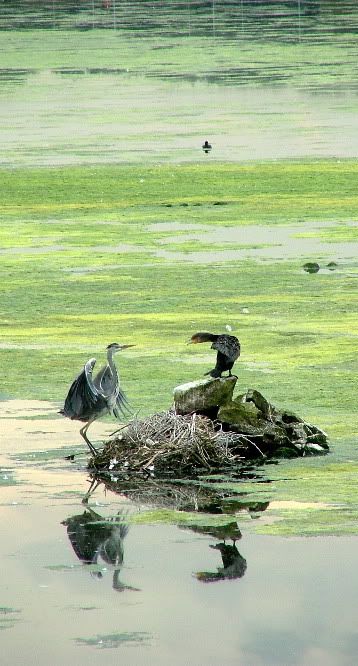
In the end, the Cormorant won.
Sunday, 29 July 2007

Our Good Night Heron

What makes a twitcher? An hour's drive up the A1 to see one (or two) birds? Not quite, I hope.

The destination was Fairburn Ings RSPB Reserve, near Castleford in West Yorkshire. We had always meant to visit the place, but never before made it out there - until now. For over a week a pair of Night Heron had been showing really well at the site. Being the summer of exotic European herons this was our chance to bag one, and if the photographs at Birdguides.com were anything to go by, they posed a straight forward tick - sitting right out, over open water and in the daylight!

It's in the name; Night Heron. Their activities are normally restricted to the nocturnal hours, whilst in the daytime they roost in trees or reedbeds, and so are not always easily viewed. The natural range of these birds usually stretches no further than the Low Countries and their stronghold remains down in the Mediterranean. Yet, here we have two, an adult in beautiful three tone plumage, and a 1st-summer partner that are slightly muddier, making them one very attractive prospect. The reason they wandered into the UK is that they are migratory herons. Unlike our resident hardy Grey Heron, they retreat from the European winter down to tropical Africa, often as early as July. With that sort of large movement, they do turn up in England - perhaps half a dozen or more per year.

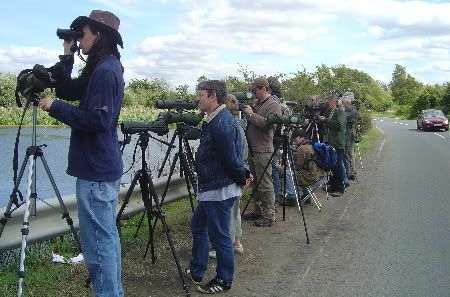
We arrived on site around 1pm, joining the ranks of 15 or so other birders, and we all saw nothing for over three hours. We stood and stared at a patch of reedbed and the trees behind, and nothing. Then an inspired find, through the wind-blown gaps of the reeds somebody had found a small feathery patch. Now you needed to find the perfect angle, almost like looking through the eye of a needle, and you could see small areas of the 1st-year bird. A shoulder here, the behind of the head, if lucky the eye or the beak, all of it 30 yards behind reeds already 50 yards away, where the bird was sitting very low in a willow. As a tick, I didn't mind calling it a disappointment. What I was impressed by was the ability of some of the other birders to pick it out, even knowing exactly where it was, locating a scope was far from easy. Oh yes, these guys are good!

After an hour of peeking at those feathery patches, the girlfriend and I decided to investigate the nearby areas of the reserve. Fairburn Ings is a relatively large area of lake and marshland, that looks a perfectly rich habitat for our breeding waders and wintering ducks. Indeed Lapwing, Oystercatcher and Redshank were in decent number, as was a notably large population of Gadwall. My only gripe was the hide, an uncomfortable metal hut that felt not unlike a prison unit. It had large pillars between the locked-open windows and no room to jam a tripod between the seat and the ledge for anybody without a hide clamp. Just a really poor design in comparison to the traditional wooden bird hide.

Back by the roadside, where unbelievably yobs in cars would yell and beep horns at us as they passed by, we were told the immature heron had flown a short distance. That seemed enough for most twitchers who packed up and left. Only a few more determined if less proficient birders remained, hopeful as we were of seeing something better, and we did. The bird was relocated in a creek, showing very well (with a Kingfisher too), to anybody who stood in eye-line through another break in the willows. That meant one viewer at a time, plus somebody tall enough to look over them, i.e. me.
Happily we managed to make sure everybody got a view, and best of all we had a casual birder who brought his smaller daughter to see the heron. She went 'Wow!'. That probably made the coolest moment of the day for me.

By now it was 8:30pm, over seven hours of waiting for this bird, and the elusive adult did not show at all. I read this morning on the sightings websites of 'not present' reports for the herons today recorded at 10:30am. Now come on boys, have a little patience!

Thursday, 12 July 2007

Parklife

Down in London to see the Tour de France, I escaped the post-race shopping hoards for the peace and quiet of the city's great parks. This was birding-lite, a small pair of binoculars and an ice cream in hand.
There may not have been any great rarities to find, what there was were fine views of familiar birds, and the odd exotic duck to tax the old IDing muscles.

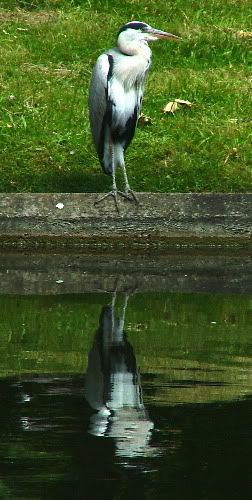
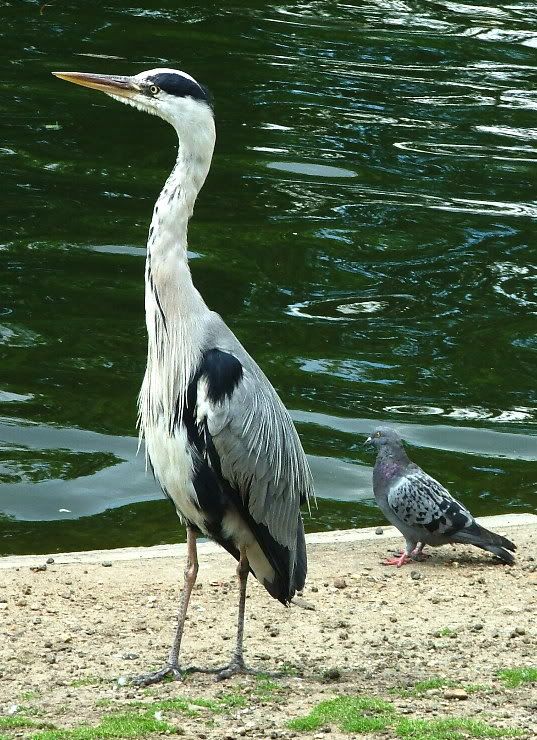
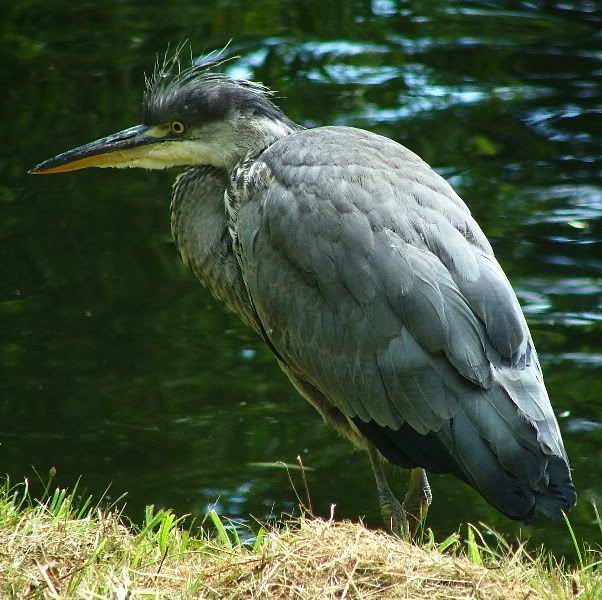
The Regent's Park Herons are one of the best treats of the capital.

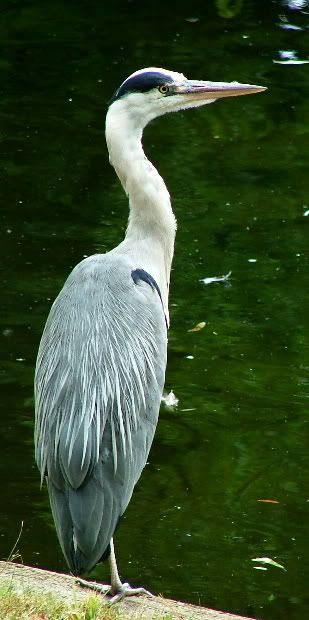
Those plumes, a most handsome bird.

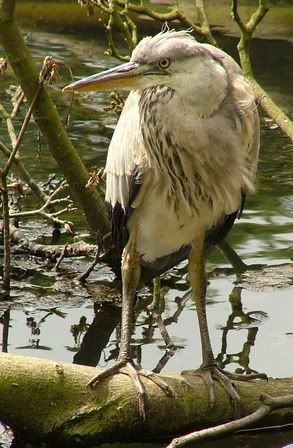
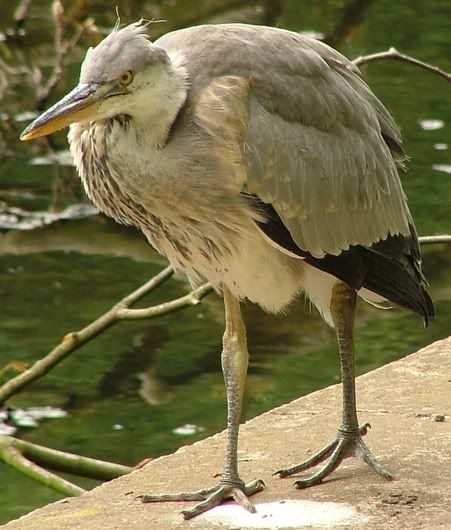
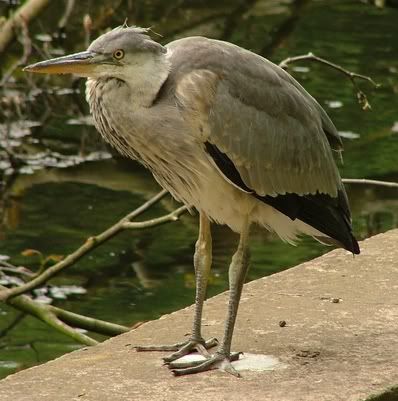
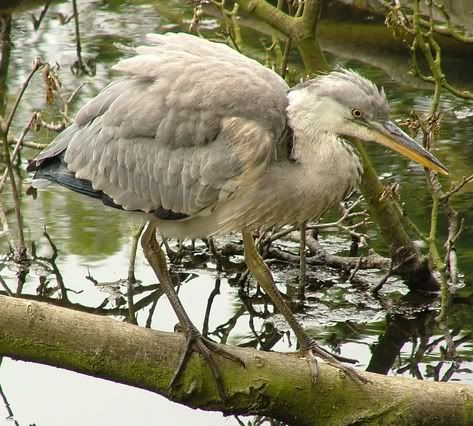
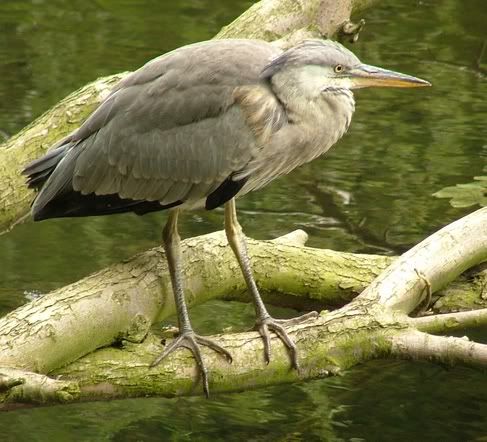
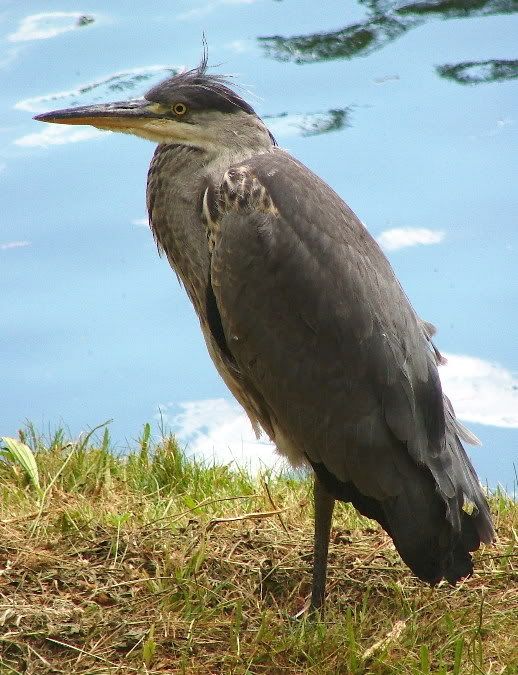
Nonetheless, the scruffy immatures have a charm of their own.


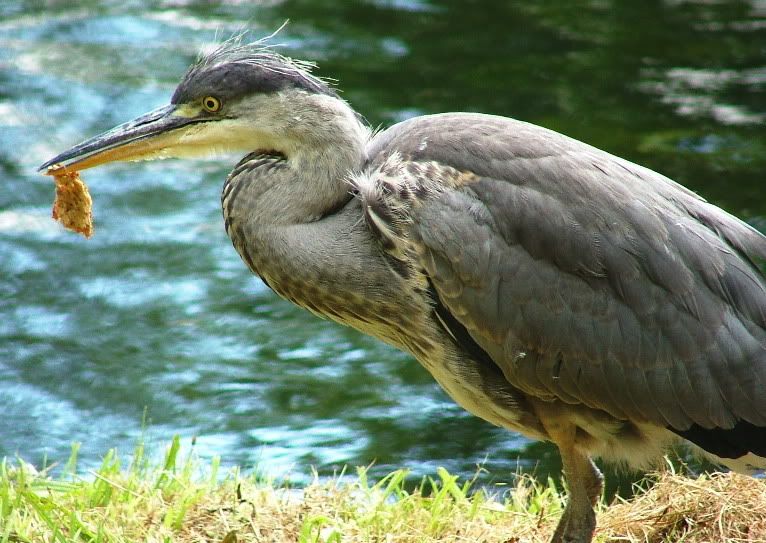
They'll peck at anything.

Truly park birds.


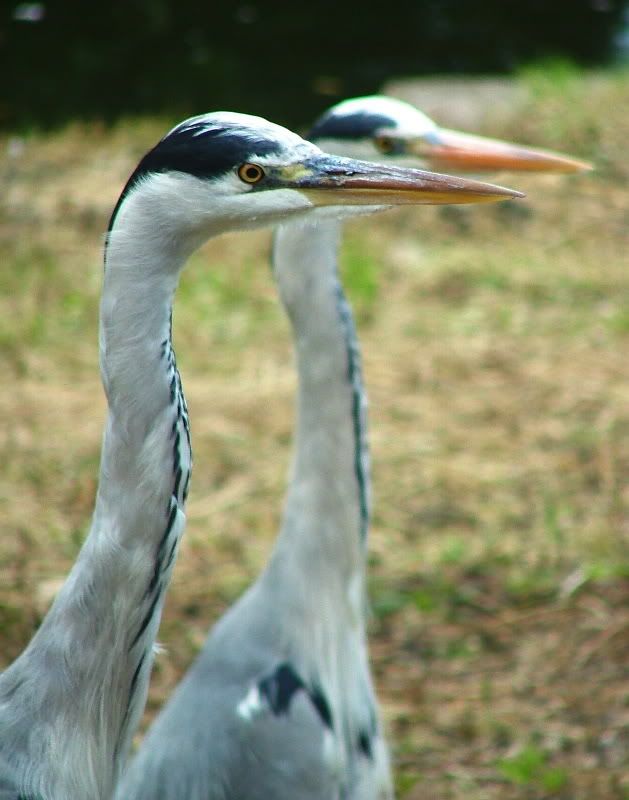
Little more than an arm's length away!

The outrageous tameness of these birds inevitably leads to visitors feeding them, and it was dismaying to watch a chap throwing bread to them. However eagerly the Herons threw it down their throats, I see a conflict of interests arising - what's best for the birds and what the park visitors want to do are not necessarily the same thing. How sad it would be to see this famed heronry descend into the disease and aggression of the average over-populated and over-fed duck pond.
For now, it reminds a treat.

Video - Herons fed bread!

Wednesday, 14 March 2007

As Spring Gets Earlier...

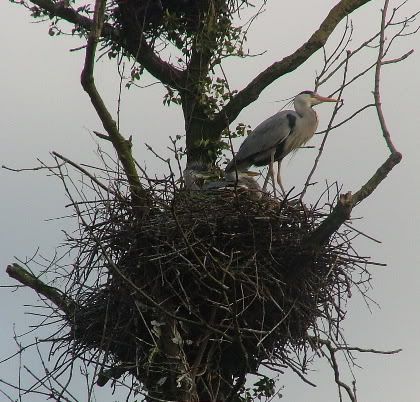
Mild astonishment down at my local reservoir. In the heronry there is a nest with chicks grown enough to be exercising their wings! They look to be at least three weeks old, which considering the incubation period of the eggs mean the parent birds mated and laid in mid-to-late January. Can you believe that? Through the heavy snow and ferocious gales we've had since then, that nest, those eggs and the chicks survived it all. Amazing.

Then, there are the other signs that Spring is arriving, like these courting Great Crested Grebe. Immediately after the pair skulked into some reeds, they like to keep the climax to themselves.

Video - Great Crested Grebe Mating

Friday, 27 May 2005

Down by the river, below the croaking tree-tops

Plenty of time for another reservoir visit yesterday, the place must be getting tired of me, though the herons don't seem to mind...

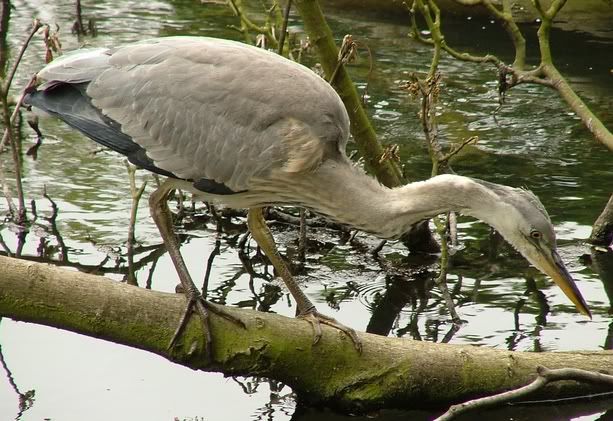
What's he looking at?

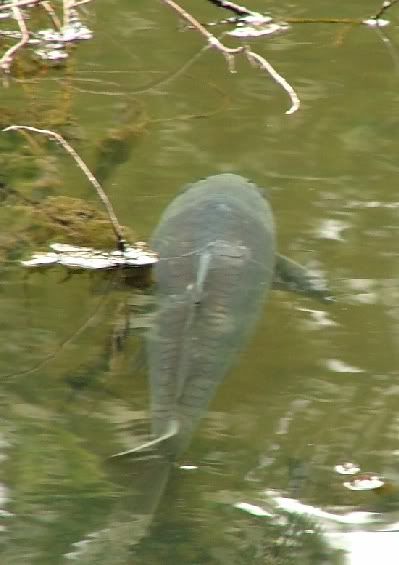
An ambitious sized fish for such a young heron, and lucky escape for a big lazy carp.

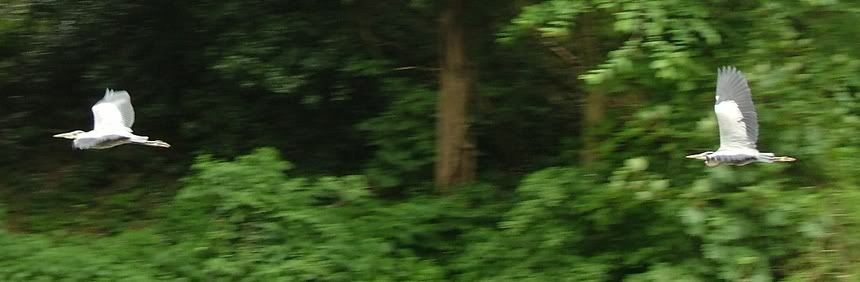
Then drama! A yearling swooped in and chased new fledger away...


...circling back around to claim the castle.


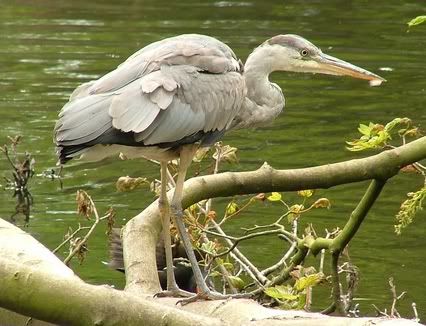
Not to worry, youngster found branches further down the river,


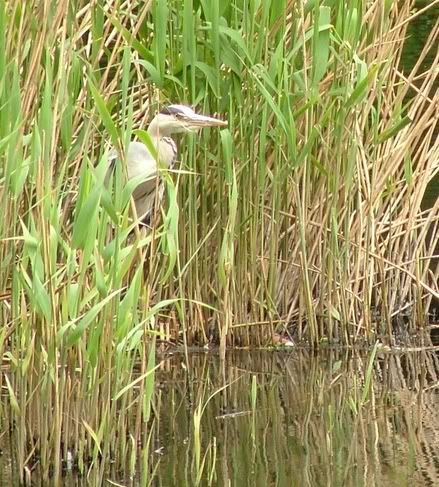
Faraway from the fuss the matured adults have free reign over the safer reedbeds...

...hey, one day youngster!