Sunday, 15 October 2006

A sad demise...

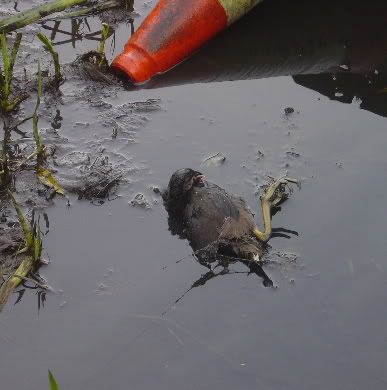
A misfortunate moorhen we found on the fringes of our local reservoir, tangled in discarded fishing line - as if the litter left by fishing parties isn't enough. I waded out to free the bird hoping there would be no lasting damage, hopes that were dashed when we discovered the line ran up into the moorhen's beak and down its throat. Doing what seemed best at the time we broke off the line to make it as short as possible, collected up the rest, and let the bird free to allow a private death without the stress of being in the open - it was very exhausted and clearly wasn't long for this world.
It's a real shame the interests of fisherman and birdwatchers must conflict so badly. We both must want a clean and healthy environment to pursue our hobby, it's what our respective game surely need.

Ah well...
Since birds are so highly prone to being affected for good and bad by human influences, I suppose it's up to those of us alert our of own impact, to make sure it's a good one.

Tuesday, 10 October 2006

Local Birding

A long time has passed since my last post here, primarily because we're not getting out to five-star birding sites at the moment. My girlfriend's broken bones are still recovering and of the two of us she's the only driver. So I'm left to concentrate on getting to destinations closer by on bike. I live in an area of Nottinghamshire dotted with land reclaimed from the mining industry, put to modern use as nature reserves and country parks to chase the tourist pound. They feature landscape verging on the desolate, where the soil is thick enough the trees are only young, elsewhere only highland grasses thrive, perfect habitat, it seems, for Green Woodpecker and Skylark. I ride four or five times a week and the bounding lime-green rump of a fleeing Green Woody is always a thrill - especially if you're riding fast enough to pursue!
As familiar as it has become to me, that bird never loses its exotic appeal.

Elsewhere on my local patch the return of half a dozen Teal have finally signalled the arrival of Autumn, as has the boom in the Lapwing flocks. Fair enough, it may not be 40,000 Pinkies or 10,000 Knot, put 600 or so Peewits erupting over your head is a spectacle in itself, and this one seems like ours.

If you get out there on your local patch often enough, it's not difficult to find inspiring sights. I bet there's somewhere at least five miles from any home in the UK.

Friday, 18 August 2006

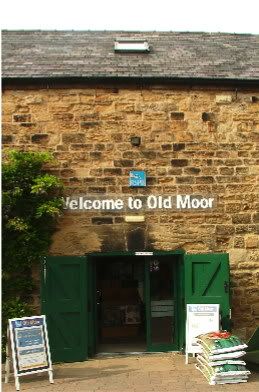
RSPB Old Moor

Situated between Barnsley and Doncaster, five or ten miles off of the M1, Old Moor is a recent addition to the RSPB's fleet of reserves and this was my first visit.

Immediate impressions were that it's been developed with families in mind. This isn't one of those quieter reserves with a hut for a reception and long pathways to the hides. There's a sizeable shop, cafe upstairs, picnic area, even an adventure playground for the kids. I'm quite certain some birding snobs would feel it's an affront to their sedate pastime, however, the number of kids enjoying a day at the reserve and getting excited about the birds, leaves me inclined to welcome the direction the RSPB have taken at Old Moor. Even if it meant fanciful claims about Red-Throated Diver and Jack Snipe, if only they were true!

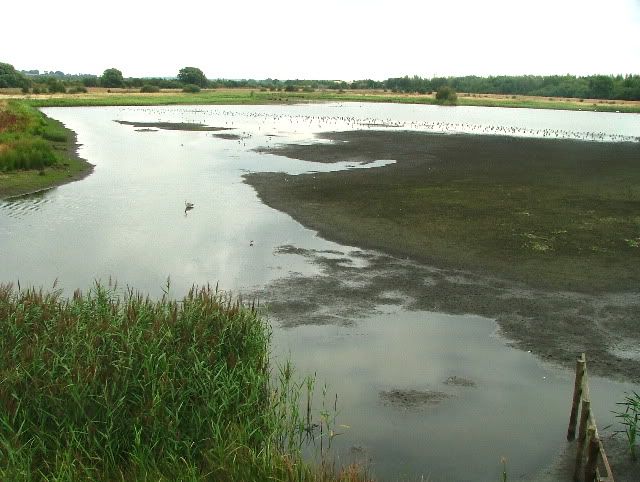
The hides are tidy and even at a busy time in the summer holidays we found space to sit with a scope. They overlook open lakes, marshland, reedbeds and grassland too, with plenty of wet mud to attract passing waders.

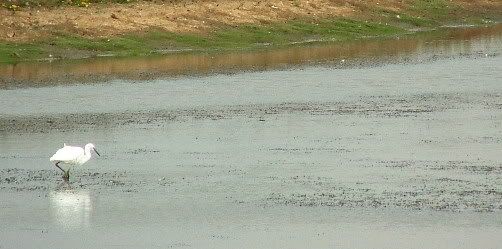
Star bird on my visit was a Little Egret, which don't number greatly this far north, and a Wood Sandpiper was also a nice find, as was an early Curlew Sandpiper.

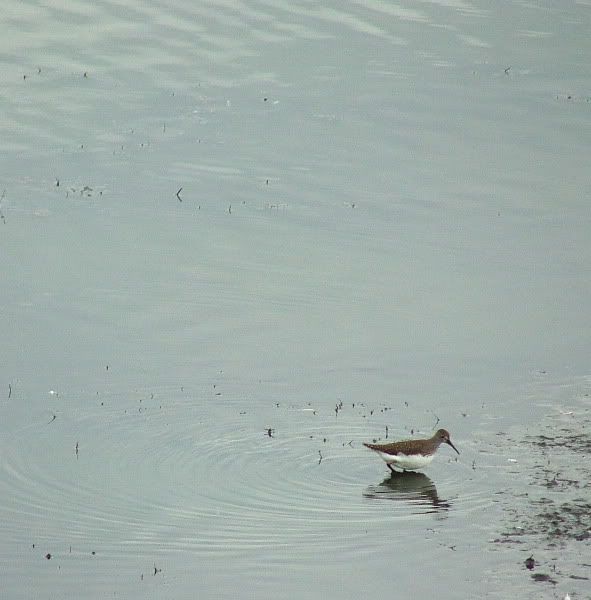
That's Green Sandpiper, one of a twenty plus movement.


We're in the heart of the South Yorkshire industrial belt here, so don't expect total tranquility from road noise. Enjoy the birds instead.

I'll be returning there in a couple of months, interesting to see what the colder months will turn up.

Thursday, 10 August 2006

Holkham NNR


I find late summer is lovely time for birding, it's the families. Just the other day I watched a gang of half a dozen Redstart darting after each other as much as food, a nice find for the East Midlands.

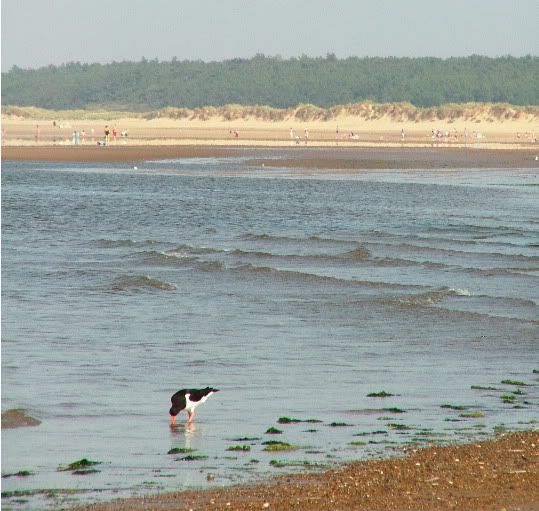
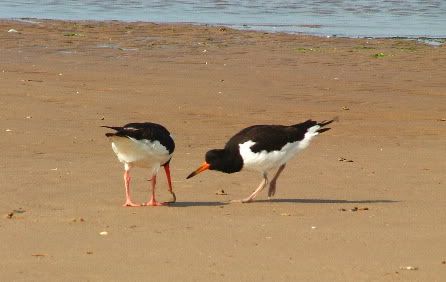
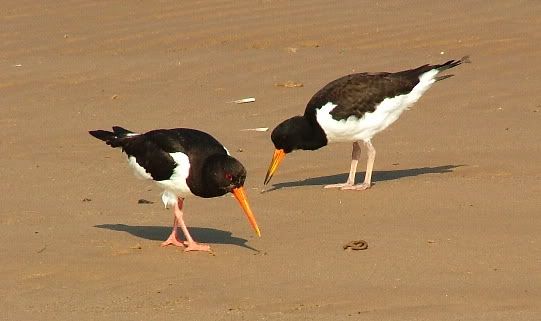
A couple of weeks ago we camped for a weekend down on the North Norfolk coast, very nearby to Holkham National Nature Reserve. The site comprises a sandy shore, extensive dunes, saltmarshes, pinewoods, and some reclaimed marshland a little further inland. I was beach-holidaying with my girlfriend so didn't devote as much time to the reserve as I'd have wished but still found stunning and close views of Marsh Harrier, enough to excite any birder. Below them species like Sedge Warbler could be heard. Underfoot the dunes were full of toads, and out on the beach Little Terns skimmed the surfed, and a pair of Oystercatchers babied their one remaining chick.
We plan to make future visits, give the reserve the attention it deserves. Also not a long drive west along the coast are both Titchwell Marsh and Snettisham RSPB reserves. This part of England really is very rich for birders.


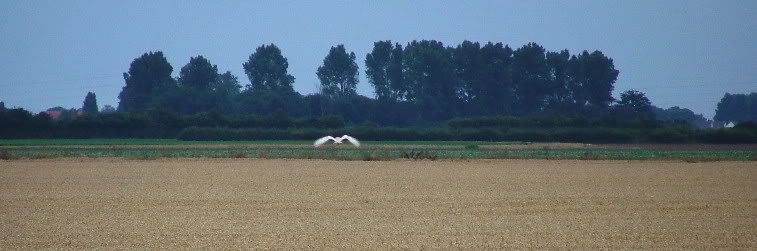
Driving back home through the quiet farm roads brought us across this Barn Owl patrolling over one of the vast Norfolk wheatfields. We've found travelling along such lanes to be a marvellous birding tactic. It may not be very eco-friendly but there seems few other ways to cover so much rural habitat in a mobile bird hide.

Monday, 31 July 2006

Swifts and Martins


How's the birding everybody?

I'm a little concerned myself, the swifts in my neighbour are still prospecting for nesting places and it's almost August. Watching them hover under next-door's eaves has led to me to researching swift nest boxes, which seem like a jolly good idea keeping in mind how modern building practices deprive possibly the most enigmatic of all our summer visitors of suitable next sites.
We just might invest in one.

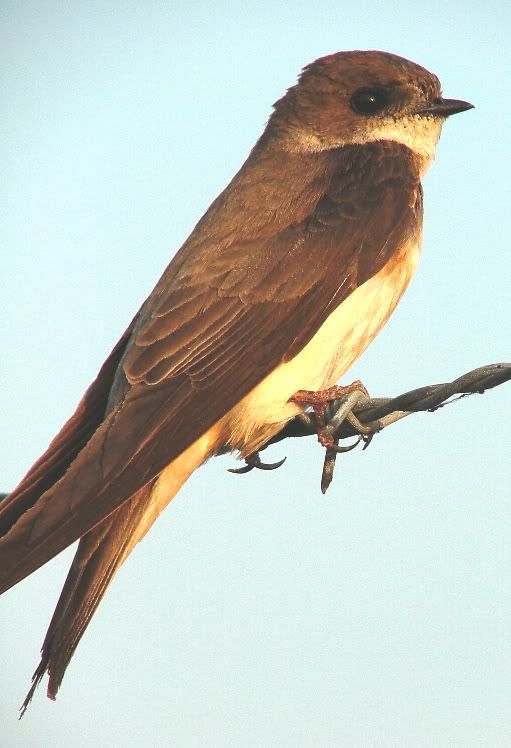
Happily the local population of hirundine seems to be in good number, particularly sand martins. There is a lot of sand quarrying in my part of the country and that keeps in ready supply the soft banks that are ideal for this species to carve nest hollows into.


Very sweet little birds, in a few months this youngster maybe only a three weeks old will have flown all the way to sub-Saharan Africa. How amazing is that?

Thursday, 13 July 2006

Rutland Water

There are half a dozen posts I've meaning to type up about my recent bird trips, so I'll begin with the most recent - Rutland Water.

Little wonder the site is annual host to the British Birdfair, it truly is second to none. With the breadth of habitat and literally dozens of hides a day's list grows rapidly indeed. We only spent three hours and casually chalked up 67 species in all, I'm certain a little more attention might have crept us up toward 80 but this was intended as a leisurely visit with my girlfriend and we missed the hides to the south of the centre. Really the place demands a full day, dawn to dusk if you're able.

We didn't catch the Ospreys this time, though they are around. One of the team looking after them told us he'd seen the nest earlier in the day and the youngster was flapping its wing, tip-toeing into the air, very ready to get going.
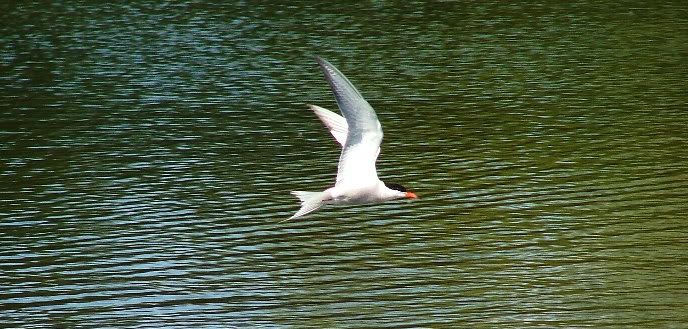
His tip was to head out onto the Hambleton peninsula early in the morning and late in the evening, and find a spot on one of the bays. This we did, but I fear we chose the wrong bay for all we saw were Common Terns, Egyptian Geese and fishermen.

Best species of the day was Black-necked Grebe, although my personal favourites where the summer Black-tailed Godwits very rusty and orange-red. Close views of fishing Common Terns were also particularly memorable.

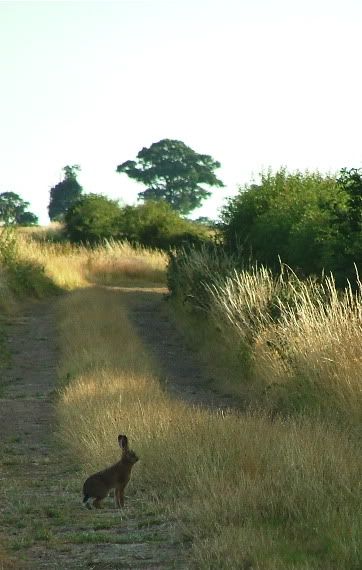
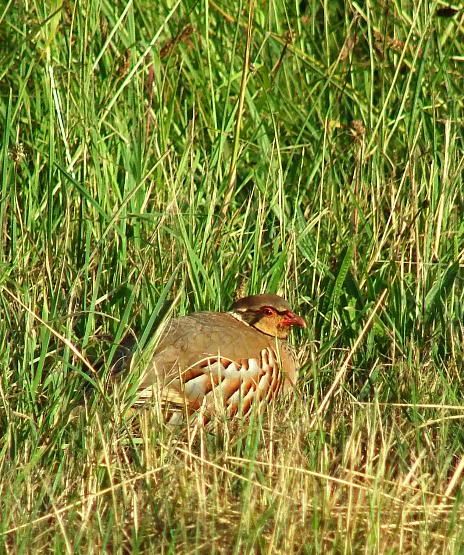
The quiet roads back north offered almost as much wildlife as the reserve. Weaving back through the quiet country lanes and villages might be far slower than the A1, but when was the last time you saw hare, Red-legged Partridge and Sparrowhawk as you rushed along at 60mph on a dual carriageway?
Surely worth the time, effort and wrong turns.

If I was pressed to recommend one and only one birding destination, Rutland Water may very well be my choice.

Thursday, 18 May 2006

Nifty Nesting

It's the breeding season, and every year our local TV news programming features ducks nesting in pubs and robins rearing in red post boxes.
Well, I've found a quirky nidifier of my own.

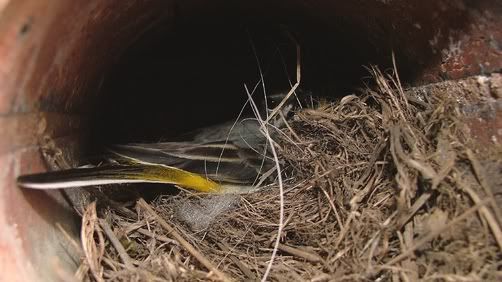
Travel along a winding farm road and under a disused rail bridge, and you just may find this Grey Wagtail. Running water is some distance away, which only increases the unlikelihood of the nest.

That's the hole under the R. Could these be politically-minded birds? Anarchists even?
I felt uneasy about the location of this nest. The country road gets more traffic than it really deserves, and surely it would only be a matter of time before a terrible tragedy.
That's why it was with more than a small amount of relief I found several days ago that the pair appear to have moved elsewhere.