Thursday, 7 December 2006

Bitternly Disappointed


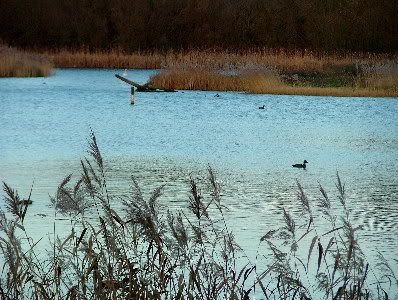
Potteric Carr, Doncaster, probably the best place in the North for Bittern. Five apparently on the reserve, and did we see one? Nada. Two hours in the number one hide, if they're showing they are there. Birders came and went, but Bittern didn't. Some people had been there all day and seen just as little as we did, whilst we were told early morning is the best time to see the birds.
At times of great frustration it's often helpful to philosophise, and we've decided that striking out today must mean we deserve outrageous luck elsewhere. Soon may it come.

Overall it was a quiet day bird-wise, but it's a relatively new reserve so it is bound to take time for word to get around the bird flocks.

Sunday, 3 December 2006

Another wild bird chase...

First of all let me say I am NOT a twitcher, work had dragged my partner down to Cambridgeshire and I hitched along for the ride in hopes of maybe ticking off a very special bird indeed - an inland Leach's Storm Petrel.

The story is covered here by timesonline, but briefly speaking the terrible and persistent southerly gales Britain has suffered in the past week have brought north great numbers of Leach's Storm Petrel that would otherwise be safely wintering in calmer, warmer areas of the Atlantic.
Most are turning up on the south and west coasts, areas like Morecambe and Cardiff Bay, but others are being blown further inland. Areas like Cambridgeshire, Derbyshire, even London. So if you've been at all nearby a recorded sighting, it's a chance not to be missed.

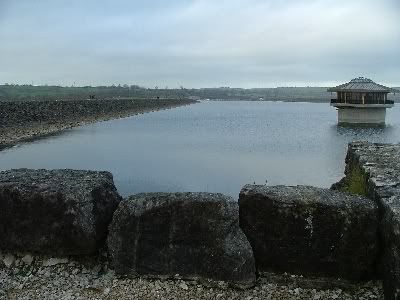
Alas, according to birdguides.com, the petrels had either gone or all died by the time we arrived at Grafham Water (where they'd been well reported earlier in the day), all there was were us and several other wet and disappointed birders. At least there is some solace in not seeing a species that wasn't there, rather than not seeing one that was.
The best bird of the day, a couple of flattered Goldeneye probably wondering what all the fuss was about.

Much worse luck for the petrels of course, once inland they seem terminally doomed. Even if they find a large body of water, it's fresh water and there just isn't the marine food for birds already tired, cold and wind battered. Sad really.

The gales still blow, so there's still a chance they could turn up almost anywhere in the UK.
This might be a once in ten or twenty year event.
Saturday, 2 December 2006

Blacktoft Sands RSPB

East Yorkshire, a good place to be to catch the late migration season.

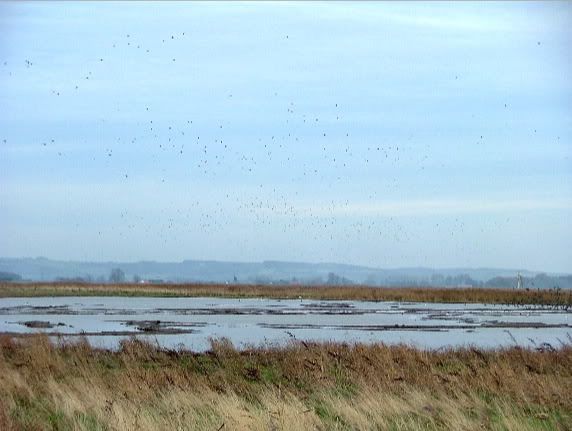
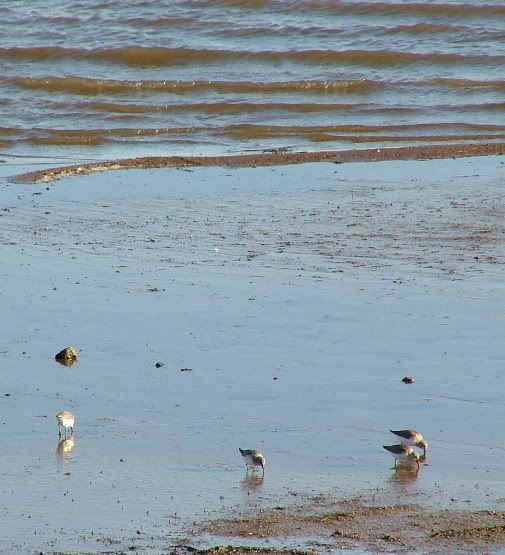
Blacktoft has been a regular destination for years in my family, though for some reason we'd never been during November and seldom stayed very near dusk. Both big mistakes. Yesterday we were on the reserve until nearly 4pm, more or less around high tide and the flocks were becoming big. Wigeon, Teal, Lapwing, Golden Plover, Dunlin, Redshank, Black-tailed Godwit too, by the hundreds and thousands, and all alighting when a languid Sparrowhawk twice quartered across the lagoons. And in the distance large skeins of Pink-footed Geese passed by.
It was a true natural spectacle.

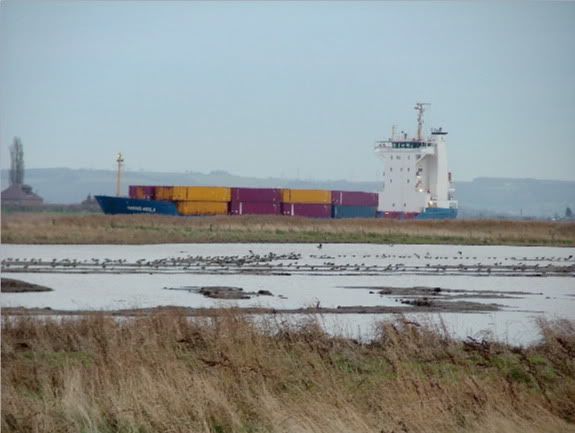
We're very near the inland port of Goole at Blacktoft, so pacing container ships are common.

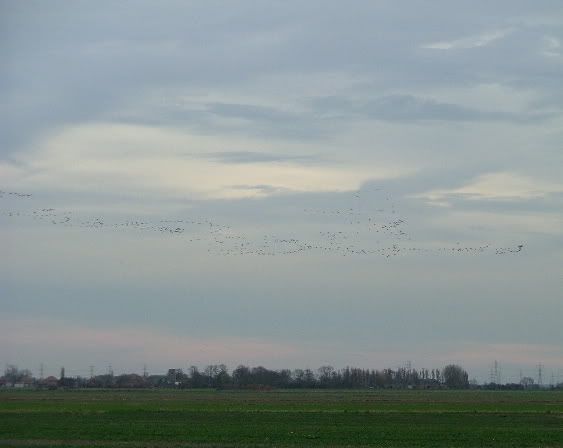
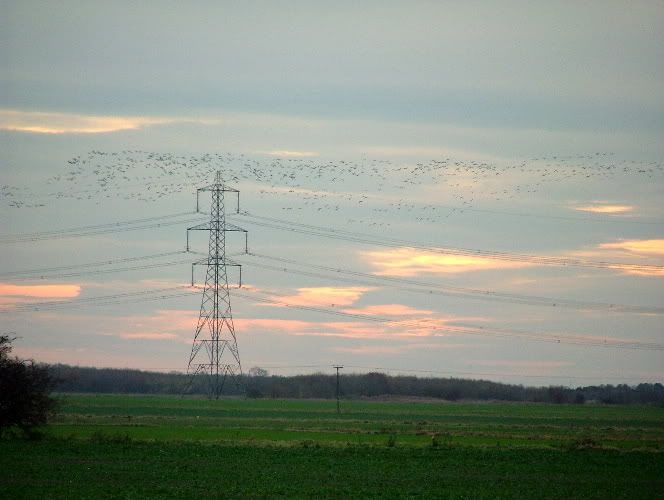
The Pinkies.

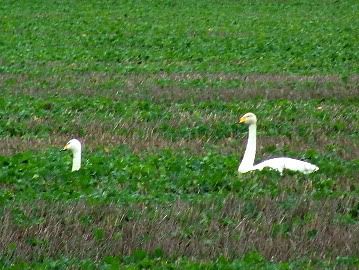
Locally rare a couple of Whoopers were in fields adjacent to the reserve.

Other notable sightings included Merlin, Goldeneye, and finally the bird which the reserve is most famed for Marsh Harrier - three of them. Oh and we also saw Roe Deer.

If you're too far north of the north Norfolk reserves of Snettisham and Titchwell where all the birds I've mentioned gather in even more unimaginable numbers, Blacktoft isn't a disappointing substitute.

Thursday, 30 November 2006

A Lost Loon


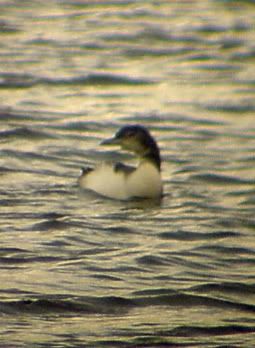
A new tick for me, and probably a new one for lot of birders since by all accounts it's been a bumper month for Great Northern Diver across the country. This one, a first winter bird by the looks of it, was doing laps around the tower at Carsington Water. Even out of its pied adult summer plumage the diver is an immaculate creature, the delicately white-dotted back, the gleaming red-eye and large dagger bill, alas a rudimentary moment of digi-scoping sans-adapter just doesn't show it so well.

The GND has been there most of the week so word had gotten around and we happily guided four or five other birders to the rarity. You know you have a special bird when people don't even have to tell you what species they're looking for, a simple 'is it about?' is enough.

Good numbers of Wigeon around too.

Monday, 20 November 2006

"Walking in the cold driving wind is half the point of birding, don't you know?"

Marvellous clear skies yesterday for our trip to Rutland. Although no megas were around we did see what I tend to think of as glamour birds, those that are a little scarce and very handsome - Goosander, Goldeneye, Red Kite, even Pintail falls into that category for me. Four very decent lifers for my girlfriend in her first year of birding.
Other sightings included Dunlin, Curlew, Egyptian Goose, Little Egret and Goldcrest. As the evening began to draw in I found myself looking across to the southern arm of the Egleton reserve when hundreds of Golden Plover descended to their roost. I've rarely been there so late and definitely plan to leave late next time I go. Around that time countless groups of 20-50 Starling hurried in and into the distance one of those awing swirling humongous winter flocks gather and tossed and turned into the distance, how many individual birds by the end I really don't know, just think of a number and triple it.

We chose Rutland in hopes of seeing Bittern, since on the Birdguides.com website one had been regularly reported at the site. No luck on the day, but I think we'll continue to keep an eye on that website, seems like the premier source for the latest sightings news and bird photographs. It will probably help us to decide which destinations to choose and when, even if that means paying a subscription when the free account deadline runs out.

Happy birding everyone.

Wednesday, 15 November 2006

Another Feed the Birds Day

Our Bullfinches still seem to spur a great deal of excitement among visitors, I suppose it's the close proximity you can get to them. Probably helps the birds watch us scattering seed.
Quiet day otherwise, although Redwing are still around. About a 150 flew in from open farmland to the north of the park late in the day.

Off to Freiston Shore RSPB on Monday. Being so landlocked here in Notts it'll be my first visit to the coast during winter. With any luck it'll be loud with Brent Geese and rolling with flocks of Knot. I can hardly wait.

Video - Brierley Forest Park Bullfinch

Saturday, 11 November 2006

To find a Little Owl

Out on feeding station duties around the local nature reserve yesterday. We'd long heard reports of Little Owls up around the farm buildings on the northern boundary, yet hadn't actually seen them for ourselves. Being a warm afternoon on an otherwise cool day, hopes were high of spotting one of the small characters warming in the low sun, and we weren't to be disappointed.

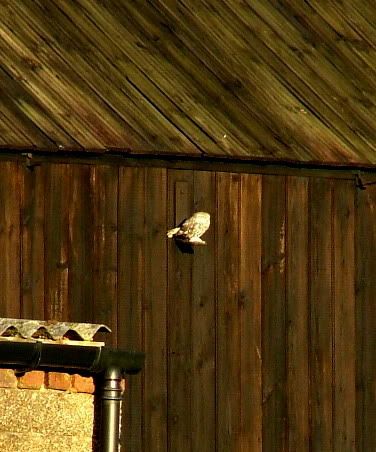
Now it's well known that Little Owls pick prominent perches, but this bird seemed to have made an extra effort to stick out. Look at the pale dot near the centre of the big dark barn toward the right of shot...

Okay, not a picture to grace the magazines, but enough to confirm ID, and how conspicuous the owl's notably bold behaviour can sometimes be.


They're sort of the emblem bird for the volunteer group at the reserve, and I couldn't think of a more suitable or perky choice.