Showing posts with label water rail. Show all posts

Monday, 24 December 2007

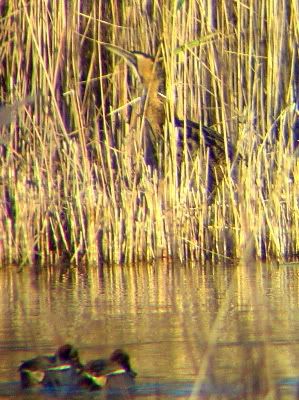
Bittern by the Bird Bog

click to enlarge
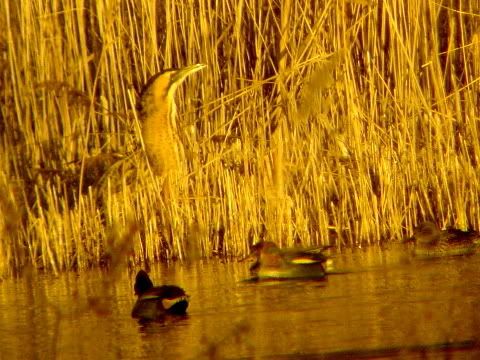
Look close and look hard, look for the black markings on the back.

Potteric Carr, just south of sunny Doncaster, it's a big site, getting bigger, and full of birds. The star attraction here are Bittern. On any given day during the winter up to 6 birds are to be expected on the YWT reserve, and the neat part, as the staff was happy to tell me, is the they cut the edges of the otherview very thick reed beds fairly short, so you can see into the reeds a wee bit, which isn't done elsewhere. 'Best place in the country to see Bittern', he said. I could hardly disagree, we had three sightings through the day, of probably three different birds. They do not stay to breed on site yet, although there's no reason why they shouldn't soon begin to. Black-necked Grebe already do breed there (although are absent in winter), so that could be a fantastic spring/summer double in the future.

On Sunday 20th January, Potteric Carr has its annual Bittern Count day, with hides full of volunteers, ready to point of the birds which at the best of times are damn difficult to pick out. If you've never seen Bittern, make sure to be there.

Our best view was when one Bittern flew right-to-left across Piper Marsh, which is apparently its uniform behaviour, as the bird circuits the reeds in a clockwise direction. The flight is far more direct than the languid wafting of Heron, they go much quicker than that. The tip I was given by the locals was look for the gulls to scatter from the water, as if in predator evasion mode, because they see the Bittern coming before we do and are bloody scared of it!


Run!

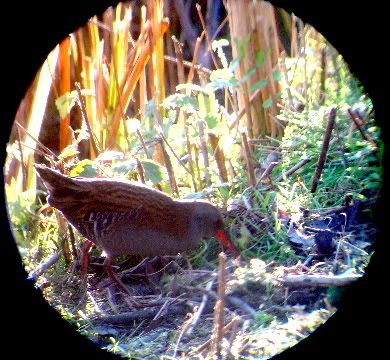
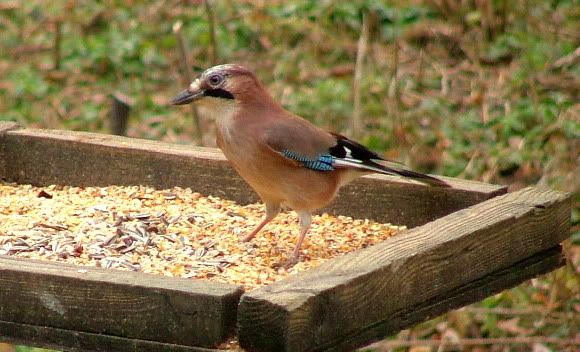
Other notables for the day included Water Rail - with ridiculously close views as they fed right out in the open under the bird table on Willow Marsh. That's a very good spot all round really, with 19 species on or around the feeders. As one might expect on a reclaimed northern industrial site, there were Willow Tits all over the place, Great Spotted Woodpecker, Bullfinch, and Jay, also showed well. There is a pair of the vastly declined Lesser Spotted Woodpecker around Potteric Carr, not to be seen during our visit though (nor since the previous Tuesday), indeed such difficult blighters are they to find that one report a week during the winter is about the going rate - and this is the best time of year to see them!

More videos of the day:

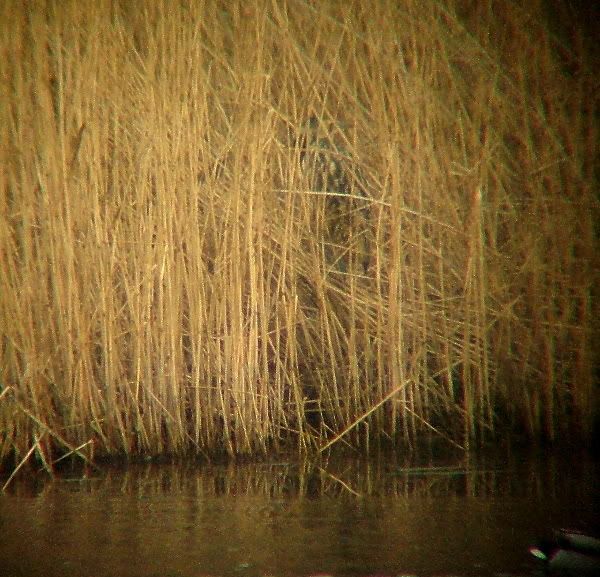
Video 1 - Dim distant Bittern preening, wait for the movement
Video 2 - Water Rail again
Video 3 - Jay

Sunday, 16 December 2007

Doubling Ducks

L-T-D

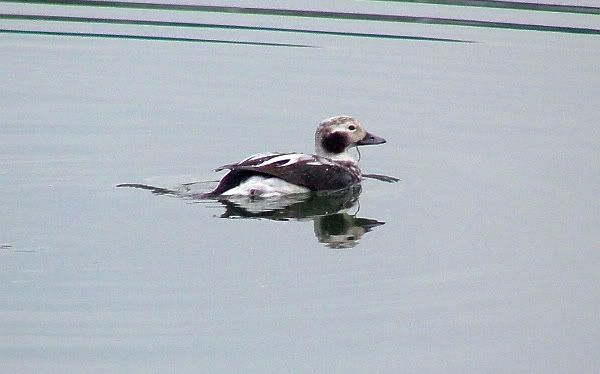
Seemed like a while since the girlfriend and I had been on a local twitch, leafing through my entries here is was the Rutland Red-necked Grebe in October, so it was due. A quick browse of Birdguides (where would birders like me be without such websites?), came up with a nearby Long-tailed Duck just across the county border in Derbyshire, at a LNR called Williamthorpe Ponds. Upon arrival it turned out to be quite the typical modern local nature reserve, a small pocket of wildlife much surrounded by Acme industrial complexes Ltd.


...when the duck eventually stopped diving.

This Long-tailed Duck (#204 for my life list) has been a long stayer, present on site since late November, and true to form there it was, a mucky looking 1st-winter drake, with a tail of diminutive standards. Still cute faced as ducks go though, rather round of head with the facial expression of a sated puppy. These guys ordinarily winter at sea, and are fairly common on our northern coasts, hence the local twitch value of this inland bird here in the East Midlands. Most LTDs seen around the UK will have come from the breeding populations in Iceland and Greenland where they nest on lakes and freshwater marshes, feeding largely on crustaceans, molluscs, and aquatic invertebrates, during which they dive for long periods.
Our bird seems happy where he is, and quite fearless of man. Just a little patience and views within 10 yards would come. A really nice bird.

Bonus!

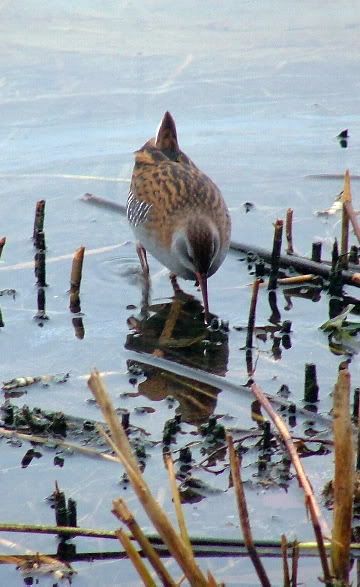
As ever, just being out and about brings its own rewards, this time a wandering Water Rail. Icy days seem to encourage them out of the reeds and this one walked with a couple of yards of us, utterly oblivious. It made for quite the most memorable encounter, and I could hear others squealing in the reeds. Check the video links below.
Other birds around included the regular winter ducks, both common grebes, and I heard a Willow Tit or two.

How cool?

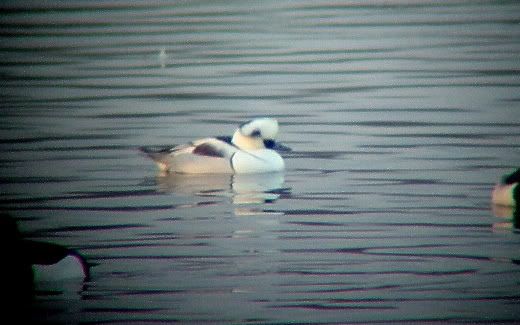
The second scarce winter duck of the day was this gorgeous Smew back at one of my local haunts, Kings Mill Reservoir (you know it well by now if you read my bird blog), a neat stop off on the way home. Apparently only the fourth record for the site (check out the local recorder's website for more info), it drew in many a local birder, and happily a few non-birding passersby.
Winter males are always striking, for me their look harks of Walls vienetta, you know, that fancy white ice cream with the embedded wafers of chocolate. Historically Britain receives more wintering females than drakes, though I'm not so sure that's necessarily true these days, with around 200 mainly finding sites in the south-east, migrating from the lakes and rivers of northern Scandinavia and Russia where they breed. His diet mainly consists of small fish, larvae and invertebrates.

Tuesday, 19 December 2006

The Bittern Trip Mk2

As the saying goes, if at first you don't succeed... so this was our second trip to find the Bittern at Potteric Carr NR, near Doncaster, and this time we weren't to be disappointed.


Perhaps it was the birds becoming more comfortable at their wintering site, the calmer brighter weather, or maybe we were just luckier this time, whatever the reason they showed well yesterday, with two different individuals from one very popular hide. A new lifer for me.

Their famed talent for transformation is well founded, and we watched these birds seamlessly move from streaky egg-shape to towering serpent. It's quite remarkable, and quite typical of this highly charismatic species.

That other elusive bird of the reedbed Water Rail was similarly accommodating, indeed more so. I'd never previously heard of them coming to feeders, never mind seen it, but now I'm a believer. As the tits and finches scattered seed down onto the grass below, the Water Rail skulked and crept from the reeds, out into plain view to peck up the remnants, no more than ten yards from the hide.

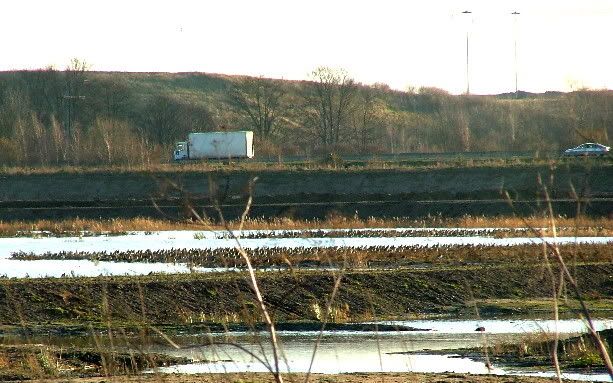
On the far side of the reserve beneath the main road into Doncaster, 2,000-3,000 Golden Plover roosted in the afternoon with smaller numbers of Lapwing.

All in all, a grand day out, and just reward for all that Christmas shopping I've had to do with my girlfriend.

Bittern in Winter, Black-necked Grebe breeding in the Spring/Summer, Potteric Carr is quickly becoming a must-do for the northern birder.