Showing posts with label RSPB. Show all posts

Wednesday, 24 November 2010

GND

So I've been at Carsington a bit more often than normal, more Date With Nature days mainly. We're currently trying to make sure everyone has the opportunity to sign up to our Letter to the Future campaign, and let the politicians who can do so much to provide a healthy environment for future generations know just how much we all care about this stuff. If you haven't done it yet, follow this link which tells you all about it.


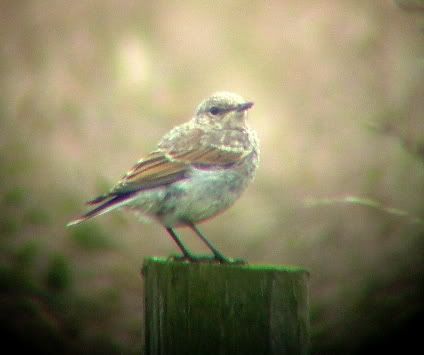
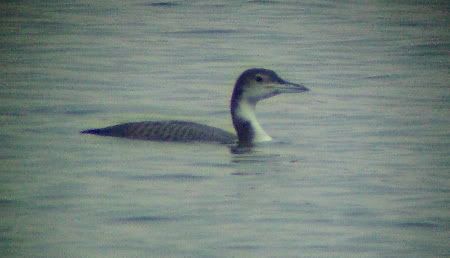
As ever the reservoir remains a brilliant place to be doing this work with some cracking sunsets lately and smattering of tasty birds. I regret I missed the recent Black Redstart (some small consolation that I saw the one last November) , but the Great Northern Diver is settling in now and easy to find most days.
Another juvenile bird so bang goes any theory that we get the same birds returning each year, this isn't site fidelity, Carsington is just a natural magnet for any GNDs that end up this far inland. It'll be a sad winter when we don't have one.

And because these divers are such fantastic birds, check out these Youtube videos....

Voices: Common Loon
Loon joins scuba divers

...Common Loon being the given North American name for the same species.

Then there are the surprises that happily occur while on site. Closing things up at the end of another DWN event I had a Barn Owl sail by the Wildlife Centre. In other areas of the reservoir you can expect them, especially the areas with unimproved grassland the STW rangers look after so well, so it was more than pleasant to see it comfortable enough to quarter the busier parts of the water's edge.
If it weren't for the volunteering I'd never be up and out there so regularly and I'd miss so many of these things. The rewards they are manifold.

Monday, 1 November 2010

A little catch-up

Been a good long time since I've updated here, that's life for you I suppose. Here's a brief summary of my birding exploits since February...

Slimbridge in the early days of March, just a majestic place.
Large numbers of Whoopers and Bewicks were still around and perfect in the sunset during the last afternoon feeding session. Green-winged Teal, the close American relative our native duck, was the only lifer on the trip, but you go for the spectacle and sausages in the cafe. A chap at the table next to us asked for an ID and for a relative novice gave a spot description of a Shelduck, and he was thrilled by what he'd seen, they are stunners after all. Don't think I've ever seen a non-birdwatcher converted so completely so quickly. Well done Slimbridge.

Meanwhile at home in the garden the Dunnocks were upto something...

Delicate subject, I'll let Wikipedia explain it:
This species makes up for its drab appearance with its breeding behaviour. Females are often polyandrous, breeding with two males at once, and thus giving rise to sperm competition. Males compete for mating access to the female, but DNA fingerprinting has shown that chicks within broods often have different fathers, depending on their success at monopolising access to the fertile female. Males try to ensure their paternity during courtship by pecking at the cloaca of the female to stimulate her to eject the sperm of other males with whom the female has recently mated.

Those were birds in my garden, here's one that might have come from Australia...

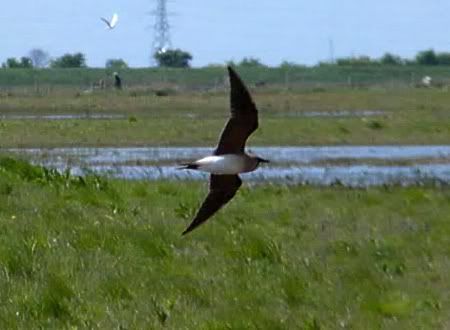
One of the birding events of the year came in May with this Oriental Pratincole at, let me get this right I always mixed it up with Freiston Shore, the RSPB reserve at Frampton Marsh in Lincolnshire. This was a bird that ticked every box, outrageous/unimaginable vagrancy, movie-star looks and enigmatic behaviour. It swooped by the hide hawking for insects much like a Swallow and each time to fresh "wows" from any observer newly arrived. Of course a lifer, and other nice birds included Temminck Stint and Curlew Sandpipers. One of those regional twitches where you see familiar faces, so altogether a very nice day indeed. The RSPB have done wonderful things at Frampton, wasn't many years ago we visited on spec and found pretty featureless bleak marshland with nothing like the variety of life present there now. Well done RSPB!

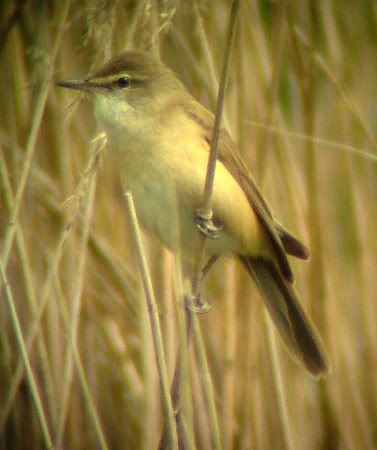
Happily a more local twitch, with a less criminal CO2 output, came with a Great Reed Warbler at Straw's Bridge Nature Reserve near Ilkeston. A local lady heard it singing and recognised it as something very different from what she usually finds and alerted a birdwatcher she knew. Well done her!
Bit of a brute as warblers go. Good populations are just across the Channel and it seems like we really ought to see more of these overshooting their migration. Currently they remain a exciting vagrant and potential breeder/coloniser should all the right things happen some day. This one stayed for about two months in a patch of reed bed you could almost stretch your arms around.
(Here's a video of it singing.)

June, and our first trip the Farne Islands...
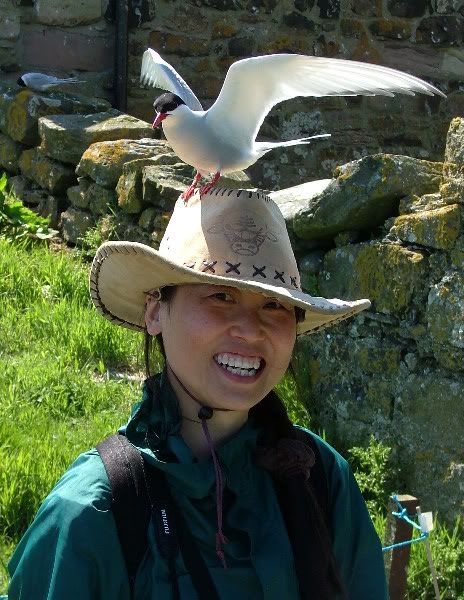
Arctic Tern on the girlfriend's head. Nuff said. For more on the Farnes check out the blog kept by the National Trust wardens.

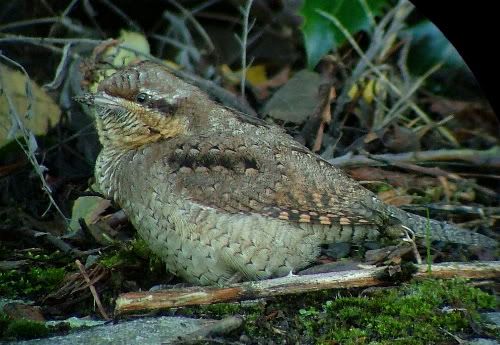
An uneventful summer later and my bird of the year at Carsington Water.My ultimate bogey bird bagged and on the local patch too - I thought it'd be many a fruitless hour spend on the east coast before I saw one of these. It's a Wryneck of course, almost more reptile than bird. Found by one the top chaps from Carsington Bird Club at the reservoir just off the dam wall (which has always been a bit of a migrant magnet). With patience and several rain showers later the bird hopped out from the bushes and within two yards of those of us who stuck around the afternoon.
Very rare bird for Derbyshire which makes it more than doubly amazing that another (or the same one) turned up not far away in a housing estate in Heanor. Couldn't get there for that one but by all accounts the residents enjoyed the bird as much any ornithologists as it skipped out of the way of buses and perched on window sills. Some of the local kids on their way school must have seen a truly stunning stop of nature. What a bird!

October and it had to be Spurn. Winds weren't at their most favourable, you can't keep a good place down though.

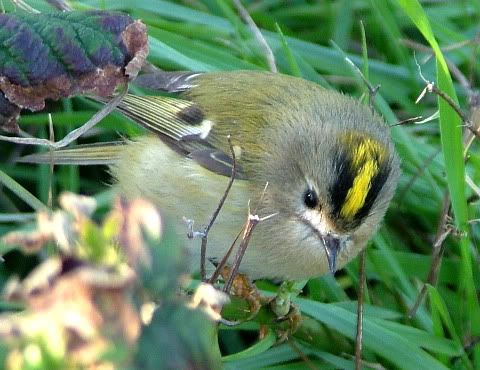
We've had better days there, Waxwing, Snow Buntings, Mealy Redpoll, Merlin, Jack Snipe were the best of it. The girlfriend's favourite was this Goldcrest we found behind the dunes. Completely fearless and perhaps exhausted after a hop across the North Sea (for a bird that would sit comfortable in a teacup a pretty damn amazing achievement), a bit of a treat to see so much detail on such a miniscule bird.

And that's really the chunk of things. Oh there were other days, other birds, Turtle Doves and Cetti's Warbler at Wicken Fen were memorable, and our Little Owls up at the pit did very well this year. Birds for another update, another time. I promise to do my best and keep this blog going, dib dib dib.

Tuesday, 10 November 2009

A Birdwatch to Remember


Big day at Carsington this weekend. It began with a report of a Black Redstart (video above), by the end of it Great Northern Diver (mostly summer plumage), female Scaup and Common Scoter, and a Ring-billed Gull made for the best visit I can remember for a long time. First and last birds there lifers too (#222 & #223), and interesting birds. The RB Gull is a Carsi regular, turning up in the roost early each November staying for a few weeks and then it's off again. Must have its reasons I suppose. Bet it spends the summer somewhere like Scotland, can't really see a trans-Atlantic migration from its normal range being made every year.
The Black Redstart was a second site record, the previous one a spring bird from as far back as 1996. Charming birds, a sort of smoky delicacy in the feathers, they've a definite touch of class about them. Ours spent a lot of time on the sailing club building, picking off flies warming themselves up on the sunny side of the roof.

To add to the impressive cast earlier in the week we had a Garganey of debatable age and even gender during the RSPB's A Date With Nature event. That's how it can be when you have eclipse males around, this ostensibly female-looking just too warm coloured to be a female. Might still be on the water now.
The water is really really low on the reservoir meaning the acreage of exposed mud is enormous, good for the wintering Teal and surely alluring for any vagrant waders. Eyes peeled. The Garganey enjoys the mud too, but really ought to be in Africa already.
Yellow-legged Gull, Ravens, Buzzards, Peregrines, Goldeneye, tonnes of Tufties, Wigeon, Pochard and Coot, Snipe and other regulars make it fairly easy to notch maybe 60 species in a day visit at the moment.

Also had good numbers of Pink-footed Geese overflying the few days. Nice to be under their direct flight path between their first port of call in Lancashire and their real destination in Norfolk.

Another video of the Black Redstart, it just misses a whopping big fly there...

Wednesday, 4 November 2009

As October Flies By


Bad bird-blogger, I haven't updated for over a month. To keep it brief mid-October we had our first big trip to Spurn. Not a classic day despite a favourable easterly from the sea, a netted Radde's Warbler released as the Anchor pub car park made for a very cheap life tick (not sure it really counts for that matter), and I chalked of another long-term bogey with a Jack Snipe skulking around the pond at Canal Scrape or whatever it's called. Bar-tailed Godwit, loads of winter Thrushes, a Merlin and smattering other nice birds made it all enjoyable enough. Only bummer was another from the nets - a Red-flanked Bluetail - missed the release for that one and then the bird refused to pop out of the bush it dived into. Invairably whichever side we chose to look from the bugger would briefly show from the other. Grah!
For a first experience of Spurn in autumn it was all right, and we'll return next year. The spectacle of dozens of birders and the near-miss car accidents when a report of a mega goes out is something altogether different to local patching.

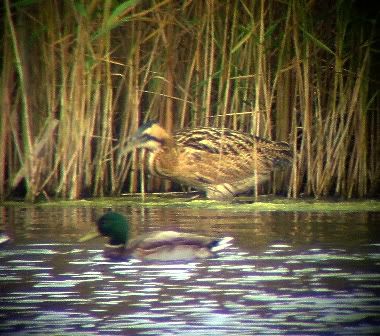
More recently we dipped on a Cetti's Warbler at Potteric Carr (might it winter there?). We picked a day when it chose to keep schtum, the regulars told me the bird has days like that and then others when puts on a real performance. Ah well, loads of Cetti's around the region at the moment, we'll pick one up sooner or later. Superb views of Bittern (video above) made up for any disappointment and I'll agree that Potteric Carr is quickly becoming the best place in the region, some dare even say the country, to see the species. One bird resident, with five expected as winter takes hold.
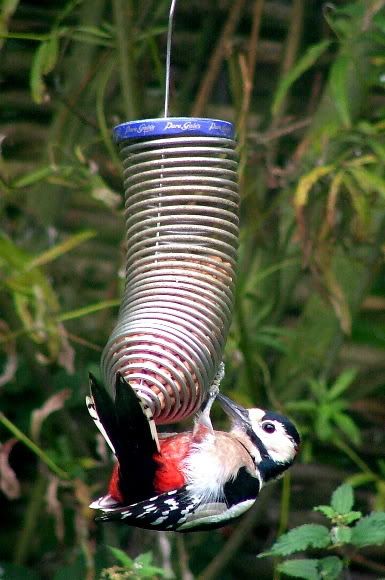
Slightly annoyed by some photographers camped in the hide near the Field Centre, the one with the feeders right infront. Giggling and saying 'poor thing' each time you scare off a GS Woodpecker with an assault of loud photo shutters, and would you believe a flashgun, isn't really on. Hardly what they call fieldcraft is it?
Otherwise hugely impressed by the new hides, lots and lots of new hides, overlooking the lagoons where all the Golden Plover hang out. It was always a big nature reserve and now you can access the whole thing, brilliant.

Finally, had a day RSPBing at Carsington yesterday. More schoolkids, more exclamations of 'wicked' after first views of Lapwings through a telescope. Bird of the day was a rusty Garganey that looks more like a juv male than a female. Frustrating to lose the bird when a low-flying Spitfire put up probably every bird on the reservior. Later it was refound at the other end of the water, with a Great Northern Diver, yes - they're back, or at least one so far. Now if we're really talking about the best place in the country to see a particularly scarce bird, Carsi genuinely rates for its GNDs.
The Carsington Kingfishers continue to put on good shows...


Last word, Lesser Redpoll in the garden, thats species #41 since January.

Monday, 28 September 2009

Carsington Kingfishers!

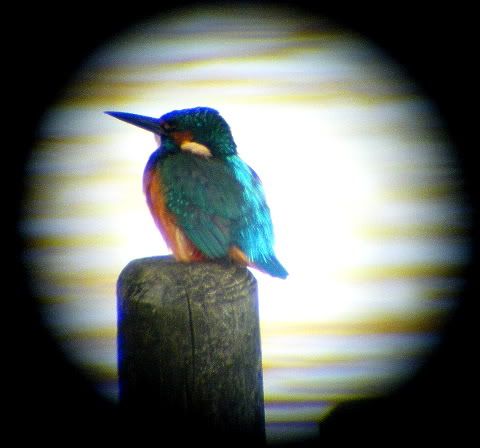
Did Carsington last week, first event I've done for months, so long ago they've even changed the name of it - A Date With Nature - sounds like a date worth keeping. Fairly quiet there, the best bird news is the Kingfisher is becoming quite tame and posing very neatly in front of the hides and Wildlife Centre. If it sticks around better photographs should follow, I was busy going wow with the visitors on the day when the birds was super close.
Wigeon numbers building, Tufted Ducks and Coots arriving all the time and will soon become so many I think it's a spectacle Carsington is too rarely credited with. A Yellow-legged Gull sat on a tern raft almost literally all day. There was half hour during which it wasn't there. Remember reading somewhere the large gulls spend an average of only 26 minutes feeding each day, so I suppose plus some flight time that approximately correlates.

Plenty of action in the garden too, we've re-sited our nyger feeder and suddenly there are Goldfinch all over it, Coal Tits have also been drawn in. A Chiffchaff this morning makes #38 for our list since moving in last January.
Getting on for that time of the year when the Swallows and Martins disappear, still plenty around the hall, takes about a week to realise when I've seen my last one.

Tuesday, 9 June 2009

Cliffhangers

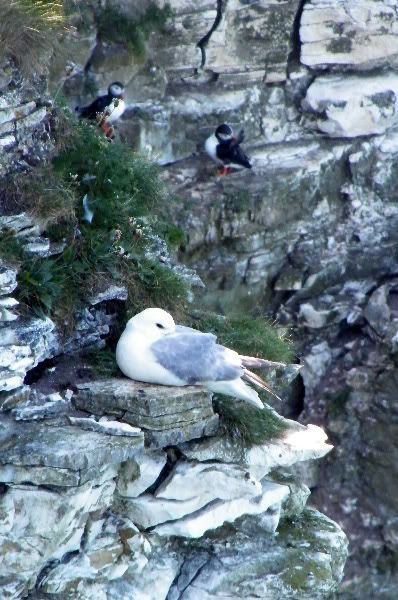
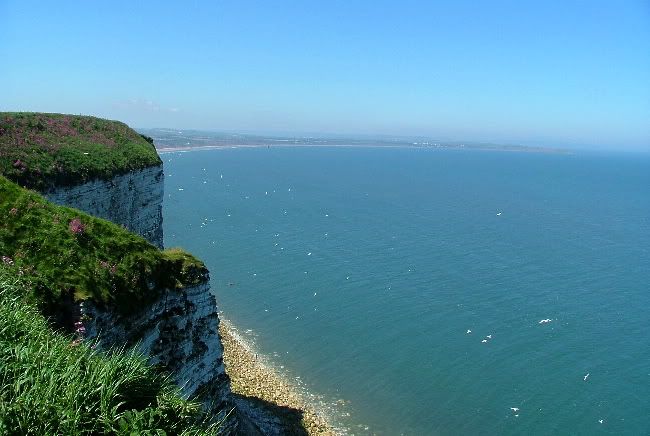
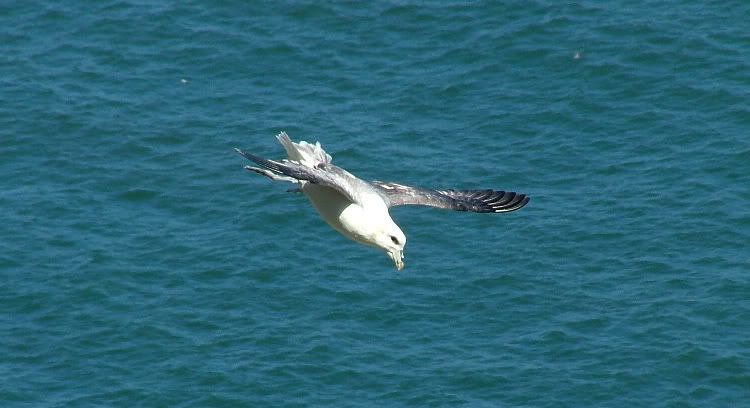
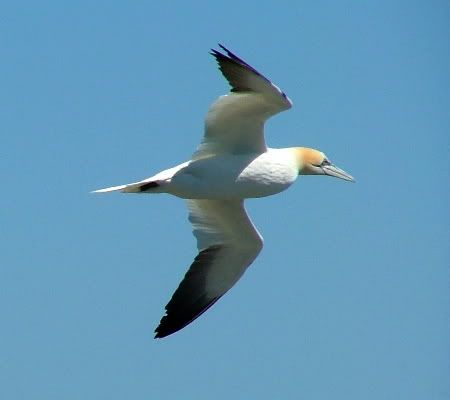
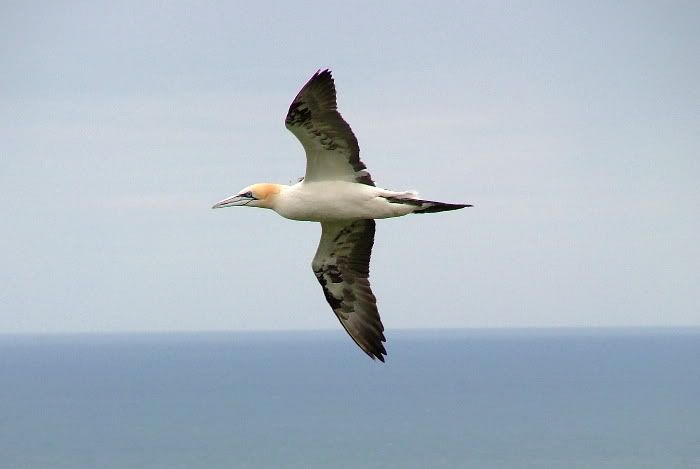
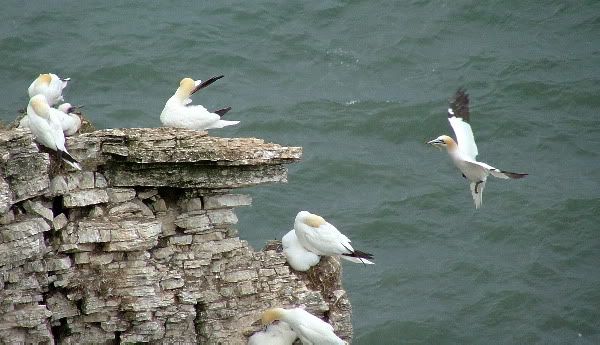
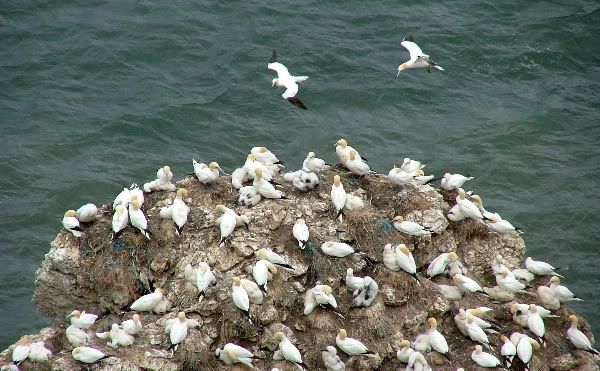
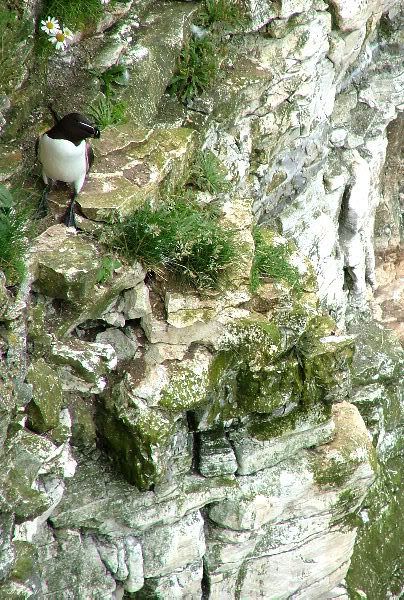
Recently holidayed up around Flamborough/Bridlington, so as a birdwatchers we were attracted as if magnetised to the RSPB reserve at Bempton Cliffs. Late May/Early June practically every Guillemot, Razorbill, Gannet and Fulmar was still on eggs. Still the bird metropolis is an exciting, elevating place to visit. The comings and goings of 200,000+ seabirds, well, you try going there and not feeling philosophical.

Picked out a nice campsite while there called Wold Farm, apparently it's under a stewardship scheme and it shows. Skylarks waking you up at 4am can only be the good way to rise at that time of the morning. Loads of them around, the odd Grey Partridge and Yellow Wagtail too, and we had a Little Egret go over one evening which has to be good record for the Flamborough area.
Really must go there in the early Spring or Autumn when it's a migrant bonanza on that headland.


For all the seabirds, my favourite at Bempton is the Corn Bunting, just don't hear that jangling key song often enough.
Also, the bridled Guillemot (same species, different race as the Common) was a nice one, an attractive auk made even more attractive, and not many of them around this south of their range. Check out the video...

Wednesday, 13 May 2009

Reterns and what's that Stint?


Nice day ABBing at Carsington yesterday, nice to see visitors excited by the antics of the Common Terns. Whether they manage to remove the Black-headed Gulls from the newly deployed raft and get a chance to nest looks like big story for the next few weeks. Just not sure they're quite feisty enough to do it. I think the word soap opera writers use for the interest inspired by this sort of thing is jeopardy.
3 Common Sandpipers were a charming addition too. The Garden Warbler video comes from the Sheepwash end of the water.

Can beat that all though, this afternoon I checked Birdguides and there it was a report of Little Stint up at the pit. Good birds, but I've seen them before, even in Derbyshire, better stay in and get some work done in the house. A couple of hours later I check again and jeepers, there's been an upgrade, they're Temminck's Stint! - a lifer for me and probably the first in Derbyshire for many a year. Admittedly the difference is slight between the two species (and the mistake easy to make), basically Temminck's have pale legs, but they are a good deal rarer than Little Stint, both birds notable for being so flaming tiny, like unbelievably small for waders.
So Pleasley scores again, I really do like having the pit just a short walk away.

Here are a couple of strictly dodgy digiscope efforts, taken from a windswept video too shaky to dare post, glad they were still there...

Friday, 24 April 2009

Carsi


(Willow Warbler)

Was back at Carsington this week for the Tuesday ABB. Stunning weather, anybody who's been on holiday has got to have used up all their good luck for the year. 2 Great Northern Diver remain on the reservoir and look likely to tease us with mere hints of summer plumage before disappearing in the next week or so.
The best of the rest were a couple of pristine White Wagtails. You can spend hours checking every Pied Wagtail umming and ahhing over their identity but when you actually find a White one you really know it. Shelduck was a nice record for Carsington, Little Ringed Plovers are around, plus the regular waders and warblers. Mallard ducklings are already out and about.

The House Martins have begun work on nest cups up around the visitor centre and the RSPB volunteers will spend a bit more time this year featuring them on event days, which ought to be lots of fun. Like all hirundine they're fascinating birds.

Friday, 26 September 2008

More Old Moor


Took the family to Old Moor, in good time to enjoy part of the weeklong stay a fabulous Osprey. Kingfisher and Little Egret from the same hide thrilled family to satisfaction, and later in the day picking out Greenshank, Curlew Sandpiper and Spotted Redshank (all top inland records) from the Lapwings, Dunlin and Golden Plover did it for me.

The great facilities at Old Moor impressed too, including a full array RSPB optics in the shop. In the market for a new scope my dad tried and buyed the Viking AV80, plus a zoom eyepiece. The image through it is as clear as a bell, although for me the twist-cups of eyepiece seem quite bulky. That's about my only criticism though.
For the price it offers great value, and who better to be giving money to than the RSPB?

Mum raided the shop for gifts, picked out Pochard and Shelduck from the fluffy bird toys. Good choices, top ducks.
Proof the RSPB as something for everybody? Well, enough for my family anyway.

Treecreeper at the feeding station

Migrant Hawkers, getting it on

Tuesday, 2 September 2008

Bird Storking

A while since my last post and I wonder where to begin this update. No doubt about it, the honour really does belong to the immature Black Stork [lifer #212], literally a big lifer, had in North Yorkshire over the weekend. The location was Cawood, a small town along the Ouse with fields sparse and wide enough to satisfy this most wary of birds. The wait to see it pop up out a ditch was around 2 hours and well worth it, although enormous thanks go to the birder who yelled us back. The girlfriend and I had just quit for the day, accepting the dip, and had walked no further than 30 yards when the shout came, "HEY, IT's THERE!". Never give up hope folks. Anyway a bird like that though shy gets noticed wherever it wanders, the individual possibly first picked up in Ireland, and now has made its way to Spurn. That's a long long way from Hungary - the region the Black Stork really ought to be in. The girlfriend, upon seeing the bird, she simply exclaimed, 'WOW!'.
Peregrine through too on the day also.

In other news, I have lots of shiny new bird kit. We'd actually headed up to N Yorks to check out some RSPB optics at Fairburn Ings, and only made it for the Stork when I realised it was just another 10 miles motoring on the day. I was after new binoculars on my RSPB volunteer/discount card, and settled for a pair of RSPB BGs. £60 more and I could have had the HGs, but I preferred the cheaper model. They feel a touch lighter and seem just as bright to my eyes. Tried the Viking range too, but for the same price they were dimmer and had a definite blue hue. Weird really, Viking manufacture both its own and the RSPB range, so why the difference?

So bins sorted, it was a scope next. The venerable old Kowa has served us well for 10 years, but using the Swarovskis at ABB events has spoilt me, they are simply too good to go without. Fortunately those of us not rolling money the London Camera Exchange have a wide range of fully serviced secondhand optics, and we found an AT-80 plus 20-60 zoom (and a spare 32x eyepiece). Sure it's a ten year old model but still light years ahead of mid-range scopes from Viking, Kowa, Opticron, etc at the same price. Also, forked out a Viking S1 tripod which is a sturdy animal and very easy to use.
Tried out the new set-up on my well neglected local patch today, King's Mill Reservoir, and straight scored a distant Dunlin (we get maybe three through in a year). I'm sure I would have overlooked the wee wader with the old Kowa, so am I happy with the Swarovski? YES, YES and YES again!

Round-up of for the supporting cast in August goes... family group of Spotted Flycatcher at Carburton/Wellbeck watchpoint and hundreds of hirundine gathering nearby, Yellow Wagtail at Hardwick village in Clumber Park, Red-crested Pochard at Carsington. Nice enough to keep my going in a month I've been at work almost non-stop. Glad it wasn't sunny, that would have been awful!

Common Sandpiper (Carsington)

p.s. Stressed? Tried Birdsong radio here or here.
Tuesday, 5 August 2008

Holiday Birding


Super busy at the moment so this post must fly by almost as quickly as my holidays, both the family shindig up in Bridlington and the week's camping in North Norfolk.

Birdwatcher or not, a holiday to the East Yorkshire coast really does demand you devote one day to the RSPB reserve at Bempton Cliffs. Over 200,000 birds nest on cliffs over 100m high, and the whole cacophany that erupts from that sheer mass of life makes it an inspirational place, inviting philosophy and peace of mind.
Bloody good birds around too. Gannets, Guillemots, Kittiwakes, Puffins and Razorbills make up the major numbers, with scatterings of the other commoner gulls. In the meadows behind the cliffs notables during our visit in mid-July included a juvenile Wheatear and singing Corn Bunting - that unmistakable jangling keys call.

Back in Bridlington, more Kittiwakes nesting in the streets and more than 60 Turnstones in the harbour added interest to late evening strolls. Here's hoping they will adjust to the construction of the new multi-million pound harbour/marina recently announced by the council. Fingers crossed it doesn't change the character of the town too much either.

Scenes of the day...

The Wheatear (named for its pale rump visible in flight - wheatear is apparently an old country corruption of 'white-arse')


Finally, a video of a show-off Gannet.

My Norfolk post next time folks.

Wednesday, 25 June 2008

Daddy Long-legs

A quick post to wrap up the Wales trip. On the way across we bisected Cheshire, very close to a nature reserve were Black-winged Stilts were still nesting. Didn't expect us to pass that by without taking a look, did you?
This was only the 7th known occurrence of nesting in Britain for this species (found more usually around the Mediterranean coasts), unusually two or possibly three pairs breed in Nottinghamshire in 1945, with a handful of other records since then. Cue the RSPB and their Aren't Birds Brilliant team to watch over the birds and show them to the public. You couldn't miss them...


Ridiculous and beautiful looking birds really, my girlfriend labelled the male bird 'daddy long-legs' and you can easily see why - indeed proportional to body size they have the longest legs of any bird in the world. Not only strange by appearance, the parent bird had the habit of carrying the chick around under its wing, so you'd see the adult stood with two legs poking from its armpit and know where the chick was.
Sadly it was only one chick. The clutch hatched during a stormy night which the rest of the brood failed to survive, and now regrettably I have read that the one chick has been taken by a predator since our visit to the site. Just 1 week away from fully fledgling too.

So for this year, that particular spectacle is over. Let's see if the Stilts pop up anywhere next Spring. Keep an eye out for ridiculous birds, all right?

Maybe you'll find a long-stayer worthy of naming, like Sammy, a remarkable bird that took residence at the RSPB's Titchwell Reserve for 12 years from the mid-90's. Thought at the time to be the most photographed bird in the UK, beat that Kate Moss!

Friday, 20 June 2008

GOP


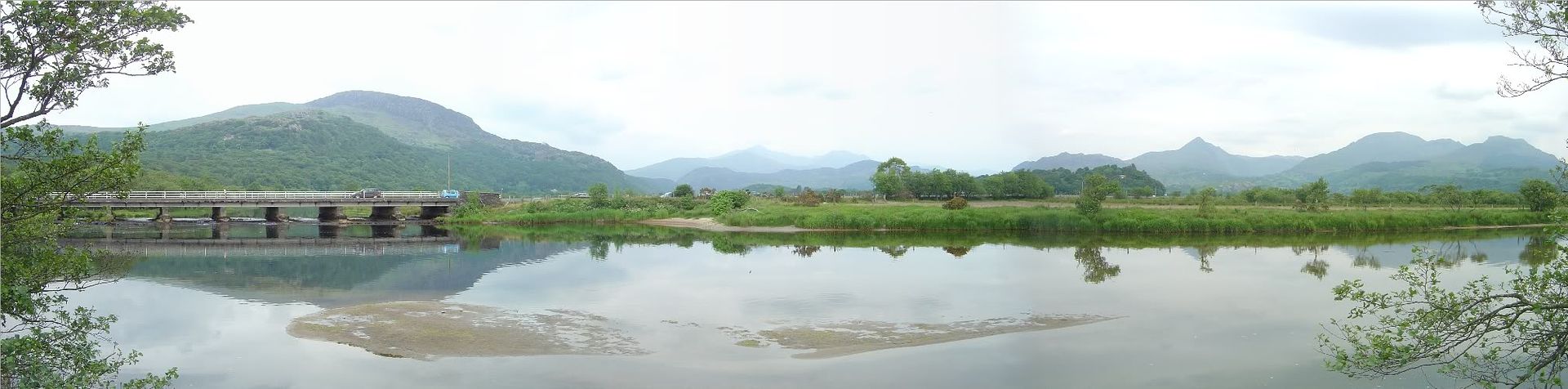
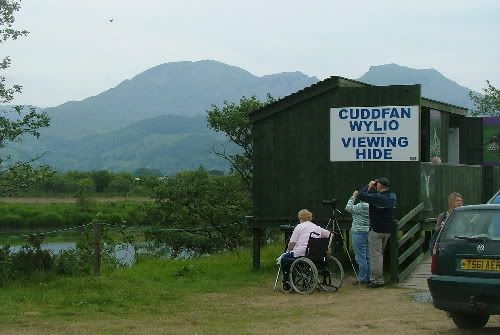
Wales again, another ABB, the Glaslyn Osprey Project in Snowdonia. If you're in the region it's the perfect diversion, and though the nest is over a mile away from the viewing area the RSPB's scopes give great sights of these majestic birds that can't fail to thrill. The project has its own blog, check it out here.
Yes, that is Snowdon in the background there, the pointy peak centre left.

More intimate views available at the ABB site through the CCTV set up above the nest.

Top stuff.

Thursday, 19 June 2008

Aren't Kites Brilliant!

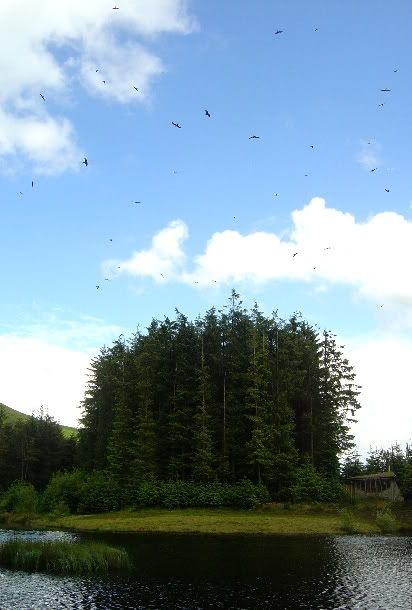
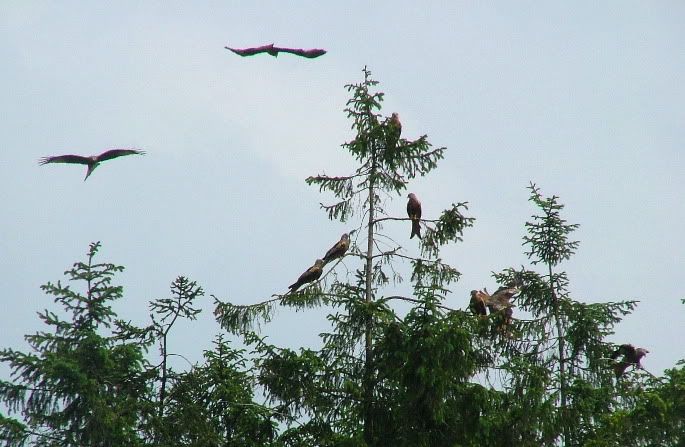
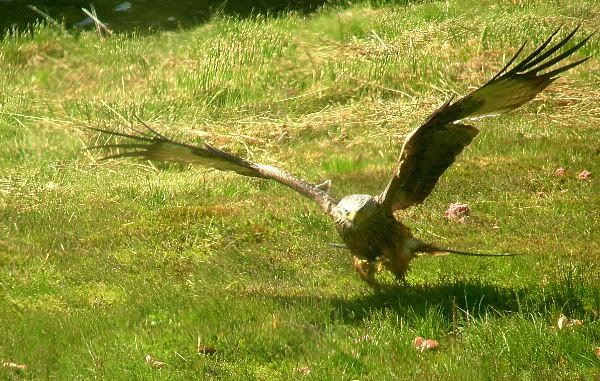
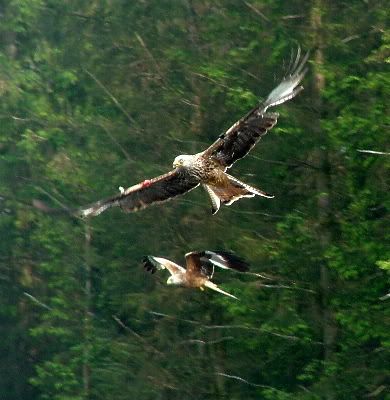
Continuing the birding story of my holiday in Wales, the next feathery target were the Red Kites at the Forestry Commission's feeding station at Nant-yr-Arian, in central Wales about 9 miles east of Aberystwyth, where an ABB project runs most days through the year. Around 100 birds arrive everyday at three in the afternoon to snatch a quick easy meal, swooping down with great dramatic poise to pick up their prize, usually chicken we're told, tossed to them by the rangers. This apparently helps improve breeding success, especially during dry spells when parent birds find difficulty in digging up their main prey item - worms.

Here's the video...


(another video here)

The hide is 20 yards from the feeding area, so you can view the Kites at very close quarters indeed.

Now truth be told, the profusion of Red Kites there lasts most of the afternoon, you really can't miss them in your anywhere around the site, and after an hour or two you begin to take them for granted. This has to be a marvellous thing, to be tired of Red Kites! After the entire Welsh (and therefore British population) at one point came down to just a handful of pairs, indeed research into their genetics tells that all Welsh kites are descended from just one female, these numbers indicate the most amazing recovery for the species.
There are up to 400 pairs now in Wales, and without hyperbole their survival has to be one of the great stories in nature conservation anywhere in the world. What a remarkable achievement! So even if the feeding stations feel a little like Red Kite theme parks, all is forgiven.

Of course you don't have to go to Wales for Red Kites anymore, there are birds from reintroduction schemes around much of England now, and some fairing a little less well in Scotland. The Welsh will tell you these are 'non-native' Red Kites since they came from European populations and perhaps they have a point. Truth be told, there is an argument that the RSPB jumped to quickly to reintroduce Red Kites to the UK from other countries. It's a cautionary tale.

Other birds around the site included Buzzards, Ravens, Siskin, and practically in the car park you have Tree Pipit.

Back to the Kites, and more pictures...


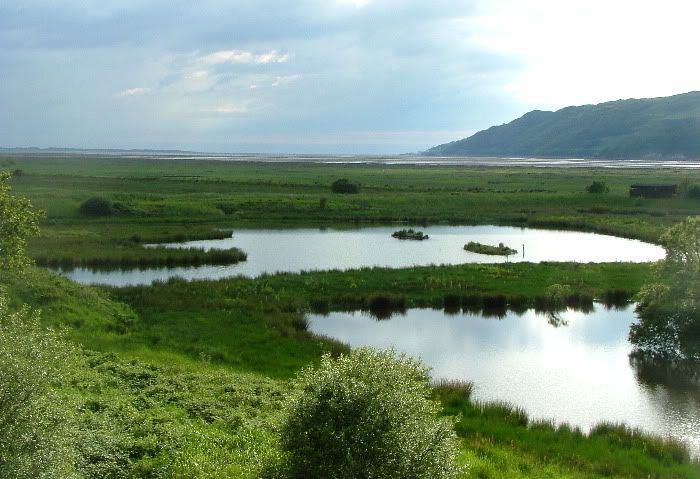
The valley to the west.

Monday, 16 June 2008

Ynys-hir

Another swift post to sum up the best of the birding enjoyed on my camping holiday to NW Wales.

Top spot had to be the RSPB reserve at Ynys-hir, never heard of it? Me either before I went, but I am quite comfortably confident it's the finest RSPB site I've ever been to. Where to begin describing the plethora of habitats? The oak woodlands? The mudflat estuary? The fresh water pools? Or how about the reed beds and open pasture? I could go on.
As you may imagine, this extraordinarily rich variety offers a true wish-list of summer birds in early June... maybe 10 pairs of Pied Flycatcher by our straw count, almost as many Redstart, and best of all a single Wood Warbler - a lifer for the girlfriend and I. May have been too late in the day for the bird's amazing stuttering trill song (listen here), however a plaintive 'tuh' contact call quite unlike anything I've heard from a Willow Warbler of Chiffchaff helped to confirm with our ears what we seeing with our eyes through the thick green foliage.

In at least three of the hides we found nesting pairs of Swallow, probably my girlfriend's favourite part of the whole holiday came in watching them toing and froing, watch out for the video at the bottom of this post.

Other top sights for the two days spent there (we simply had to go back after the first one!) were family groups of Raven and Stonechat, a single Whinchat, display flights from Common Sandpiper, overflights from Little Egret, Sedge/Reed/Grasshopper Warbler among the reeds, Oystercatchers and Lapwings, hovering Common Buzzards, Siskin and Great Spotted Woodpecker visiting the feeders by the visitor centre/shop, and a sunbathing Treecreeper - stubby wings outstretch against tree trunk, to name the highlights.
For me most memorable of all was a Goldfinch nest riding the strong winds in the outermost branches of an oak tree at eye level from one of the hides - rising and falling five to six feet after every gust. We couldn't have planned to see a Goldfinch feeding its day old chicks, which trust me is an extraordinarily privileged view into the precarious early days of those birds.

Some pictures to illustrate all this beauty...

(Goldfinch nest just to right of picture.)

Perky Pied Flycatcher.


Those Swallows.

More Welsh birding to come.

Friday, 23 May 2008

Carry On Doving


A video of the Turtle Dove that graced the bird table at Carsington this week. Apologies for the poor image quality, but at least you get some comparison with the Collared Dove in front there.

Thursday, 22 May 2008

Dove Me Do

Had a surprise during our ABB event this week; a Turtle Dove arrived at the bird table, so far as I'm told making it only the second record for Carsington and the first in around 12 years. Great news as this is, sadly it looks like they are set to get even scarcer than that with intensive farming methods, loss of set aside and the eagerness of Maltese hunters to fill their bags, all impacting on this red listed species.
Charming bird, distinguishable for being slightly smaller than a Collared Dove, as well the obvious plumage differences.

The good news is the European Commission is to begin dealing with the Maltese government's failure to crack down on the illegal shooting, although that's little use if the doves have nowhere to feed or nest when they do get to the UK. More about that here

In case you were wondering the species' name 'turtle' comes from the French word for the dove, tourterelle, which is said to be closely onomatopoeic of the bird's purring song. So don't say I never post anything interesting!

Other birds for the day included a family of Raven playing along the hillsides, and a probable pair of Curlew bathed by the wildlife centre about 30 minutes apart in the morning. The male has a slightly shorter bill than the female, which is about the only way of telling them apart.

Most popular among our visitors however were the Lapwing chicks, best described as fluffy balls on stilts. Just two so far, but surely more to come. Well done Severn Trent Water for their management of the islands!

Turtle Dove

Wednesday, 14 May 2008

Coombes Gladly

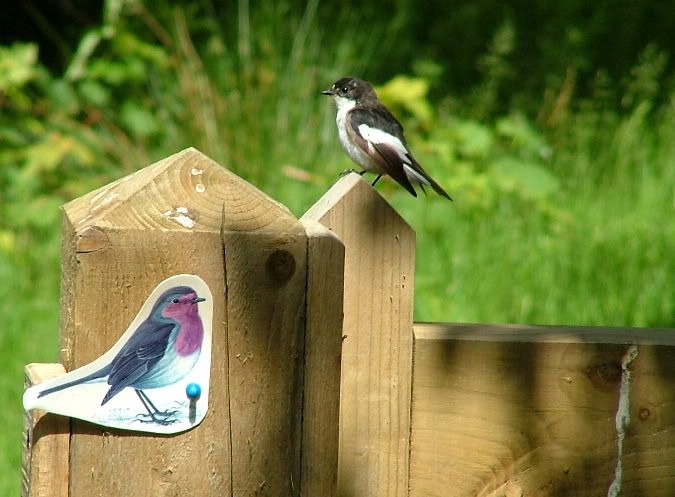
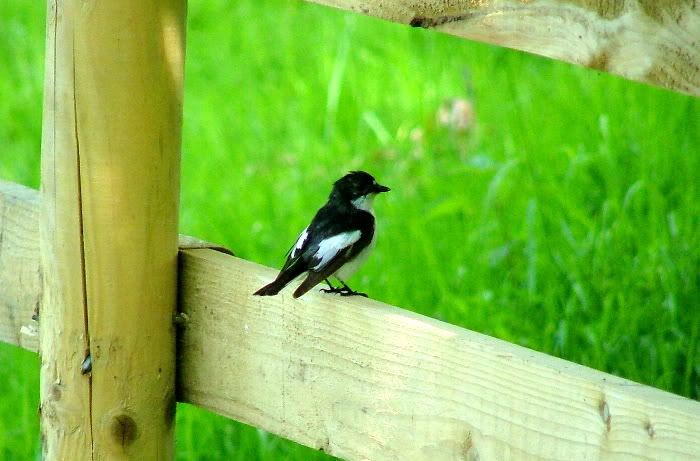
It's May, we're in the north midland, there's one place that screams a visit; The RSPB reserve at Coombes Valley (near Leek), and may I say it was brilliant at the weekend. The star birds are Pied Flycatcher (we saw 4) and Redstart (3), plus Wood Warbler although we didn't find any this visit - largely because we didn't hear any and the leafy canopy is already so full, keeping them well hidden.

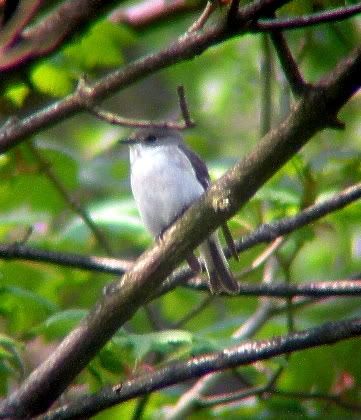
There is some disappointing news to report as the hide overlooking the pond has been dismantled I'm told due to H&S concerns. Last year it made for unbelievably close views of the pied flies, but now replaced with a bench out in the open it seems those special encounters are going to be a thing of the past, hence the dodgy digi-binned picture of the female (above). They are apparently discussing options for a more permanent replacement there.
Still, whether 5 or 50 feet away, they are magical birds to see at all, and the pond remains the top spot.

Other birds of the day included Raven, Lesser Spotted Woodpecker(!), Grey Wagtail, and woodland regulars like Sparrowhawk, Nuthatch, and Chiffchaff.

Broadleaf woodland, get thee to one soon!