Showing posts with label digiscoping. Show all posts

Thursday, 14 January 2010

A Garden Bonanza

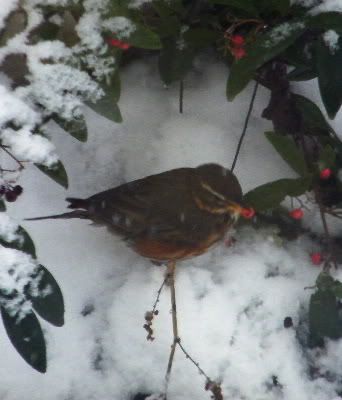
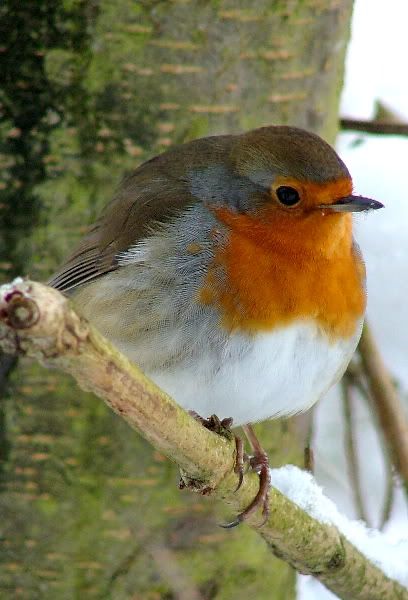
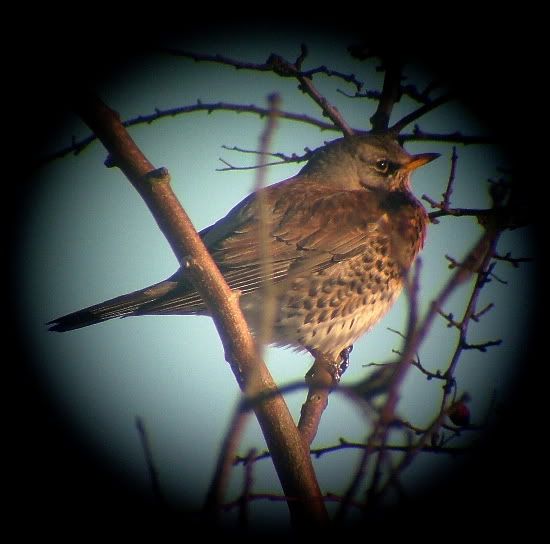
Mostly a garden update this one. All this snow and slipping down in the street has seemed worth it with the feathered visitors we've been getting. The Fieldfare has taken up residency for now, and the very wee cotoneaster and pyracantha we planted in the front garden last year have scored us a Redwing or two. The growing Reed Bunting attendance has peaked with around 15 birds at a time, and I pause to type here because a Mistle Thrush just landed on the lawn, it's squabbling with the Blackbirds over an apple core.
Extra bit of excitement came last night when closing the curtains in our spare room I noticed a shape in our heavily prune cherry tree. Twas a Tawny Owl, probably looking for the mice and voles that hoover up the seed spill from the day's action on our front garden feeders. The bird stayed a minute or two, even looked through the window at me. In the end it swooped into the gloom of our back garden, just magical. Makes species #45 on the garden list since moving in almost a year ago.

Final mention goes to the Weasel I saw darting around our patio the other day - another new record for our garden.

Looks like the thaw will set in for a couple of days now, expect we'll be back to normal by the time of the RSPB's Big Garden Birdwatch.

As the water is still frozen there's not been much up at the pit lately. The best I can report is a Great Black-backed Gull as an overfly down in the village the other day.

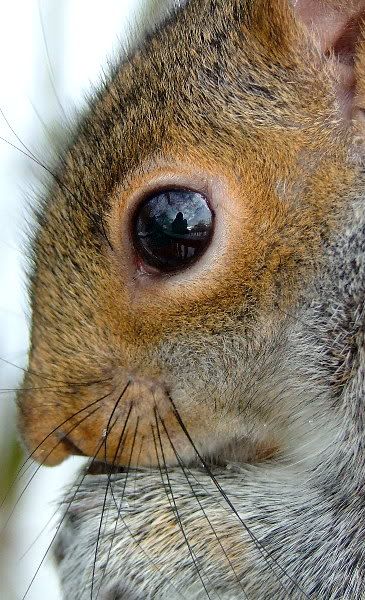
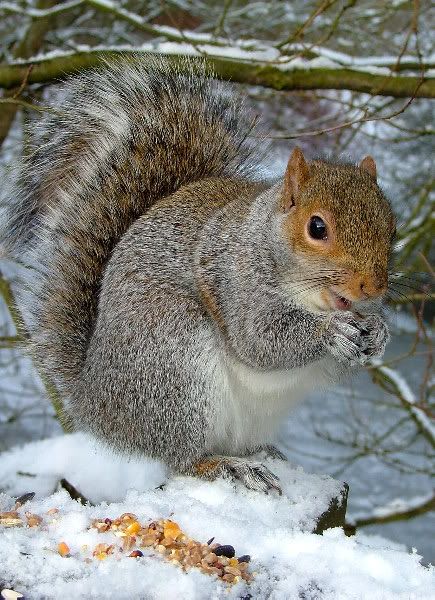
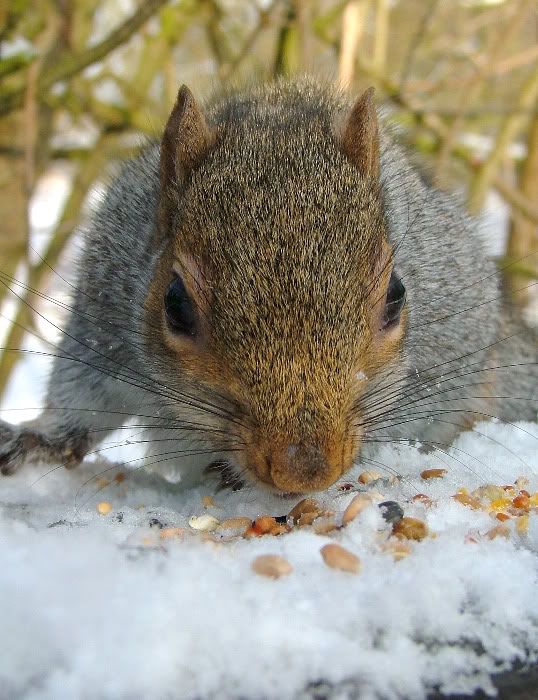
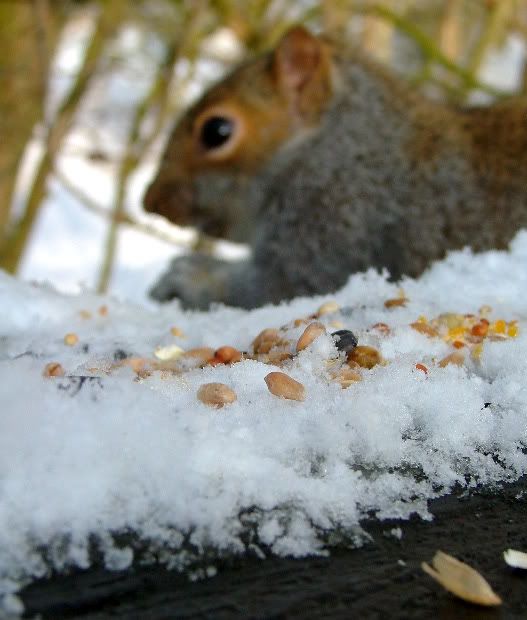
In other news, recent findings suggest that Grey Squirrel impacts on woodland bird populations far less than previously feared, although locally they could be bad news for scarcer species like Hawfinch, so we can almost like them again.
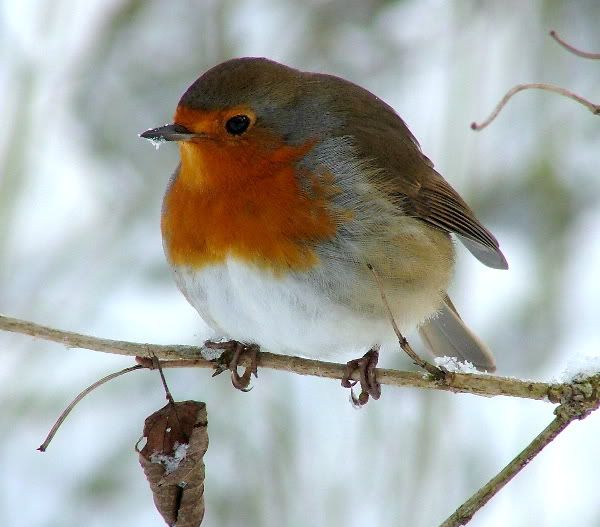
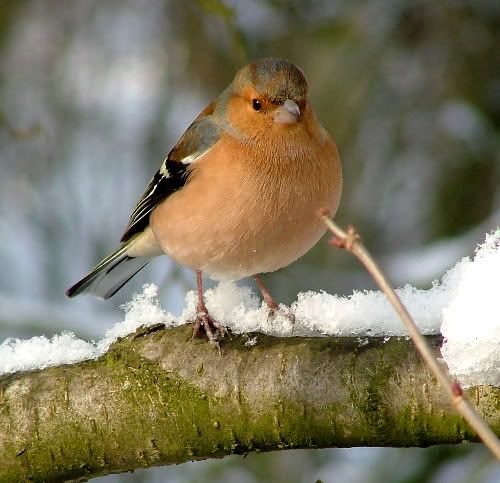
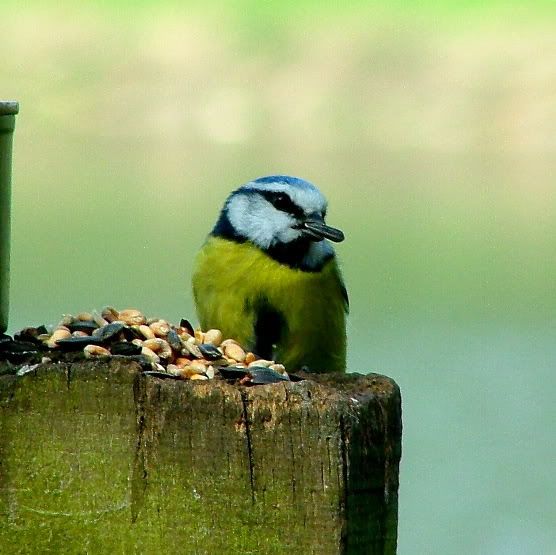
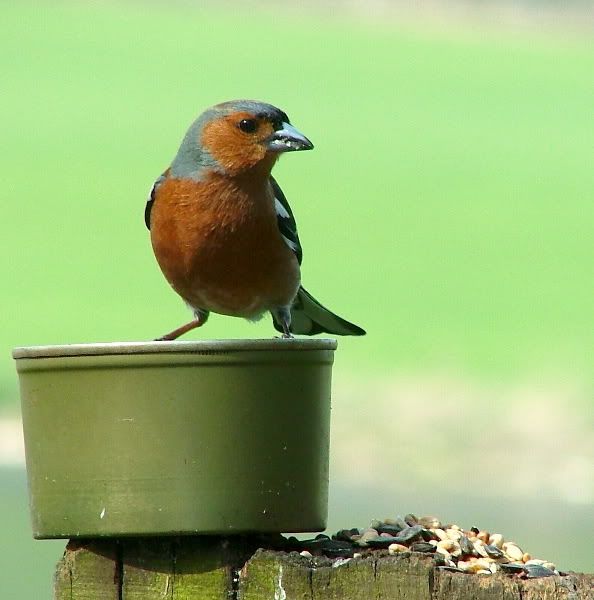
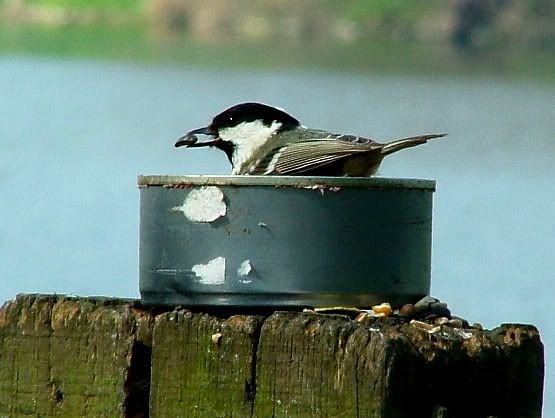
The perfect excuse to add a few squirrel pictures to the thumbnails of my recent photographs below...
Wednesday, 4 November 2009

As October Flies By


Bad bird-blogger, I haven't updated for over a month. To keep it brief mid-October we had our first big trip to Spurn. Not a classic day despite a favourable easterly from the sea, a netted Radde's Warbler released as the Anchor pub car park made for a very cheap life tick (not sure it really counts for that matter), and I chalked of another long-term bogey with a Jack Snipe skulking around the pond at Canal Scrape or whatever it's called. Bar-tailed Godwit, loads of winter Thrushes, a Merlin and smattering other nice birds made it all enjoyable enough. Only bummer was another from the nets - a Red-flanked Bluetail - missed the release for that one and then the bird refused to pop out of the bush it dived into. Invairably whichever side we chose to look from the bugger would briefly show from the other. Grah!
For a first experience of Spurn in autumn it was all right, and we'll return next year. The spectacle of dozens of birders and the near-miss car accidents when a report of a mega goes out is something altogether different to local patching.

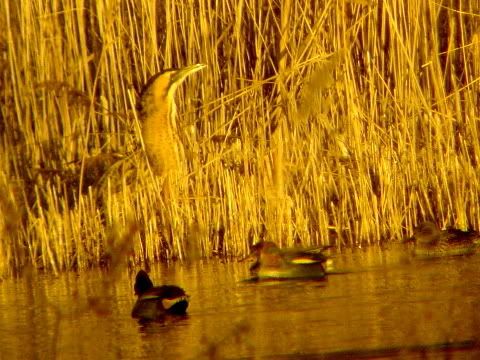
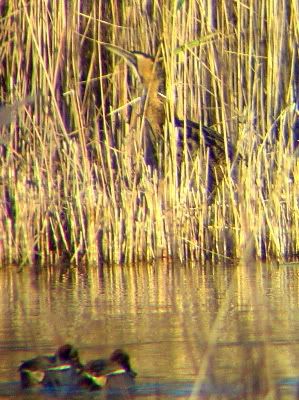
More recently we dipped on a Cetti's Warbler at Potteric Carr (might it winter there?). We picked a day when it chose to keep schtum, the regulars told me the bird has days like that and then others when puts on a real performance. Ah well, loads of Cetti's around the region at the moment, we'll pick one up sooner or later. Superb views of Bittern (video above) made up for any disappointment and I'll agree that Potteric Carr is quickly becoming the best place in the region, some dare even say the country, to see the species. One bird resident, with five expected as winter takes hold.
Slightly annoyed by some photographers camped in the hide near the Field Centre, the one with the feeders right infront. Giggling and saying 'poor thing' each time you scare off a GS Woodpecker with an assault of loud photo shutters, and would you believe a flashgun, isn't really on. Hardly what they call fieldcraft is it?
Otherwise hugely impressed by the new hides, lots and lots of new hides, overlooking the lagoons where all the Golden Plover hang out. It was always a big nature reserve and now you can access the whole thing, brilliant.

Finally, had a day RSPBing at Carsington yesterday. More schoolkids, more exclamations of 'wicked' after first views of Lapwings through a telescope. Bird of the day was a rusty Garganey that looks more like a juv male than a female. Frustrating to lose the bird when a low-flying Spitfire put up probably every bird on the reservior. Later it was refound at the other end of the water, with a Great Northern Diver, yes - they're back, or at least one so far. Now if we're really talking about the best place in the country to see a particularly scarce bird, Carsi genuinely rates for its GNDs.
The Carsington Kingfishers continue to put on good shows...


Last word, Lesser Redpoll in the garden, thats species #41 since January.

Monday, 28 September 2009

Carsington Kingfishers!

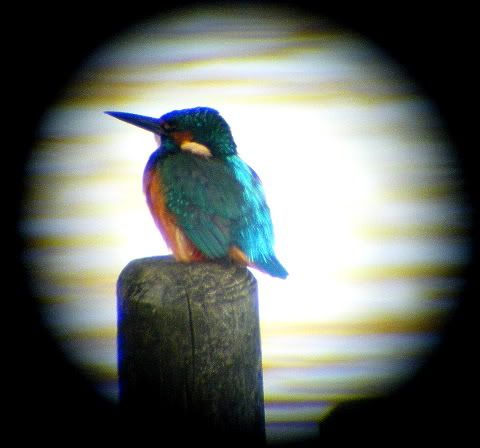
Did Carsington last week, first event I've done for months, so long ago they've even changed the name of it - A Date With Nature - sounds like a date worth keeping. Fairly quiet there, the best bird news is the Kingfisher is becoming quite tame and posing very neatly in front of the hides and Wildlife Centre. If it sticks around better photographs should follow, I was busy going wow with the visitors on the day when the birds was super close.
Wigeon numbers building, Tufted Ducks and Coots arriving all the time and will soon become so many I think it's a spectacle Carsington is too rarely credited with. A Yellow-legged Gull sat on a tern raft almost literally all day. There was half hour during which it wasn't there. Remember reading somewhere the large gulls spend an average of only 26 minutes feeding each day, so I suppose plus some flight time that approximately correlates.

Plenty of action in the garden too, we've re-sited our nyger feeder and suddenly there are Goldfinch all over it, Coal Tits have also been drawn in. A Chiffchaff this morning makes #38 for our list since moving in last January.
Getting on for that time of the year when the Swallows and Martins disappear, still plenty around the hall, takes about a week to realise when I've seen my last one.

Monday, 11 May 2009

Wow, Rutland Water


The plan was to scooch down to Rutland to finally bag one of the many Cattle Egrets in the country these days, by the end of a very long day we'd scored a list of 81 species and some memorable views - this despite missing out several hides and the Manton Bay area.

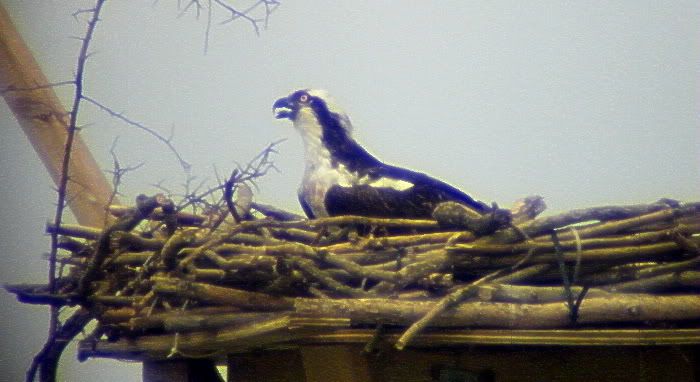
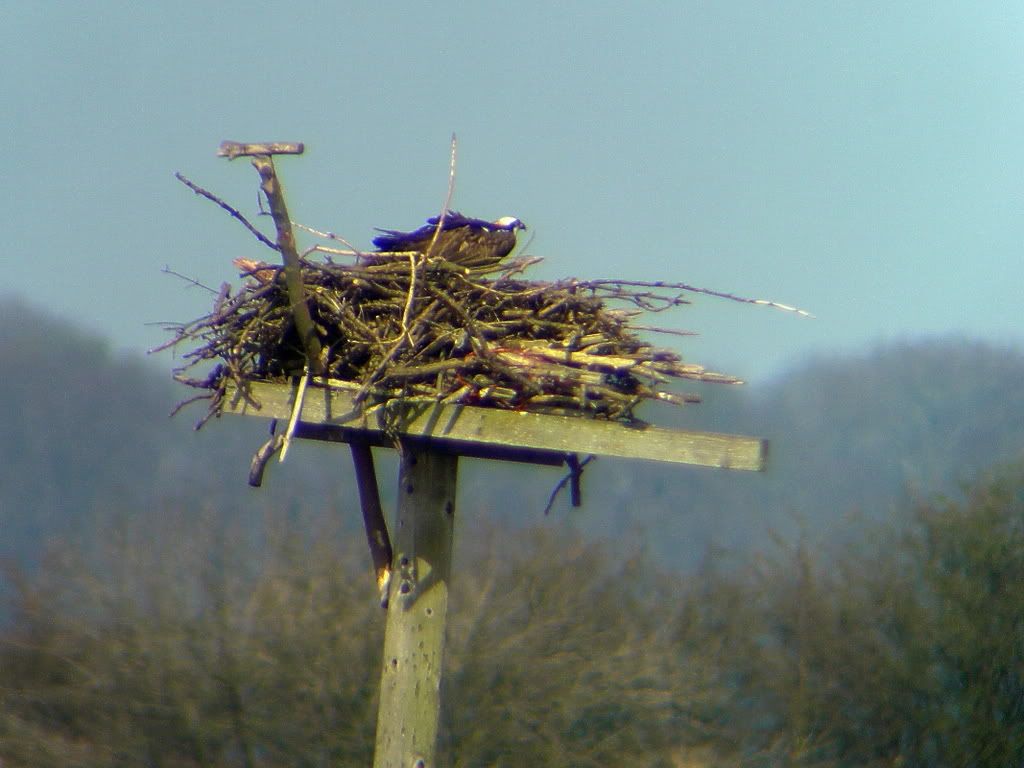
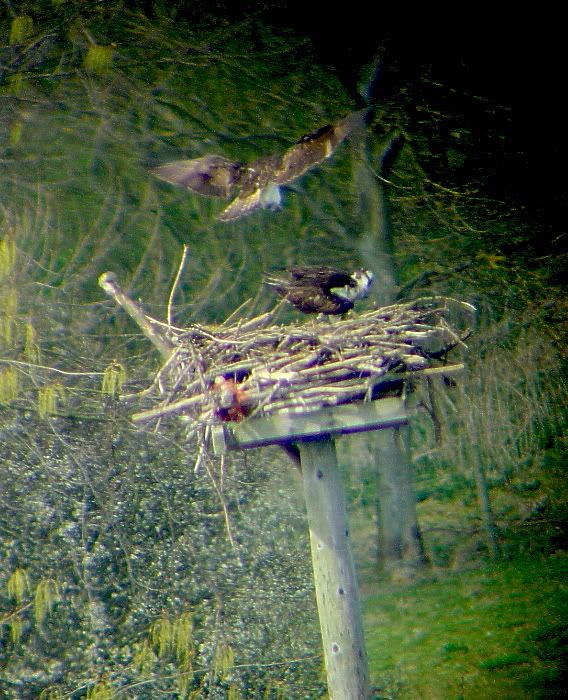
Big surprise was the new lagoon on the north side of Egleton Reserve, even googling after the visit I find very little online to cover quite what an interesting development it is. Being Rutland it's another big area of water with islands and scrapes that are an obvious magnet for all kinds of waders, and crowning glory of this achievement is an Osprey platform with attending bird. To give an idea of what it's already getting we saw Sanderling, Sandwich Tern and Avocet on or around that lagoon (gales over the last few days certainly helped with that). At one point the two Avocets mobbed the Osprey, which really underlines two of the big successes in British bird conservation over the last couple of decades. Who'd have imagined that even 15 years ago?

On other lagoons, three Black Terns, a pair of summer plumage Black-necked Grebes, and dozens of Hobbies hawking high and low, are all birds to make any day. Early evening a Cuckoo finally showed itself after teasing with distant calls all day long.

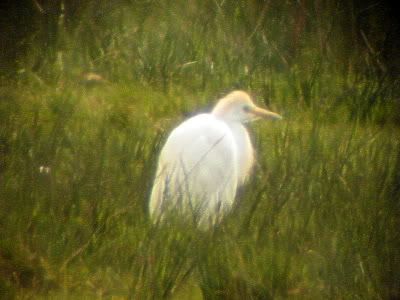
Shouldn't forget the reason we travelled in the first place, the Cattle Egret. Always kind of distant, invariably gorgeous, and yes it was among the cows (substituting for the elephants and rhinos of Africa).

An apparently plastic* Ruddy Shelduck hybrid raised and disappointed hopes, and yet what a richly coloured bird nonetheless.

Get thee to Rutland!Osprey nidifying...
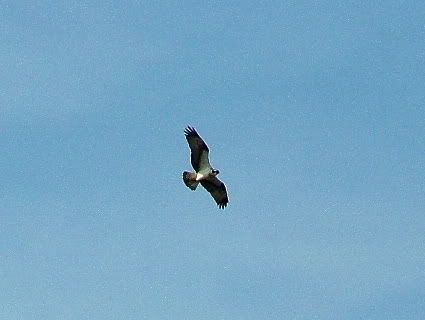
...Hobby... flying.
Ruddy/Cape/Egyptian Goose/Shelduck thing

Cattle Egret


Plus, a bonus video, shot from a good distance...


*plastic - noun, slang: A wild bird of dubious origin, usually an escapee from an ornamental wildfowl collection.

Wednesday, 25 June 2008

Daddy Long-legs

A quick post to wrap up the Wales trip. On the way across we bisected Cheshire, very close to a nature reserve were Black-winged Stilts were still nesting. Didn't expect us to pass that by without taking a look, did you?
This was only the 7th known occurrence of nesting in Britain for this species (found more usually around the Mediterranean coasts), unusually two or possibly three pairs breed in Nottinghamshire in 1945, with a handful of other records since then. Cue the RSPB and their Aren't Birds Brilliant team to watch over the birds and show them to the public. You couldn't miss them...


Ridiculous and beautiful looking birds really, my girlfriend labelled the male bird 'daddy long-legs' and you can easily see why - indeed proportional to body size they have the longest legs of any bird in the world. Not only strange by appearance, the parent bird had the habit of carrying the chick around under its wing, so you'd see the adult stood with two legs poking from its armpit and know where the chick was.
Sadly it was only one chick. The clutch hatched during a stormy night which the rest of the brood failed to survive, and now regrettably I have read that the one chick has been taken by a predator since our visit to the site. Just 1 week away from fully fledgling too.

So for this year, that particular spectacle is over. Let's see if the Stilts pop up anywhere next Spring. Keep an eye out for ridiculous birds, all right?

Maybe you'll find a long-stayer worthy of naming, like Sammy, a remarkable bird that took residence at the RSPB's Titchwell Reserve for 12 years from the mid-90's. Thought at the time to be the most photographed bird in the UK, beat that Kate Moss!

Monday, 16 April 2007

Red-throated Diver (rather on the white side)

With all those bird-miles burnt up on the way to Norfolk we're having to keep our weekend forrays closer afield for the remainder of the month. Fortunately a nearby opportunity for a lifer was there for the taking. First reports of this Red-throated Diver on a lake near Clumber Park came in two weeks ago, so it's become bit of a stayer, best bird in the county for a while too, and #191 for my life list. Don't get many of them this far inland in England.
The Diver was a real beauty, showing very well for the hour we spent there. To the eye it looked a very elegant bird, moreso than a camera could capture, and those eyes, black-eyes, like shark eyes, seemed to give the bird even more character.


Plenty came to see it. This pull-in is a well-known local raptor watchpoint, formerly famous for Honey Buzzard. Not sure they are seen so often these days though, possibly discouraged by the recent explosion in Common Buzzard numbers which have already made Heron so nervous they've abandoned a nearby colony.


A few thumbnails of the day's other birds...


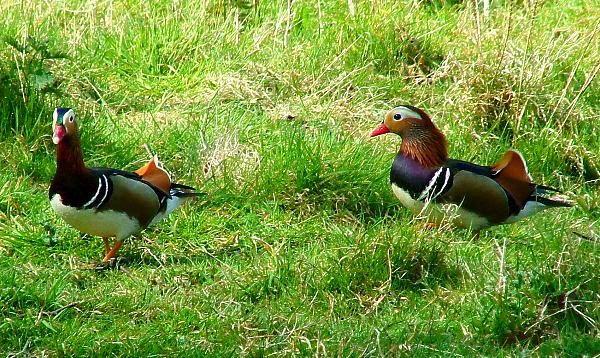
Small numbers of Mandarin hang around the feeding station, probably a nascient 'wild' population ready to grow rather than escape


And finally...

Video - Red-throated Diver

Wednesday, 11 April 2007

Norfolk Trip Part One: Via Rutland

Okay, a lot of updating to do here after our brief Easter sojourn in Norfolk, for the 4 days we managed spot on 100 species, a target I hadn't dared to speak of before totting up the list.

First stop on the way south was Rutland. The local news had mentioned the Osprey were returning so we hit the south side of the reservoir, the Lyndon Reserve where sightings are apparently most likely, it had just opened to the summer public that morning.
As we arrived there was quite the hubbub among the volunteers, they were very excited. Turned out a sixth bird had just returned, a female, and immediately rested into one of the next structures. We headed for the overlooking hides.
That's the female, she was noticeably bigger than the male.


And he was ready to mate, little matter that she'd only just completed her migration all the way from Africa. Three times he mounted and three times she very certainly shrugged him off. So instead the male headed off to collect sticks and grass for the nest.


That's him during his display flight (you can read more about this pair here).

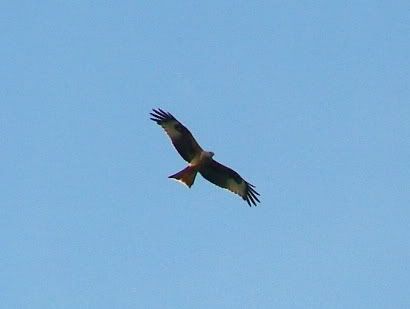
During which he was joined by a couple of Red Kite. Very special sights indeed.

And on the ground in front, two Muntjac nibbled on the reed edges.

In all honesty there wasn't very much else to be seen around the Lyndon Reserve so we headed for the Egleton side where habitat is a bit more varied, with wader scrapes etc. Even there it was pretty quiet, plenty of nice birds, Goldeneye, Pintail, Egyptian Goose, Chiffchaff, my first House Martin of the year, and the Tree Sparrow at the feeding station near the visitor centre.

It was a marvellous first leg to the trip.

Sunday, 25 March 2007

City Visit

The girlfriend wanted to go into Nottingham to shop at the Chinese supermarket, so to make a trip out of the drive I suggested we visit Colwick Country Park, one of the top 10 sites in the county, one with plenty of good reports.
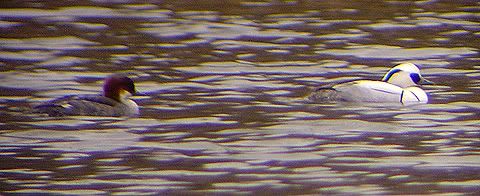
Can't be disappointed either, Smew are star birds any day and a nice yearly tick. True to form they were on the smaller lake where the trees overhang the bank. Ever glamourous as they are, as a child I always thought of the drake as being like that fancy ice-cream with the chocolate swirls in it.

Elsewhere the park was quiet, good birds, if nothing so spectacular - Goldeneye, Chiffchaff, large mixed flocks of Linnet and Reed Bunting, and I heard a Lesser Spotted Woodpecker drumming, as per usual for the bird, heard but not seen. 46 species in all.

'Smew Lake'.

I see Red-necked Grebe has been reported on another site in the county today, wonder if I can convinced the girlfriend to make for it tomorrow.

Tuesday, 19 December 2006

The Bittern Trip Mk2

As the saying goes, if at first you don't succeed... so this was our second trip to find the Bittern at Potteric Carr NR, near Doncaster, and this time we weren't to be disappointed.


Perhaps it was the birds becoming more comfortable at their wintering site, the calmer brighter weather, or maybe we were just luckier this time, whatever the reason they showed well yesterday, with two different individuals from one very popular hide. A new lifer for me.

Their famed talent for transformation is well founded, and we watched these birds seamlessly move from streaky egg-shape to towering serpent. It's quite remarkable, and quite typical of this highly charismatic species.

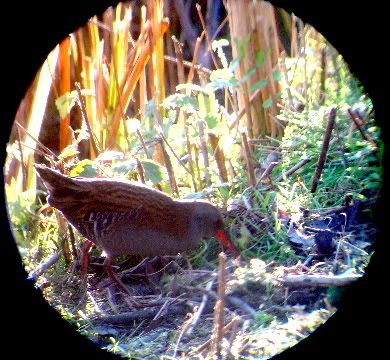
That other elusive bird of the reedbed Water Rail was similarly accommodating, indeed more so. I'd never previously heard of them coming to feeders, never mind seen it, but now I'm a believer. As the tits and finches scattered seed down onto the grass below, the Water Rail skulked and crept from the reeds, out into plain view to peck up the remnants, no more than ten yards from the hide.

On the far side of the reserve beneath the main road into Doncaster, 2,000-3,000 Golden Plover roosted in the afternoon with smaller numbers of Lapwing.

All in all, a grand day out, and just reward for all that Christmas shopping I've had to do with my girlfriend.

Bittern in Winter, Black-necked Grebe breeding in the Spring/Summer, Potteric Carr is quickly becoming a must-do for the northern birder.

Thursday, 30 November 2006

A Lost Loon


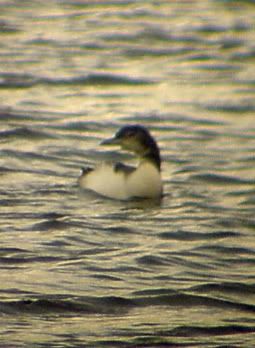
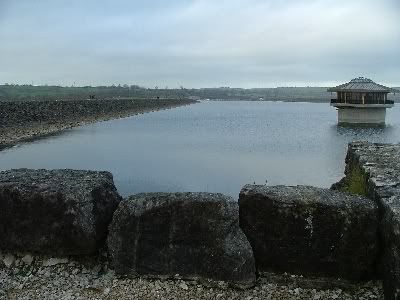
A new tick for me, and probably a new one for lot of birders since by all accounts it's been a bumper month for Great Northern Diver across the country. This one, a first winter bird by the looks of it, was doing laps around the tower at Carsington Water. Even out of its pied adult summer plumage the diver is an immaculate creature, the delicately white-dotted back, the gleaming red-eye and large dagger bill, alas a rudimentary moment of digi-scoping sans-adapter just doesn't show it so well.

The GND has been there most of the week so word had gotten around and we happily guided four or five other birders to the rarity. You know you have a special bird when people don't even have to tell you what species they're looking for, a simple 'is it about?' is enough.

Good numbers of Wigeon around too.