Showing posts with label common scoter. Show all posts
Showing posts with label common scoter. Show all posts
Tuesday, 10 November 2009
A Birdwatch to Remember
Big day at Carsington this weekend. It began with a report of a Black Redstart (video above), by the end of it Great Northern Diver (mostly summer plumage), female Scaup and Common Scoter, and a Ring-billed Gull made for the best visit I can remember for a long time. First and last birds there lifers too (#222 & #223), and interesting birds. The RB Gull is a Carsi regular, turning up in the roost early each November staying for a few weeks and then it's off again. Must have its reasons I suppose. Bet it spends the summer somewhere like Scotland, can't really see a trans-Atlantic migration from its normal range being made every year.
The Black Redstart was a second site record, the previous one a spring bird from as far back as 1996. Charming birds, a sort of smoky delicacy in the feathers, they've a definite touch of class about them. Ours spent a lot of time on the sailing club building, picking off flies warming themselves up on the sunny side of the roof.
To add to the impressive cast earlier in the week we had a Garganey of debatable age and even gender during the RSPB's A Date With Nature event. That's how it can be when you have eclipse males around, this ostensibly female-looking just too warm coloured to be a female. Might still be on the water now.
The water is really really low on the reservoir meaning the acreage of exposed mud is enormous, good for the wintering Teal and surely alluring for any vagrant waders. Eyes peeled. The Garganey enjoys the mud too, but really ought to be in Africa already.
Yellow-legged Gull, Ravens, Buzzards, Peregrines, Goldeneye, tonnes of Tufties, Wigeon, Pochard and Coot, Snipe and other regulars make it fairly easy to notch maybe 60 species in a day visit at the moment.
Also had good numbers of Pink-footed Geese overflying the few days. Nice to be under their direct flight path between their first port of call in Lancashire and their real destination in Norfolk.
Another video of the Black Redstart, it just misses a whopping big fly there...


Thursday, 10 April 2008
Great Greenshanks Batman!
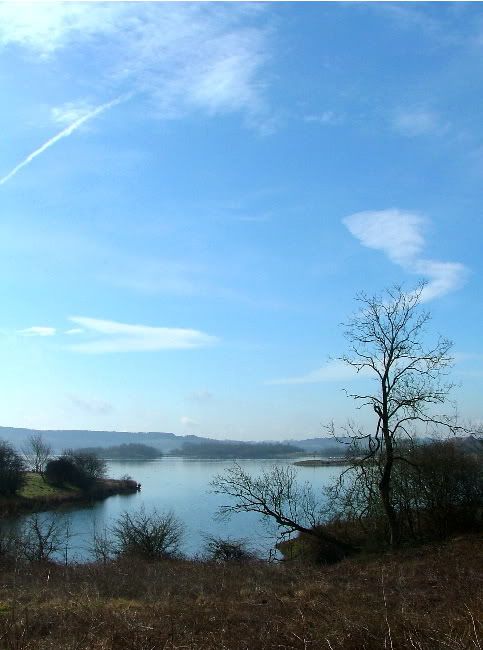 Well folks, I think we can call this spring and the bird life confirms it. Chiffchaffs are everywhere, and those zipping flocks of hirundines can't be argued against. Birds do it once again, this time enriching us with the hope that very soon it'll be so much warmer outside.
I had another fabulous ABB day this week, in mostly fabulous weather, and I'll use that word again, we had some fabulous birds coming in, almost a wader bonanza in Carsington terms. Bird of the day was an unbeatable Greenshank, the site's first for a good long while. Their traditional migration route toward their breeding grounds on the moors and peatland of NW Scotland is coastal, hence the rarity in Derbyshire. Most will winter in Africa, though many also spend the cold months around the SW coast of the UK.
If one thing strikes me when I sight a Greenshank it is their beautiful daintiness, how the bird is almost too delicate. Nearest species we have to stilts, at present.
Other birds for the day included Common Sandpiper, Common Scoter (marine ducks that migrate overland between the Irish Sea and Scandinavian breeding areas at this time of year), Little Ringed Plover, the regulation pair of Little Owl, Wheatear (on the dam - real hot-spot for migrant passerines), and White Wagtail (the continental race of Pied Wagtail - look for birds with pale grey backs and very clean white flanks below the line of the wing). Almost goes without saying the Great Northern Diver remains, and now shows a hint of summer plumage on the back. Hopes are high it will turn fully before it departs - into something like this - handsome or what?
Icing on the cake, and the whole point we do the events at Carsington, was a bumper crop of membership sign-ups for the RSPB. That's win-win for everybody, for birds, for people, forever.
I have news to report that isn't so sportive. My previous entry reported on the return of the King's Mill Barn Owls, which is great, but alas I learn today their territory is imperilled. Already an area of superb hunting habitat south of their nest site has been ploughed up for commerical development, which will doubtless include the construction of a new road. The local RSPB group therefore views the long-term future for Barn Owls at the reservoir in very pessimistic terms.
My hopes rest on remembering how they surprised us by turning up, surprised is in their bizarre choice of nest site, surprised us with their breeding success, and I look forward to them surprising us again. I watched one of the birds sat on a post a yard or two from the railway tracks the other night, and for a heart-stopping moment it scarcely flinched as two trains thundered by it. Again, after all the noise had died down it was a surprise to see it calmly perched with the same simple ease it had been before the trains passed. Blaze is the word that springs to mind.
Got five mintes, why not look at the RSPB's campaigns website?
Subscribe to:
Posts (Atom)