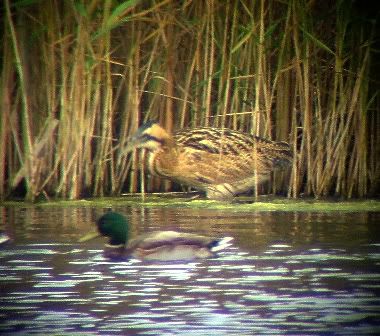
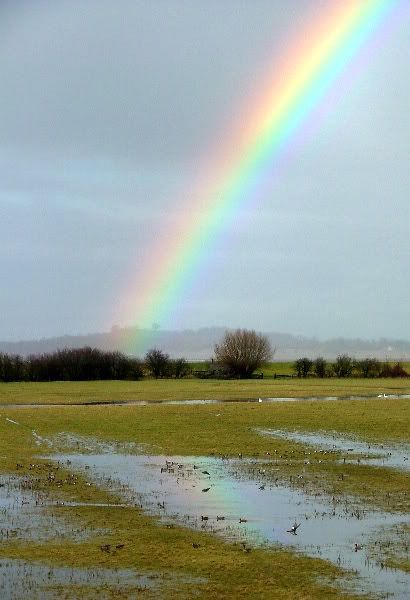
 Slimbridge in the early days of March, just a majestic place.
Large numbers of Whoopers and Bewicks were still around and perfect in the sunset during the last afternoon feeding session. Green-winged Teal, the close American relative our native duck, was the only lifer on the trip, but you go for the spectacle and sausages in the cafe. A chap at the table next to us asked for an ID and for a relative novice gave a spot description of a Shelduck, and he was thrilled by what he'd seen, they are stunners after all. Don't think I've ever seen a non-birdwatcher converted so completely so quickly. Well done Slimbridge.
Meanwhile at home in the garden the Dunnocks were upto something...
Delicate subject, I'll let Wikipedia explain it:
This species makes up for its drab appearance with its breeding behaviour. Females are often polyandrous, breeding with two males at once, and thus giving rise to sperm competition. Males compete for mating access to the female, but DNA fingerprinting has shown that chicks within broods often have different fathers, depending on their success at monopolising access to the fertile female. Males try to ensure their paternity during courtship by pecking at the cloaca of the female to stimulate her to eject the sperm of other males with whom the female has recently mated.
Those were birds in my garden, here's one that might have come from Australia...
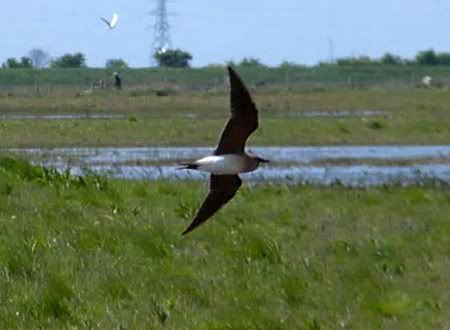 One of the birding events of the year came in May with this Oriental Pratincole at, let me get this right I always mixed it up with Freiston Shore, the RSPB reserve at Frampton Marsh in Lincolnshire. This was a bird that ticked every box, outrageous/unimaginable vagrancy, movie-star looks and enigmatic behaviour. It swooped by the hide hawking for insects much like a Swallow and each time to fresh "wows" from any observer newly arrived. Of course a lifer, and other nice birds included Temminck Stint and Curlew Sandpipers. One of those regional twitches where you see familiar faces, so altogether a very nice day indeed. The RSPB have done wonderful things at Frampton, wasn't many years ago we visited on spec and found pretty featureless bleak marshland with nothing like the variety of life present there now. Well done RSPB!
Happily a more local twitch, with a less criminal CO2 output, came with a Great Reed Warbler at Straw's Bridge Nature Reserve near Ilkeston. A local lady heard it singing and recognised it as something very different from what she usually finds and alerted a birdwatcher she knew. Well done her!
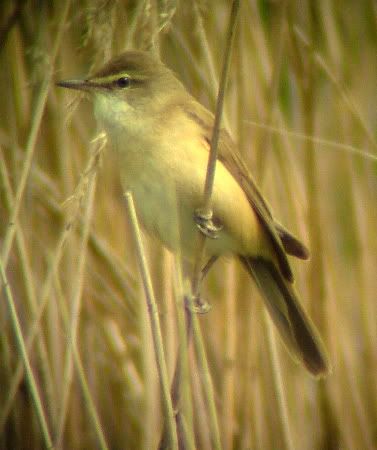 Bit of a brute as warblers go. Good populations are just across the Channel and it seems like we really ought to see more of these overshooting their migration. Currently they remain a exciting vagrant and potential breeder/coloniser should all the right things happen some day. This one stayed for about two months in a patch of reed bed you could almost stretch your arms around.
(Here's a video of it singing.)
June, and our first trip the Farne Islands...
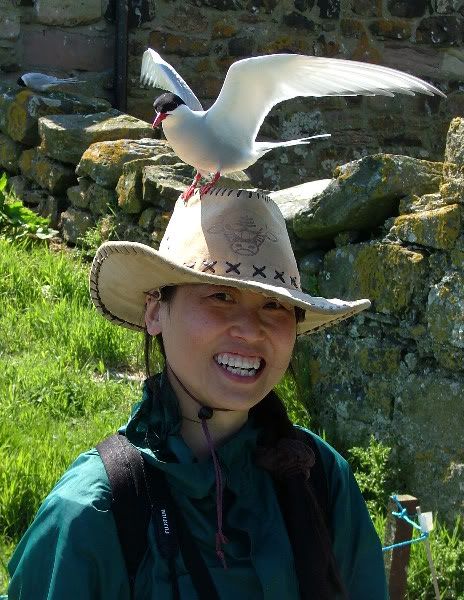 Arctic Tern on the girlfriend's head. Nuff said. For more on the Farnes check out the blog kept by the National Trust wardens.
An uneventful summer later and my bird of the year at Carsington Water.
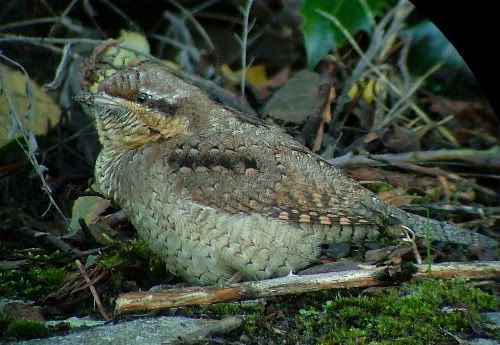 My ultimate bogey bird bagged and on the local patch too - I thought it'd be many a fruitless hour spend on the east coast before I saw one of these. It's a Wryneck of course, almost more reptile than bird. Found by one the top chaps from Carsington Bird Club at the reservoir just off the dam wall (which has always been a bit of a migrant magnet). With patience and several rain showers later the bird hopped out from the bushes and within two yards of those of us who stuck around the afternoon.
Very rare bird for Derbyshire which makes it more than doubly amazing that another (or the same one) turned up not far away in a housing estate in Heanor. Couldn't get there for that one but by all accounts the residents enjoyed the bird as much any ornithologists as it skipped out of the way of buses and perched on window sills. Some of the local kids on their way school must have seen a truly stunning stop of nature. What a bird!
October and it had to be Spurn. Winds weren't at their most favourable, you can't keep a good place down though.
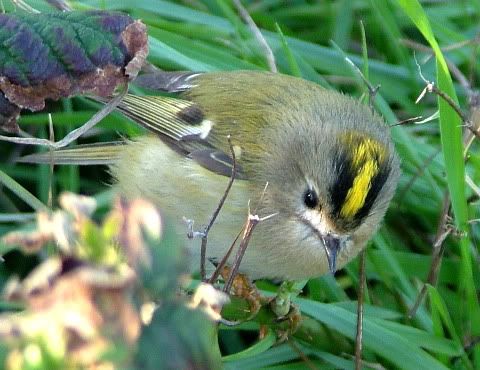 We've had better days there, Waxwing, Snow Buntings, Mealy Redpoll, Merlin, Jack Snipe were the best of it. The girlfriend's favourite was this Goldcrest we found behind the dunes. Completely fearless and perhaps exhausted after a hop across the North Sea (for a bird that would sit comfortable in a teacup a pretty damn amazing achievement), a bit of a treat to see so much detail on such a miniscule bird.
And that's really the chunk of things. Oh there were other days, other birds, Turtle Doves and Cetti's Warbler at Wicken Fen were memorable, and our Little Owls up at the pit did very well this year. Birds for another update, another time. I promise to do my best and keep this blog going, dib dib dib.