Monday, 16 June 2008

Ynys-hir

Another swift post to sum up the best of the birding enjoyed on my camping holiday to NW Wales.

Top spot had to be the RSPB reserve at Ynys-hir, never heard of it? Me either before I went, but I am quite comfortably confident it's the finest RSPB site I've ever been to. Where to begin describing the plethora of habitats? The oak woodlands? The mudflat estuary? The fresh water pools? Or how about the reed beds and open pasture? I could go on.
As you may imagine, this extraordinarily rich variety offers a true wish-list of summer birds in early June... maybe 10 pairs of Pied Flycatcher by our straw count, almost as many Redstart, and best of all a single Wood Warbler - a lifer for the girlfriend and I. May have been too late in the day for the bird's amazing stuttering trill song (listen here), however a plaintive 'tuh' contact call quite unlike anything I've heard from a Willow Warbler of Chiffchaff helped to confirm with our ears what we seeing with our eyes through the thick green foliage.

In at least three of the hides we found nesting pairs of Swallow, probably my girlfriend's favourite part of the whole holiday came in watching them toing and froing, watch out for the video at the bottom of this post.

Other top sights for the two days spent there (we simply had to go back after the first one!) were family groups of Raven and Stonechat, a single Whinchat, display flights from Common Sandpiper, overflights from Little Egret, Sedge/Reed/Grasshopper Warbler among the reeds, Oystercatchers and Lapwings, hovering Common Buzzards, Siskin and Great Spotted Woodpecker visiting the feeders by the visitor centre/shop, and a sunbathing Treecreeper - stubby wings outstretch against tree trunk, to name the highlights.
For me most memorable of all was a Goldfinch nest riding the strong winds in the outermost branches of an oak tree at eye level from one of the hides - rising and falling five to six feet after every gust. We couldn't have planned to see a Goldfinch feeding its day old chicks, which trust me is an extraordinarily privileged view into the precarious early days of those birds.

Some pictures to illustrate all this beauty...
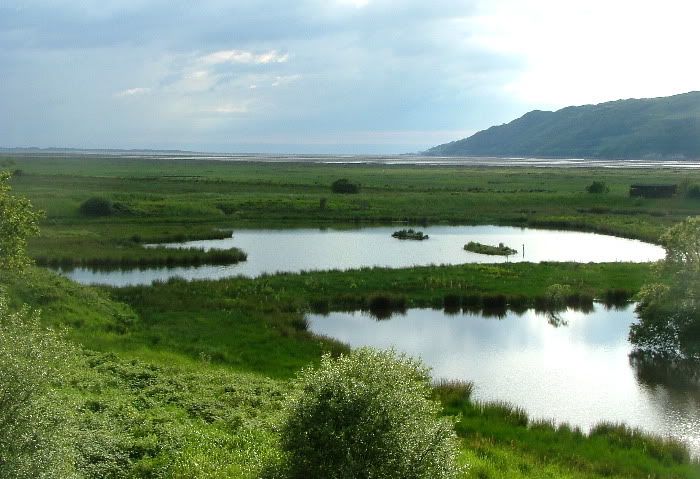
(Goldfinch nest just to right of picture.)
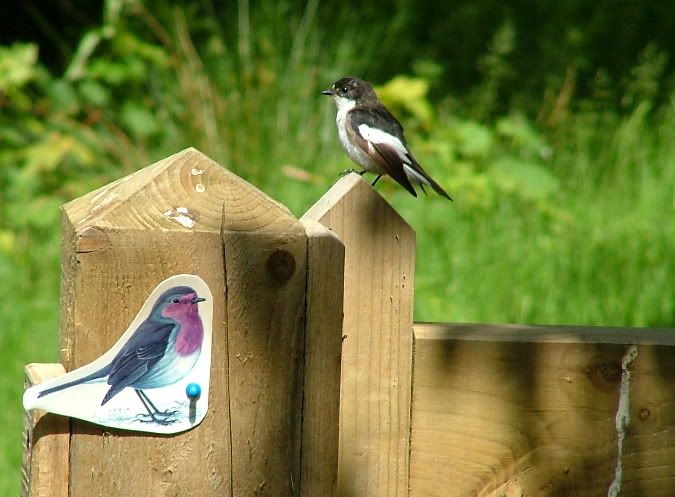
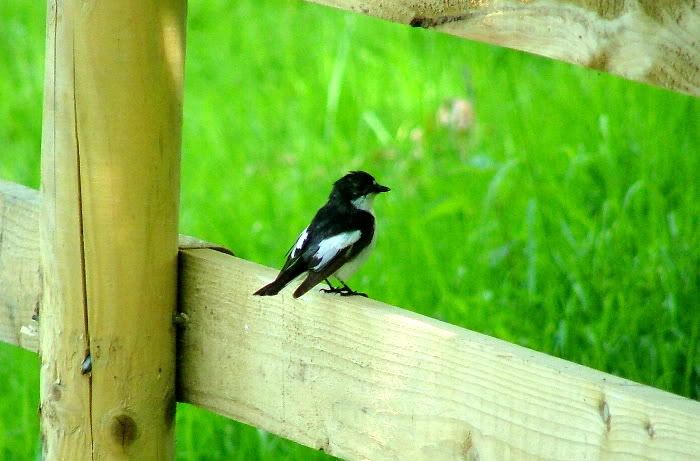
Perky Pied Flycatcher.


Those Swallows.

More Welsh birding to come.

Wednesday, 11 June 2008

Flying Entry

Big update soon about my holiday away in NW Wales, but for now just a few local notes. Seems a while ago now (three weeks) that I scored with Black Tern back on the local patch at King's Mill Reservoir. This year they've been just about everywhere and seen by just about everyone, so I'm glad I got mine!
Lovely, elegant birds in summer plumage, and very graceful they are too hawking for insects at the surface waters. Their dark tones, relative small size, I don't mind admitting it took a minute or two of sifting through the large hirundine flock to pick out our bird.
It scored well with the girlfriend test, she was well impressed.

Last night we had a unsuccessful forray to Budby Common in search of Nightjar. We heard them all right, at least two, probably three chirring after 10pm, that was the extent of it though. What did show were Woodcock, we more than a dozen sightings of them roding above the treelines with that strange croaking and hiccupping display call. Can't say I'm disappointed after that!
We shall return though, possibly for Nottinghamshire Birdwatchers' Nightjar walk on June 20th.

So stories and pictures from Wales next time...

Friday, 23 May 2008

Carry On Doving


A video of the Turtle Dove that graced the bird table at Carsington this week. Apologies for the poor image quality, but at least you get some comparison with the Collared Dove in front there.

Thursday, 22 May 2008

Dove Me Do

Had a surprise during our ABB event this week; a Turtle Dove arrived at the bird table, so far as I'm told making it only the second record for Carsington and the first in around 12 years. Great news as this is, sadly it looks like they are set to get even scarcer than that with intensive farming methods, loss of set aside and the eagerness of Maltese hunters to fill their bags, all impacting on this red listed species.
Charming bird, distinguishable for being slightly smaller than a Collared Dove, as well the obvious plumage differences.

The good news is the European Commission is to begin dealing with the Maltese government's failure to crack down on the illegal shooting, although that's little use if the doves have nowhere to feed or nest when they do get to the UK. More about that here

In case you were wondering the species' name 'turtle' comes from the French word for the dove, tourterelle, which is said to be closely onomatopoeic of the bird's purring song. So don't say I never post anything interesting!

Other birds for the day included a family of Raven playing along the hillsides, and a probable pair of Curlew bathed by the wildlife centre about 30 minutes apart in the morning. The male has a slightly shorter bill than the female, which is about the only way of telling them apart.

Most popular among our visitors however were the Lapwing chicks, best described as fluffy balls on stilts. Just two so far, but surely more to come. Well done Severn Trent Water for their management of the islands!

Turtle Dove

Monday, 19 May 2008

Budby Common, but its Birds Aren't

Quick update. My last decent birding foray was an evening stroll around Budby Common/Sherwood Forest Country Park. It's a National Nature Reserve up there, and the wildlife richly deserves that great distinction. Over the expanse of open heathland we saw 3 Cuckoos, several Woodlark, Tree Pipits, a Hobby screamed through, Yellowhammer, Green Woodpecker and Jays were about too, plus Red-legged Partridge and Yellow Wagtail in the farmland nearby. Wasn't all birds either, we spotted a fox, a couple of hares and a stunning sunset too.
The reserve could be the finest wildlife destination in the whole of the county.

In a couple of weeks when the bird are more active the rangers do a guided Nightjar walk, I went on last year's and it was just brilliant. Be sure to give it a go if you can get there.

Wednesday, 14 May 2008

Coombes Gladly

It's May, we're in the north midland, there's one place that screams a visit; The RSPB reserve at Coombes Valley (near Leek), and may I say it was brilliant at the weekend. The star birds are Pied Flycatcher (we saw 4) and Redstart (3), plus Wood Warbler although we didn't find any this visit - largely because we didn't hear any and the leafy canopy is already so full, keeping them well hidden.

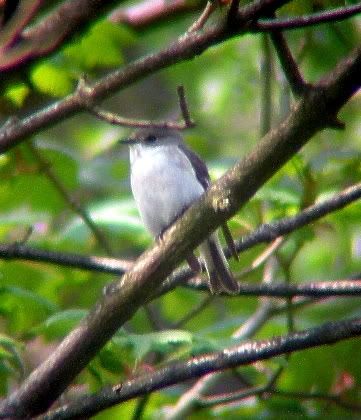
There is some disappointing news to report as the hide overlooking the pond has been dismantled I'm told due to H&S concerns. Last year it made for unbelievably close views of the pied flies, but now replaced with a bench out in the open it seems those special encounters are going to be a thing of the past, hence the dodgy digi-binned picture of the female (above). They are apparently discussing options for a more permanent replacement there.
Still, whether 5 or 50 feet away, they are magical birds to see at all, and the pond remains the top spot.

Other birds of the day included Raven, Lesser Spotted Woodpecker(!), Grey Wagtail, and woodland regulars like Sparrowhawk, Nuthatch, and Chiffchaff.

Broadleaf woodland, get thee to one soon!

Friday, 9 May 2008

Success!


Another post that will have to be brief.

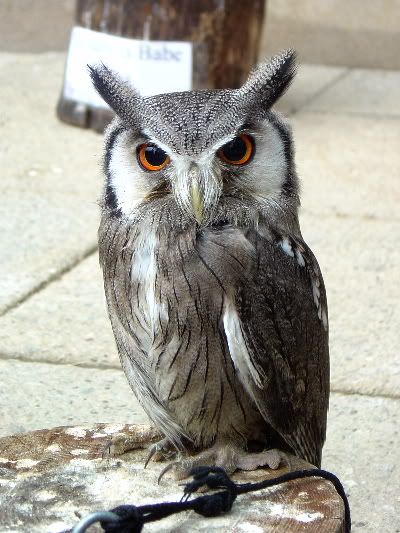
Firstly, say hello to one of the stars of Carsington ABB's Bird of Prey Day, this utterly gorgeous White-faced Scops Owl. His native region is around the fringes of the Sahara, so not a common bird for Derbyshire. I could kick myself for having to be work during the event . Anyway, between the local owl club, kids' activities and the resident birds of the reservoir, the day went marvellously. We really do have a good thing going on there.
The event took place to raise awareness of the RSPB's new Bird of Prey campaign. We are looking for 100,000 pledges of support against the continuing persecution which, despite being illegal for decades, still leaves our countryside impoverished of some of the most dramatic bird species in Britain, such as Hen Harrier, Goshawk and Peregrine.

FIND OUT MORE HERE AND SIGN THE PLEDGE.

In other news, I was thrilled this week to watch a pair of Little Ringed Plover mating at one of my local sites. Moments earlier the female gave the impression of already brooding eggs, but then the male arrived. Up she stood, literally giving him the nod, and well, he didn't need to be told twice.
Lovely to see these birds because they are still rare breeders for the region, though colonisation quite quickly these days.

Later folks!