Monday, 25 June 2007

Monty Harrier's Flying Thrilled Us

In defiance of the weather we headed out for the Montagu's Harrier viewpoint mentioned on Birdguides, and for all the rain I think we deserved the treat. The RSPB have a small camp set up in a lay-by on a quiet farm road and the nest site is in a wheatfield opposite so for such a rare breeder the views while not exactly close aren't very distant either. Both male and female showed very well, and just before leaving they decided to show off with an aerobatic mid-air food exchange, which made the 90 minutes between sightings well worth the wait. Truth be told they don't strike me as the most stunning of raptors, still their long-winged proportions and buoyant flight make for interesting observation, and the rarity does give them that 'wow' factor.
According to the guestbook we were among almost 80 visitors up until 3pm when we departed.
I know it's probably a lot further off for most other people, nonetheless if you can get there it's certainly one of the bird events of the year in Britain and made #197 for my life list.
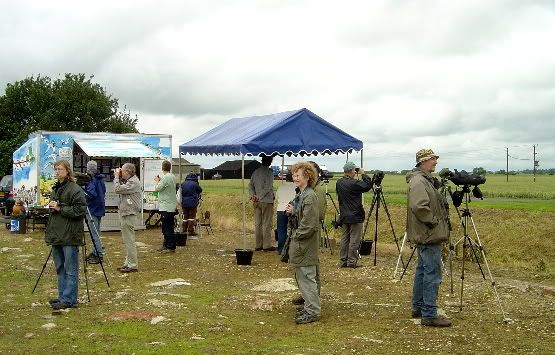
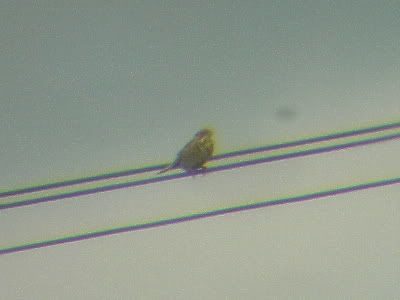
Being remote farmland the secondary species are pretty decent too, a pair of Marsh Harrier were busy in the field opposing field, a Barn Owl quartered over a high bank in broad daylight and making occasional appearances on the telegraph wires was a calling Corn Bunting.


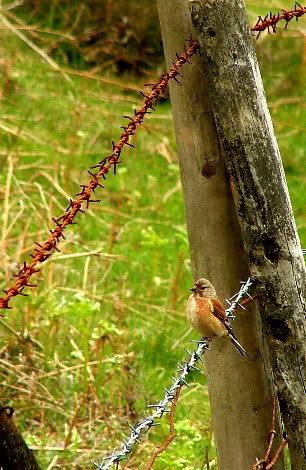
And for the sake of posting a bird picture... ...a very dodgy digiscope of the Corn Bunting taken in far from ideal conditions.
Now that harrier flight I mentioned. Here's an extract from the most comprehensive book on British birding folklore, Birds Britannica by Mark Crocker and Richard Mabey, in which they quote John Walpole-Bond's take on it,

"The normal flight of all these birds is very low, exquisitely easy, usually leisurely and always lovely to look at. They generally proceed by a series of three of four limp, if deliberate, flaps followed on the instant, each instalment, by a brief but beautifully buoyant glide, wings half-raised the while; frequently when hunting, do they quarter again and again the same section of their beat, floating methodically to and fro, hither and thither, light almost at the air itself."

That pretty much sums it up for me.

Friday, 15 June 2007

Rutland Water in June


Had the chance for a brief stop-off at Rutland Water a couple of days ago. It's always good value there and pretty quiet in the middle of the week too. I made for the Egleton Reserve side since that's where the greatest variety of species congregate, even if the Lyndon Reserve can boast its Osprey Nest.
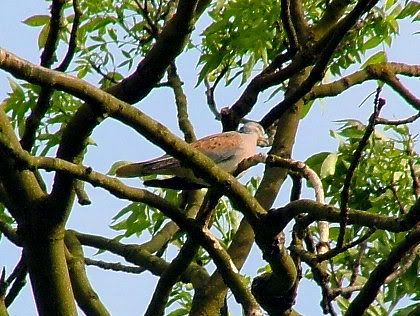
71 species wasn't bad and I'm certain nowhere near as many as there are actually on site. Osprey aside, the birds of the day were the drake Garganey feeding in the shallows, and the Turtle Dove purring in a willow tree beside the path, #161 and #162 for my year.There was added spectacle as one hide overlooks a small stretch of lagoon favoured very much by the Common Terns. Little more than 5 yards from the hide they would splash down after fry.

Video One - Splash Down!


Video Two - Wait for it, wait for it...


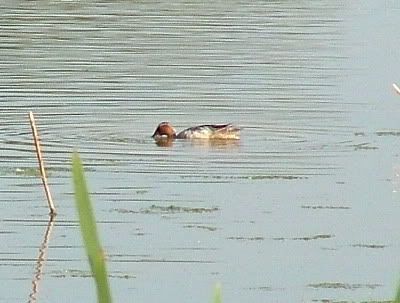
Okay, a rather distant record shot I admit, undeniably Garganey though.


The Manton Bay Ospreys on the left here. Their diary says they currently have two chicks on the go, one-to-two weeks old. Must have been rough for them these past couple of days.

There was a 'probable' Sqaucco Heron reported the previous day, though no signs during my time there. I spoke with a couple of other birders and they feel the same way I do, somebody probably mistook a Barn Owl in flight. It happens, especially during an influx.

As ever, it was worth starting off early on any north-south journey through the midlands, if it gets in time at Rutland Water.

Thursday, 14 June 2007

River Trent Martins

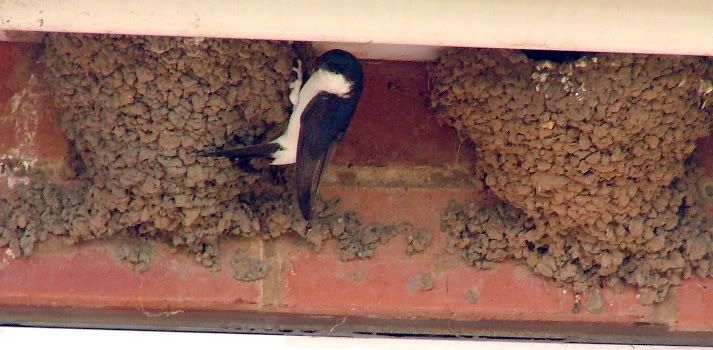
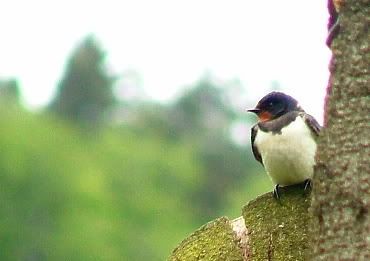
Took a trip down to the river at the weekend to watch the hirundine colonies. There's a rather grand house above the bank that's crammed with House Martin nest cups, and it's a real treat to be able to stand on the pavement and watch the busy work of feeding chicks at close quarters.
Very cool that the owners don't mind the mess, I've known people to mindlessly knock down the mudcups as soon as they're built.

Meanwhile on the sand cliffs of the riverbank hundreds of Sand Martins excavated homes in a colony that's older than I am. In parts you stand at the water's edge little more than 10 yards away from the activity. The adults will watch you as they fly in, but seem so utterly confident in their aerial ability and the inaccessibility of their nests they'll just breeze by, seeming to look back at you with curiosity rather than alarm. Very nonchalant stuff.


Monday, 4 June 2007

Sherwood Forest Country Park NNR

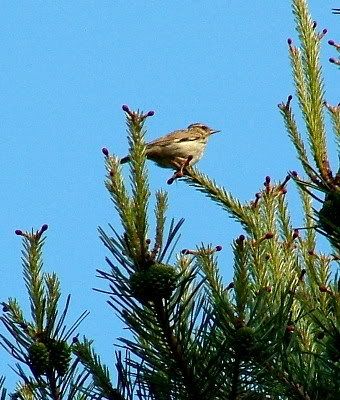
Note the pale-dark-pale leading edge to the wing, classic Woodlark.

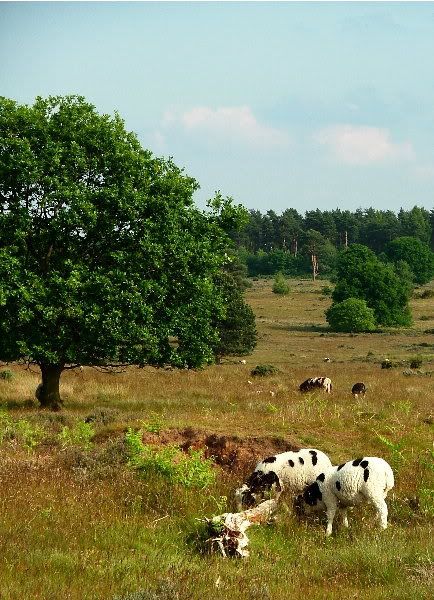
So we found a gem of a place, our only National Nature Reserve in the county - Sherwood Forest Country Park, a spacious mixture of ancient broadleaf woodland, conifer plantations and open heathland, all on the sort of sandy soil favoured by some pretty remarkable birds - not least of all Nightjar.

We began on Friday night with a guided walk led by one of the park rangers. It's a real treat when a chap like that shares specialist knowledge of his working patch - like showing us a Great Spotted Woodpecker nest that would be difficult to find during any regular visit. The walk started at 8:30. Above half a dozen Woodcock were roding throughout, meanwhile Tawny Owl chicks were branching although well hidden in the foliage, and from one of the plantations a Long-eared Owl chick begged and begged... and begged and begged for food with that distinctive 'squeaky gate' call.

Top of the bill was Nightjar and around 9:30 we edged onto the heathland where their chirring came to ear. We stopped overlooking a known territory and waited for action. That call was certainly loud enough but no bird yet visible, so the ranger used a nifty little trick. He slapped the back of his hand three times in quick succession which apparently imitates the wing-slapping part of the male's display flight. This obviously piqued the Nightjar and soon it was up against the skyline, the wafting butterfly flight and all. By now it was getting very dark and the walk headed back across the heath. Happily I spotted another Nightjar for the group, a swiftly flying female that had such strange head-long proportions in direct flight.
Some locals watching from a gate-post told us that there aren't as many Nightjar these days, which would be a shame if true.

Impressed by all of this the girlfriend and I couldn't stay away and made a visit the next day to retrace our steps and orientate a route for ourselves. The reserve is only 10 miles from home so we could make the place a regular spot.
In the daytime the birdlife was very different, a change from the nightshift species, some specialists too. Tree Pipit was very numerous, my first. Previously I'd always carefully listened to Meadow Pipits hoping to hear something different, but when a Tree Pipit does give you its splendiferous chorus you can't really mistake it for anything else. Cuckoos called throughout the day and we followed a male down a bridleway, jumping out of our skin when we flushed it from undergrowth beside the path only 5 yards ahead.
The other distinctly notable bird was the Woodlark, pictured above, again flushed from a path and very bold it was too, sitting for several minutes in the tree above us.

Again we heard the Nightjar's chirr though much earlier in the day, around 6:30 in the afternoon, still in fairly strong daylight at this time of the year. It was seemingly responding to our hand-slapping. Yes, it really works!
What else? Jay, Yellowhammer and Linnet, were nice birds.

The Common.

Monday, 28 May 2007

Beeley Moor - Derwent Reservoir - Matlock Forest


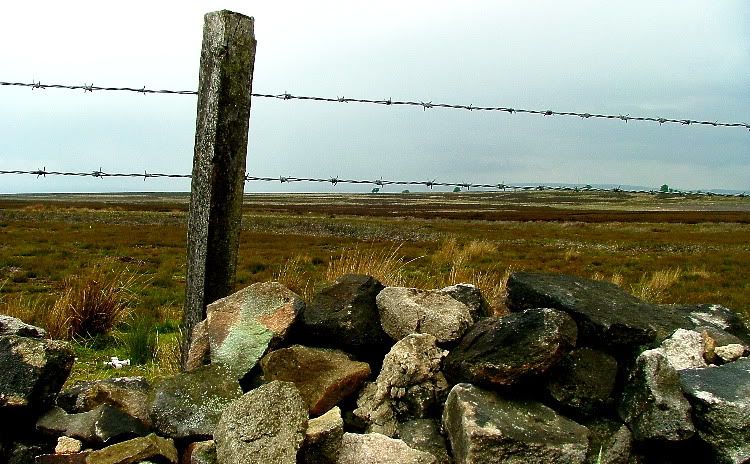
The day began as a scouting expedition, a chance to check out a few birding areas that may well become our local haunts when we manage the move into Derbyshire. First mark on the map was Beeley Moor, a few miles north and east of Matlock. It's one of the lower expanses of the Peak moorland, so not all moorland species are present. What we did see were plenty of Curlew and Linnet, charming enough on their own, and interestingly enough Willow Warbler were around - across the whole moor there might not be more than two dozen small trees and shrubs thinly scattered, otherwise it's vast heather, still the warblers were at home.
The moor itself is a designated wildlife sanctuary so access is limited and some of the best birding can be made from parking the car in a lay-by and watching from there.


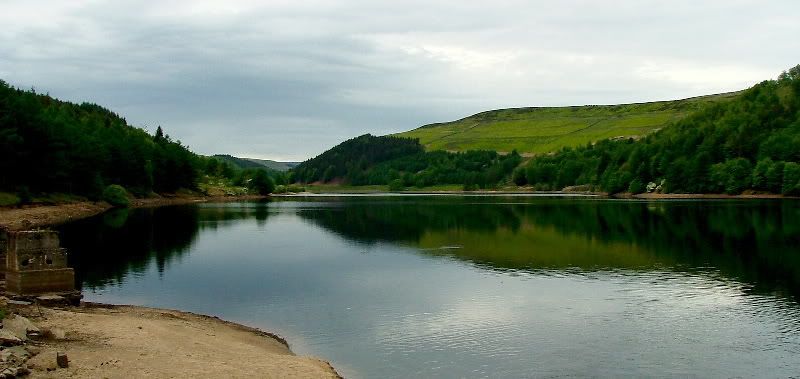
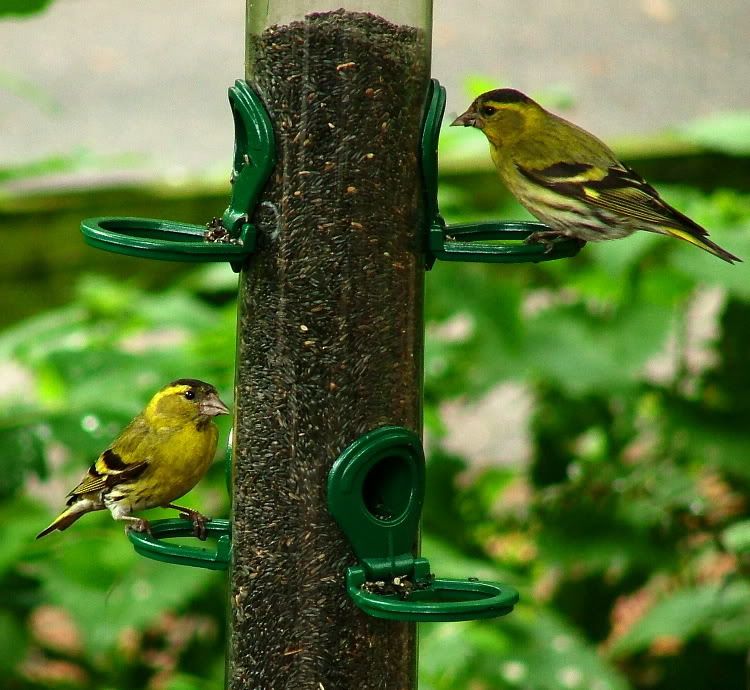
The second leg of the day took us up to Derwent Reservoir which was fairly busy with holiday weekenders. Again fairly quiet of birds, several pairs of Grey Wagtail and Common Sandpiper were nice enough to turn up every couple of hundred yards. Perhaps the highlight here was in the car park, where family groups of Siskin were omnipresent on the niger feeders. That is #156 for my year list as I somehow failed to find any during the second half of winter.

The wind tunnel of Derwent seemed to have a constant flow of passing hirundine.

Then late in the evening, we're talking 10pm, we found a lay-by overlooking a clearing in a wood near Matlock. We'd read there's potentially Nightjar to be found there. No luck, however we did see roding Woodcock, a special sight and #192 for the life list. Their call is memorable enough in itself, a sort of croking frog that hiccups, what hen Woodcock would fail to be impressed?

All in all, not a bad day, and it's Plan B for the Nightjar - Sherwood Forest in a weekend or two, a more certain prospect by all accounts.

Video 1 - Siskin on niger feeder

Video 2 - Siskin on niger feeder

Both those hand-held-digi-scoped videos courtesy of the girlfriend, sometimes it takes a woman's touch.

Wednesday, 9 May 2007

May is the month for...

...visiting gladed woodland, such as the at the RSPB's reserve at Coombes Valley (east Staffordshire).
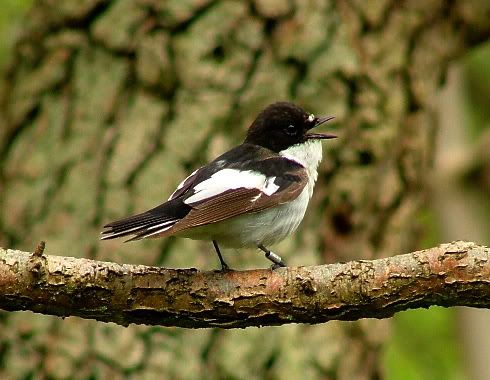
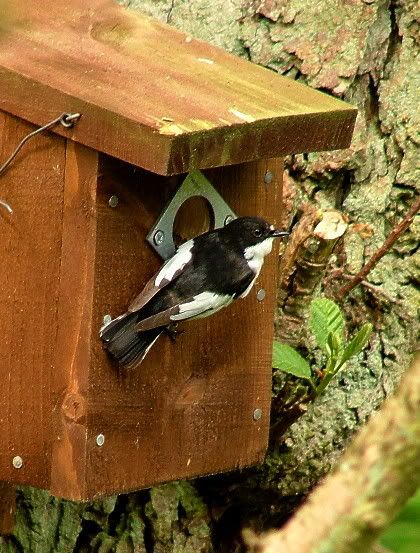
Primarily because the Pied Flycatchers are showing. This one was a lifer for me and what a lifer! In the one hide overlooking a small pond he was closely attending to a nestbox, hardly more than five or six yards left of where you sit. I doubt I've ever seen fewer birds from any other hide, still for me this one still remains one of the very best.
Seemed all the female were on eggs, as we only saw male Pied Flycatcher, at least six different birds.

The other species Coombes Valley is famous for at this time of the year is Redstart. They were fewer, or at least more elusive. The best showing was a male hawking for flies on the island in the small pond. The only flycatching of the day, and it wasn't from any of the flycatchers.

Other notables were a pair of Raven being mobbed by Carrion Crows. The size difference so remarkable that at first it appeared to be a Buzzard being guarded away. Great and Lesser Spotted Woodpecker showed only very briefly up among the leaves, though Nuthatch was much more accommodating and even let us see a courtship routine in which one bird fed the other. And in the car park a still very dull chested Linnet gave off a five minute performance of its song.


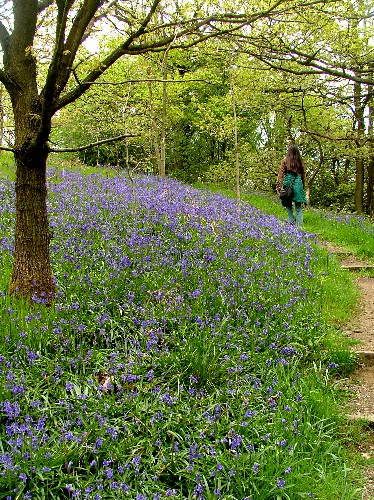
Beautiful bluebell woodlands made the walk a delight.


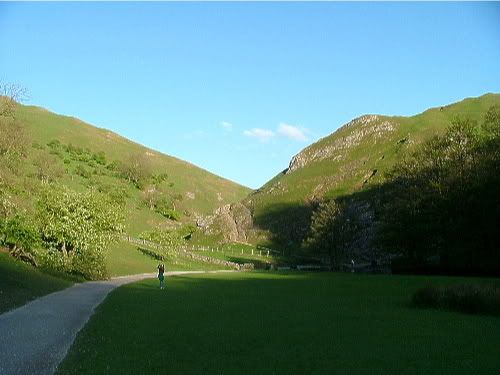
With plenty of light left in the day we realised Dove Dale was good for a shot on the way home, and thus we detoured, arriving around five, by which time the big Bank Holiday crowds were melting away.
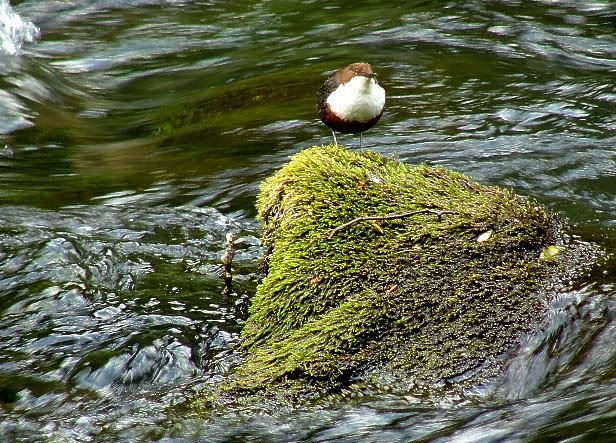
What we hoped for were the Dipper I'd promised the girlfriend. We hadn't found any at Coombes Valley, indeed it seemed unlikely anyone would spot Dipper there when the paths only cross the brook rather than running along it. Anyway, along the Dove we found our target, four or five of them that have clearly been emboldened by the masses that walk along the river during the warmer months. Fantastically close views, within ten yards of that bobbing underwater feeding technique. We even heard their song, a bizarre gurgle, a mixture between the throat warbles of a Blackbird and twisting versus of Reed Warbler. Nothing else quite like it.
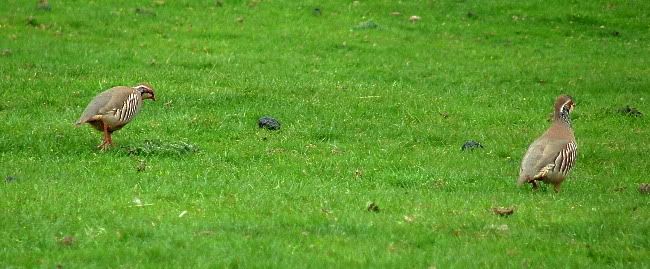
Elsewhere on the river we found a Mallard with 17 very young ducklings, a record I defy you to break, and a Goosander with 6 of her own. Close views of her too, the sort you just don't get in the Winter.Red-legged Partridge were also around.

At the end of the day the count came up to just 50 species, some real crackers in there though.
Birds thrill again!

Video 1 - Pied Flycatcher singing
Video 2 - Pied Flycatcher singing

Saturday, 5 May 2007

Carsington again

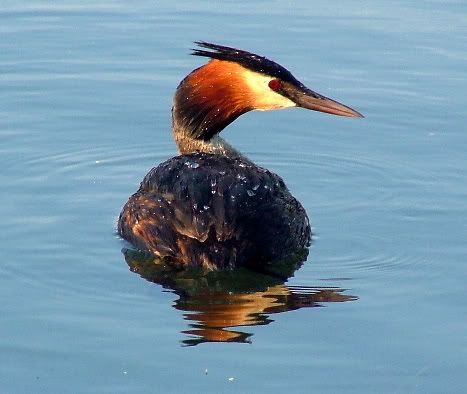
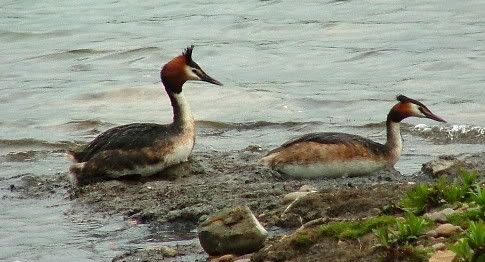
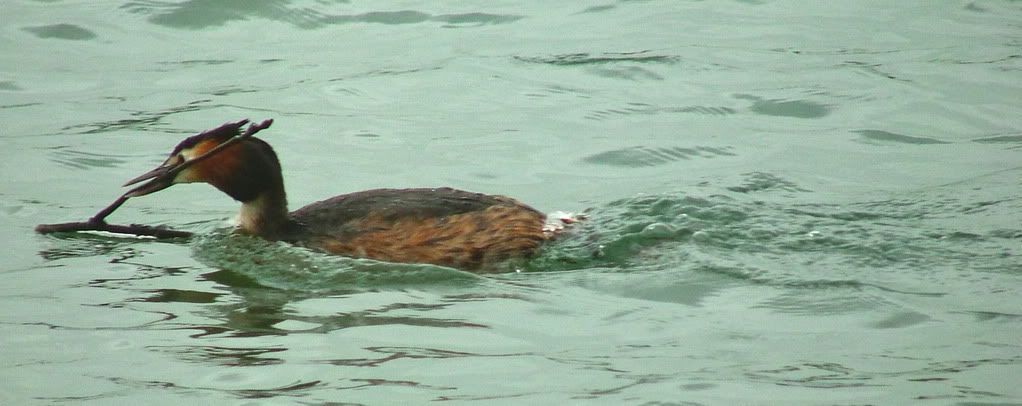
Had another free day so again got dropped off at Carsington Water by the girlfriend on her way to work (halves the bird-miles you see). For the ten hours spent there I found 64 species, not too shoddy for a reservoir shared with sailing and fishing interests.That Grebe is still playing fetch.


Best birds were the migrants (if no much hoped for Black Tern), a Whimbrel movement is on nationally with one bird present at Carsington, tricky IDing job too since the head markings weren't as prominent as should be, eventually the RSPB guy in there with me agreed it was a 1st-year bird rather than short-billed strong-eye-striped small male Curlew. Also showing in the distance of the middle waters was the odd Arctic Tern with the Commons. Difficult call at that range, I know some people who just call them 'Comics', so I was mainly going on the proportions of the bird - the wings on the Arctic look forward set compared to the Common which have them in the middle. Decent bird on such an inland site.
A Common Sandpiper was about too, plus a few Little Ringed Plover, a Curlew that apparently pops down once a day from the hills to bathe, Raven probably nesting, and the regular summer warblers. And the Great Northern Diver is still there! Getting ever more elusive though, all day I got only the briefest view of a bird that was far from shy back in November when it first appeared. Now we're into May, it really ought to think about moving on.

Best moment of the day however went to showing some kids the Curlew through my scope. Their grandparents were already doing a decent job enthusing about the birds, and when the wader flew in with its extravagant bill, it was the natural thing to call them over. The small kids seemed genuinely impressed.
Great birding karma I can tell you!