Monday, 23 July 2007

One Damp Bird

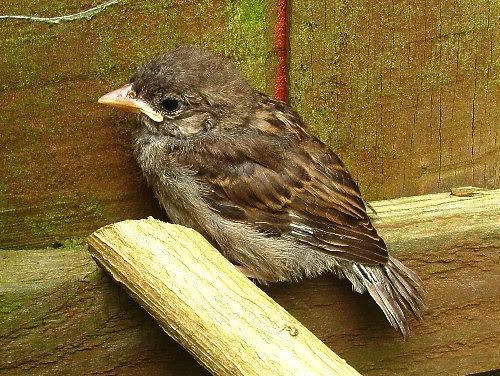
The garden is full of birdlife at present, always at least half a dozen fledglings of one species or another in our tennis court-sized plot of suburbia. Some looking rather sorry for themselves, like this House Sparrow, poor little fella, I'm sure a parent bird was looking over him. Out there with him was a small gang of Blackbird fledglings almost ready to disband, one young Song Thrush which I'm very pleased to see, Starlings and around the forsythia a brood of Blue Tits zip and zoom.
Yes, it's truly delightful to return home to all this activity.

As for holiday birding up on the East Yorkshire coast, expect several picture posts soon.

Thursday, 12 July 2007

Parklife

Down in London to see the Tour de France, I escaped the post-race shopping hoards for the peace and quiet of the city's great parks. This was birding-lite, a small pair of binoculars and an ice cream in hand.
There may not have been any great rarities to find, what there was were fine views of familiar birds, and the odd exotic duck to tax the old IDing muscles.

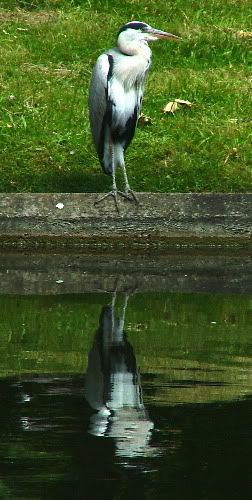
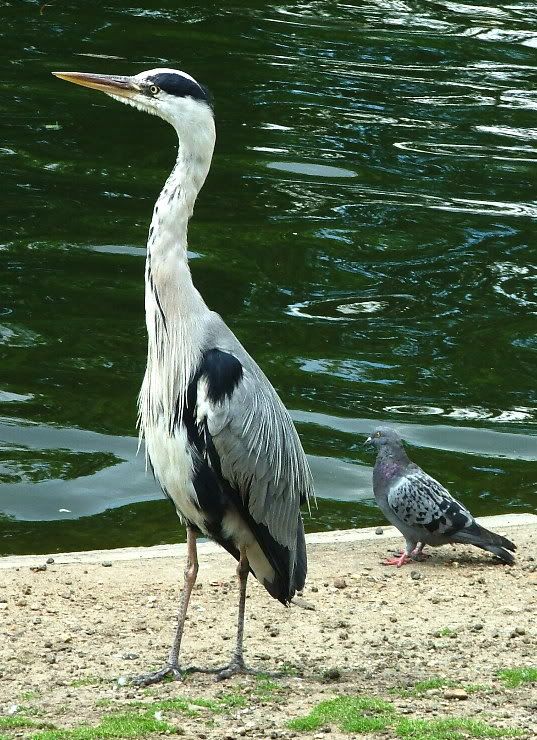
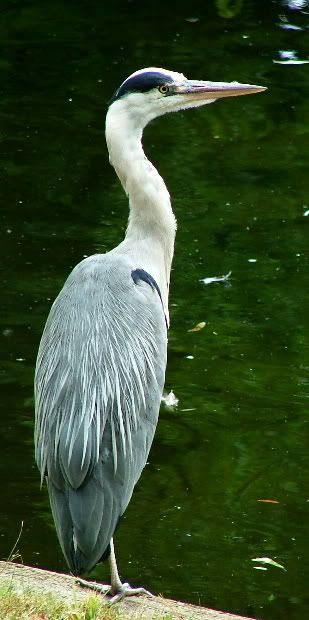
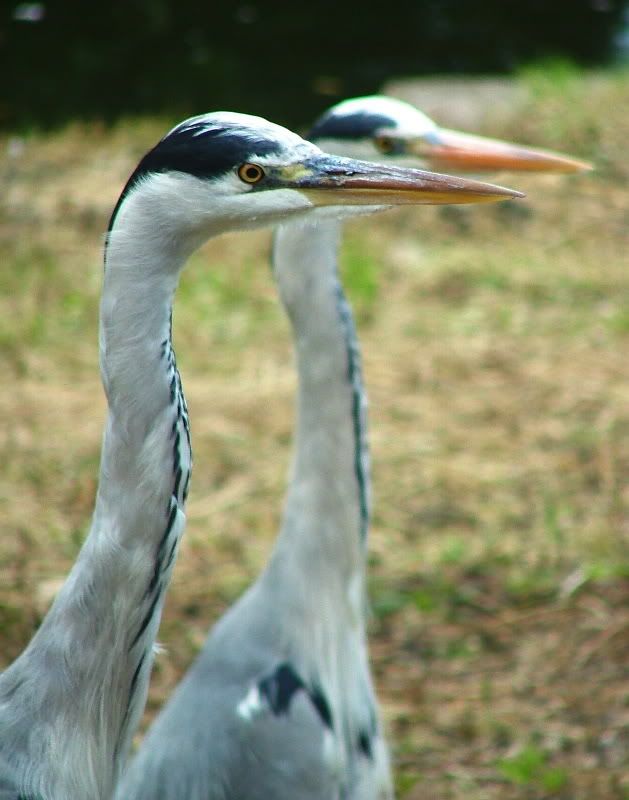
The Regent's Park Herons are one of the best treats of the capital.

Those plumes, a most handsome bird.

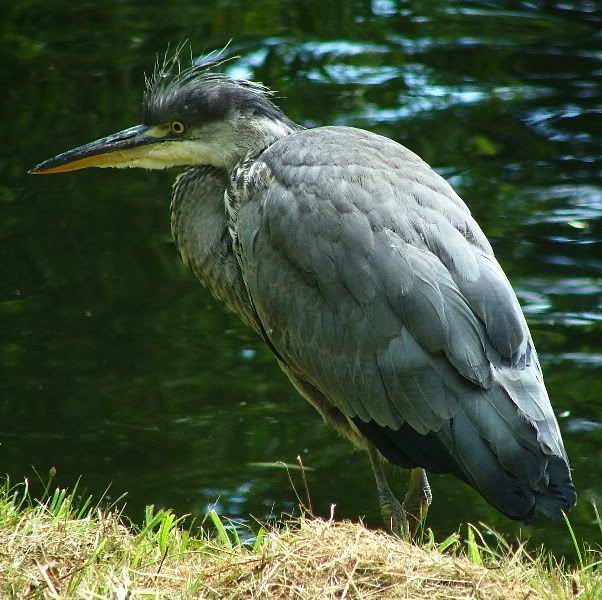
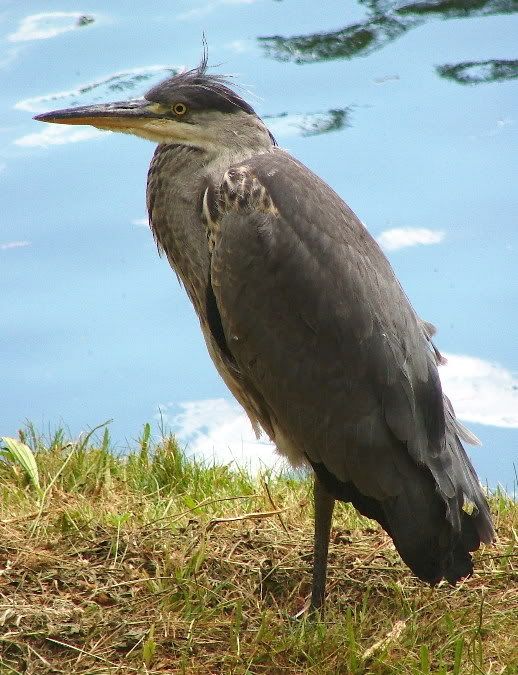
Nonetheless, the scruffy immatures have a charm of their own.


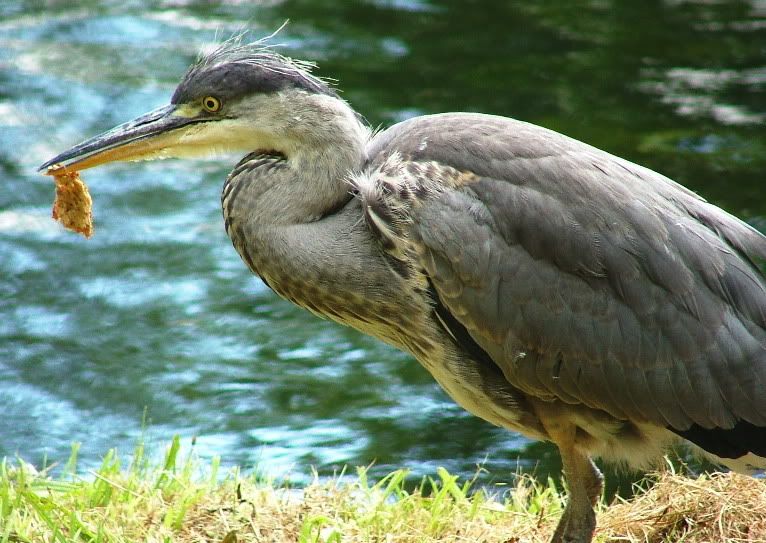
They'll peck at anything.

Truly park birds.


Little more than an arm's length away!

The outrageous tameness of these birds inevitably leads to visitors feeding them, and it was dismaying to watch a chap throwing bread to them. However eagerly the Herons threw it down their throats, I see a conflict of interests arising - what's best for the birds and what the park visitors want to do are not necessarily the same thing. How sad it would be to see this famed heronry descend into the disease and aggression of the average over-populated and over-fed duck pond.
For now, it reminds a treat.

Video - Herons fed bread!

July: The Month to Enjoy Your Garden Birdlife

Quiet as July is for birdwatching, the garden is providing no shortage of entertainment at the moment. As I type there are three pairs of Swift zooming between the houses of the neighbourhood, clearly looking for nest spaces. I read the usually their colonies have been abandoned by mid-July, not so here, and it was about the same date they began prospecting last year. Unfortunately it seems most roof spaces are already occupied by House Sparrow and Starling, rather a drawback of the neighbourhood's successfulness for those species - indeed last year I watched as a very bemused male Sparrow returned to his brood under next door's roof to find a Swift in there with the chicks. Try to imagine his surprise! The Swift was chased away, and we saw nothing more of them save for the usual screaming parties at higher altitude.
Interestingly, a pair of House Martin followed in with the Swifts today, zooming around the gardens at levels far lower than usual. Do they normally follow their slimmer cousin?

Our earthy patch has become a firm favourite of the House Sparrows. Wait for just five minutes and you can be sure to see at least half a dozen of the birds come down for a dust bath, all scruffily fidgeting in the dry soil.

A Magpie visited this morning for a more liquid wash, very nervously skipping to and fro from the birdbath. A quick dunk and then a watchful pause for any threats.

The littering of feathers found yesterday prove the Sparrowhawks that sail over us will still come down to hunt. These feathers with very small and dark grey in hue, probably cock House Sparrow.

So okay, migration might be stagnant until August, still the action outside our kitchen window offers a different perspective on birding. There are stories out there, not just bird species.

Thursday, 5 July 2007

Two and two make Nightjar?


This weather, the wettest month on record, three times the average rainful, I just haven't done very much birding lately. Also helped little that last week I hit a flood damaged path too fast and came off the bike fairly hard, doing a real number on my legs. Haven't really felt like riding since.

During my last circumnavigation of Brierley an elderly gentleman who noted my bins asked whether I'd heard the Nightjar. We don't have Nightjar at the park, so I reasoned he mistook the Grasshopper Warbler's similar reeling call for the much more illustrious species (the warbler has high-pitched grasshopper like call, the Nightar a low chirrrrr, both go on and on). This I attempted to explain yet he was adamant, said he'd even seen them skimming over the lake - probably referring to the Swifts that come in from town. Seems like he put two and two together and came up with Nightjar. Again I tried to explain his mistake to him, still he'd have none of it, and I left wondering whether sometimes it's better to leave chaps like him to enjoy their self-assured ignorance.
Probably not, he's missing out on finding the real thing, which is an amazing thing.

Tomorrow I'm off with the girlfriend to see the Tour de France in London, camping the whole weekend. I think we'll at least get some birding done in the great parks. That leaves just enough time this evening to check out the Barn Owl nest at King's Mill, a secret site I heard about it today on the local birding grapevine. Knew they were about, didn't know where, and I'm told only one of three chicks is yet to fledge.

Tuesday, 3 July 2007

Bird Miles

So let's face facts, very often birding expeditions will involve an extensive amount of car travel. Even in a nation as small as ours, public transport just can't cover the job. The problem is, whether you are aware of your carbon footprint or not, the more you drive to see wildlife, the more you imperil it through your own personal contribution to Global Warming. I don't know about anybody else, but that came as quite a frightful notion for me.

It has been with that thought in mind, that I've begun to think about 'bird miles', the distance we're willing to drive in pursuit of our hobby and that perhaps we should do our bit to save the planet and restrict ourselves - after all, for most birders it counts as purely a recreational habit.
Now any limit can only be arbitrary, but it occurred to me, that a 200-mile-a-month limit wouldn't be a bad commitment for most birders to make, it ought to allow one or two decent journeys to big nationally important sites (or to find must-see a rarity), or several more closer to home. Not only could that limit decrease the carbon released by hobbying birders, it may very well prove to be a renaissance for local sites if we paid more attention to them.

I have emailed the RSPB's magazine about this, and the editor said that although the next issue is full, the one after that may very well include something on the topic.
I proposed to him a members' commitment, if you could just imagine a million members cutting even just a third off their 'bird miles', then maybe you can understand why I'm enthusiastic about the idea. We could be talking millions of miles worth of petrol not burnt, a worthy contribution to the enormous overall challenge our societies face and a top example for us to set.

In a couple of other online birding forums I broached the subject, and was met with a generally indifferent reception, at other times it was blatant unpologetic opposition - 'it's my right to drive however much I want' etc...
Such reactions I simply do not understand, and they leave me quite dispirited. These are folks supposedly interested in the plight of our wildlife and the environment, and yet they found that moderating their car use was unthinkable, so what hope for the regular punter cutting his emissions?
Some of them cover well over 100,000 miles a year on bird trips!

Anyway, I remain hopeful of a more positive reflection from the RSPB.

ETA: I decided to try out some rough figures. If the RSPB has a million members, let's say that each of them individually covers 100 miles on birding trips per year. Less than 10 miles per month, which might even out it we consider shared journeys.
Now extrapolating from the fact that the average car travels 12,000 miles per year emitting 4.3 tonnes of CO2, that 100 million miles jointly covered by RSPB members equates to the average carbon emissions of 3,500 households (at 10.3 tonnes each per year).
Even if my figures are off the mark, it's clear to see there is a significant issue here that the RSPB really should think about. I don't know the answer, perhaps a parking charge for vehicles visiting reserves could fund an RSPB lobby for extra bus routes, or maybe the solution is the simple one; we all drive less.
Monday, 2 July 2007

Hope Through the Rain

Horrendous weather persists so my birding exploits have been dulled of late. However, my efforts in the garden are still earning their gentle homely reward. Yesterday not one, not two, but three Stock Dove strolled around the lawn. A new record for a species I'm proud to call a daily visitor. I don't know many people who can boast them.
Truth be told, they were initially attracted down by the pesky feral pigeons, the nemesis of my bird feeding efforts. I try to forget that bit.

Hello!

Welcome to my new birding blog.

My name is James, I live in the East Midlands (of England) and enjoy spending many a weekend on the trail for birds, my trusty, if very modest, camera in tow. For the first several days or weeks here I'll be transferring posts from my previous blogging site so expect dates and seasons to be much of a mixture for a while. The likelihood is I shall probably retro-update so it might be worth looking backwards at earlier dates.

I hope you'll enjoy visiting my blog and be inspired to go out and find some feathered friends of your own.

Cross your fingers and I might just manage to keep updated!