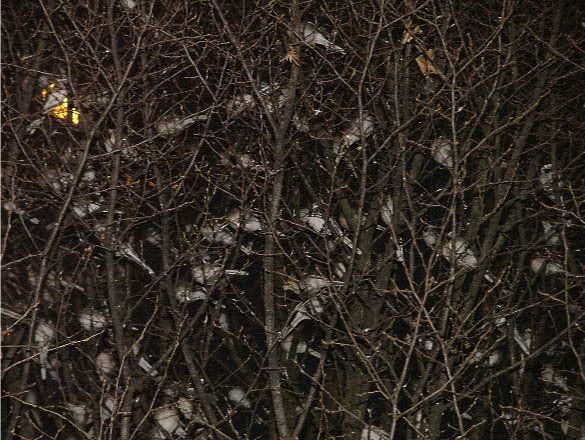
Here's a surprise treat, something I discovered during my walk to the bus station, it's an urban Pied Wagtail roost, in Mansfield. I knew there was one around the town centre, and there it is, in the lone beech tree tucked behind the closed down Tesco. Noticeable first because about half an hour after sunset, when the wagtails descend from the surrounding buildings there's quite the cacophony, almost giving the impression of a pet shop aviary given the high street location.
Quite difficult to photograph in the gloom though, so here's a dodgy video of the action.
For ten or twenty minutes before the wagtails came down to roost they circled quite high, gathering their numbers and emitting that familiar 'chiswick' call. Rather like Starling, they appear quite nervous, unwilling to be the first individual to touch down. Eventually it happened, half a dozen birds flitted into the roost, and then came a continual flurry for the next twenty minutes, getting louder and louder.
Difficult to estimate the total number, but by the end perhaps 120 birds came in, give or take. A quick explanation of this behaviour is that the birds find safety in numbers during the night and choose these urban settings because the micro-climate in our towns and cities tend to be a couple of degrees warmer than their more rural surroundings. The roosts are often traditional sites, with one used for at least 30 years, and some can contain thousands of birds. The largest one I'm currently aware of in my part of the world is in the centre of Nottingham, with reports of 850 individuals joining the roost. I try not to imagine the kind of mess them must leave below them.

Neater still, as I photographed the scene, shoppers stopped to look and listen to the spectacle, a couple of them venturing to ask me what birds there were.
'Lovely', and
'I would never have thought', were the sort of things they were saying.
And what else to say, but again it's a bird triumph, they wowed us again!
In other news, the girlfriend and I enjoyed a night at the cinema this week, as we went to see the exceptional new French version of
Lady Chatterley. I mention this for two reasons, it's full of birds, and, here's the terribly nerdy part, I spent moments during the film mentally noting the location errors - for example, we don't have Black Kite in this part of Nottinghamshire (I live where the story is set), despite the bird of prey depicted soaring over the woods. Heck, I really wish we had them!
Anyway, is it really, really, terribly sad to be noticing these things? Awful, I'm sure of it. I suppose that's how birders are, we never really
switch it off.
That's all for now, but here's a couple more videos of the wagtail roost...
Video 1 - WagtailsVideo 2 - WagtailsVideo 3 - Wagtails
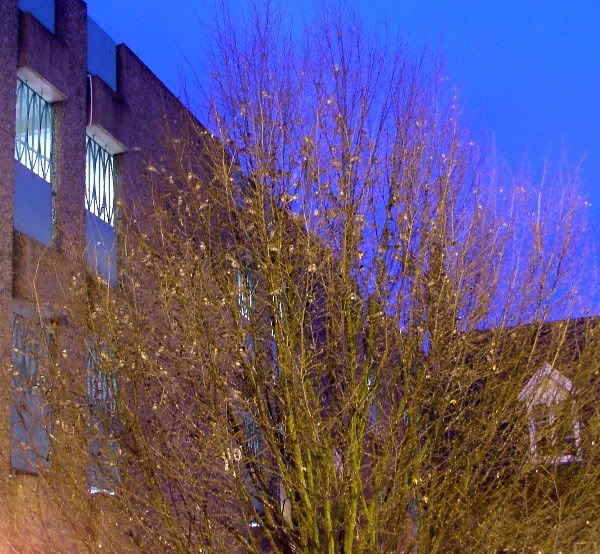
 The artsy-fartsy photograph, because sharp shots in the dark ain't easy!