Short of a warmly unseasonable September (figures crossed for it), August ban holiday marks the last chance for a summer camping break, and with a decent weather forecast the girlfriend and I headed for Norfolk. For the most part it was a beach holiday, to enjoy the sun, sea and sand, but you can't escape the birds of Norfolk, should you lose your mind and want to.
In the pinewoods behind the dunes at Holkham there had been reports of migrants right out of the top drawer - Wryneck, Red-backed Shrike, and one of the many Greenish Warblers turning up in Norfolk this August. Alas, carrying a beach tent and windbreak (essential items for a day on the Holkham sands) and other beach-going paraphernalia made birding a wee bit difficult, and day reports on Birdguides suggest all the aforementioned star birds had left anyway. The best I could find was a Kestrel hunting toads on the dunes, and a family of Willow Warbler. For all the world I willed one of them to have the pale wing-bar of a Greenish Warbler, but no.
What made up for any disappointment in the pines was the Barn Owl hunting over the open pasture and across the marsh. Splendidly close views of a bird it is forever special to see. Other birds along the walk back to the car park included Coal Tit, Little Egret and Curlew. Nothing to quite compare with the Spoonbill in April though. As we drove out we had another sighting of the Barn Owl as it nonchalantly whisped across the car park.
On the Monday the north winds blew, too cool for the beach, so we gambled on which of the North Norfolk birding sites to head for. We chose first NWT Cley Marshes. and there was plenty around; large numbers of Black-tailed Godwit, Ruff and Avocet, in the early afternoon a flock of 50 Golden Plover came in, many in still summer costume. Marsh Harrier is a speciality there, and I counted at least three males and three females, yet no juveniles. There wasn't much else to pick out though, and a Common Sandpiper was the only single wader of any note.
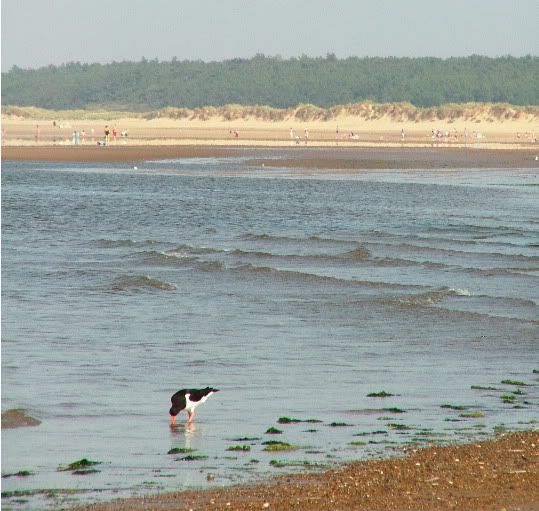
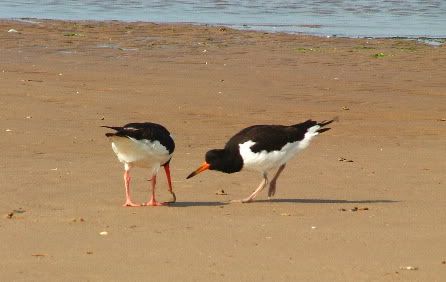
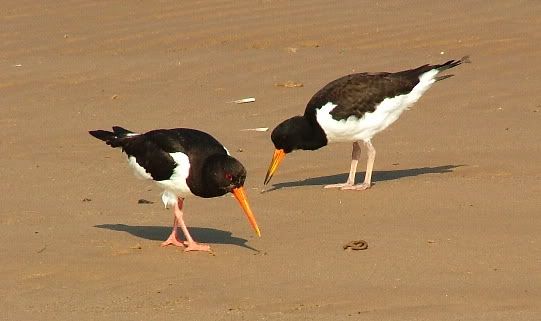
In the evening we had time for a quick stop at Titchwell Marsh RSPB, also a good place to get close views of waders. It was much the same as at Cley, plus a few Spotted Redshank, one Knot, a few Grey Plover, and my first Greenshank of the year (#176) was in the marshland just west of the reserve. It is always worth walking out on the beach at Titchwell, and although it was too hazy offshore to scour for skuas and shearwaters, many Sanderling, Turnstone, Dunlin and Oystercatcher pottered around on the surf line. I have always kept a soft spot in my heart for Sanderling - in their white winter plumage, they look somehow dainty and pure, perhaps spirit-like wardens of the tide.
Finally in to roost came six Little Egret. I'm still a kid really and even I'm old enough to remember how special that once would have been prior to their colonisation of these isles. Heck, it's still special!
Pictures from the weekend:
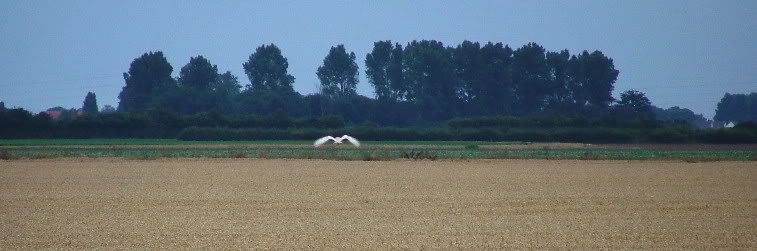
 That Barn Owl again.
 Little Egret at Holkham.
 Greylag Geese at Holkham, many groups of 4-10 birds passed over heading east, presumably for a roost.
 3 Black-tailed Godwit and a Ruff, at Titchwell.
 The Titchwell scene.
In the pinewoods behind the dunes at Holkham there had been reports of migrants right out of the top drawer - Wryneck, Red-backed Shrike, and one of the many Greenish Warblers turning up in Norfolk this August. Alas, carrying a beach tent and windbreak (essential items for a day on the Holkham sands) and other beach-going paraphernalia made birding a wee bit difficult, and day reports on Birdguides suggest all the aforementioned star birds had left anyway. The best I could find was a Kestrel hunting toads on the dunes, and a family of Willow Warbler. For all the world I willed one of them to have the pale wing-bar of a Greenish Warbler, but no.
What made up for any disappointment in the pines was the Barn Owl hunting over the open pasture and across the marsh. Splendidly close views of a bird it is forever special to see. Other birds along the walk back to the car park included Coal Tit, Little Egret and Curlew. Nothing to quite compare with the Spoonbill in April though. As we drove out we had another sighting of the Barn Owl as it nonchalantly whisped across the car park.
On the Monday the north winds blew, too cool for the beach, so we gambled on which of the North Norfolk birding sites to head for. We chose first NWT Cley Marshes. and there was plenty around; large numbers of Black-tailed Godwit, Ruff and Avocet, in the early afternoon a flock of 50 Golden Plover came in, many in still summer costume. Marsh Harrier is a speciality there, and I counted at least three males and three females, yet no juveniles. There wasn't much else to pick out though, and a Common Sandpiper was the only single wader of any note.
In the evening we had time for a quick stop at Titchwell Marsh RSPB, also a good place to get close views of waders. It was much the same as at Cley, plus a few Spotted Redshank, one Knot, a few Grey Plover, and my first Greenshank of the year (#176) was in the marshland just west of the reserve. It is always worth walking out on the beach at Titchwell, and although it was too hazy offshore to scour for skuas and shearwaters, many Sanderling, Turnstone, Dunlin and Oystercatcher pottered around on the surf line. I have always kept a soft spot in my heart for Sanderling - in their white winter plumage, they look somehow dainty and pure, perhaps spirit-like wardens of the tide.
Finally in to roost came six Little Egret. I'm still a kid really and even I'm old enough to remember how special that once would have been prior to their colonisation of these isles. Heck, it's still special!
Pictures from the weekend:
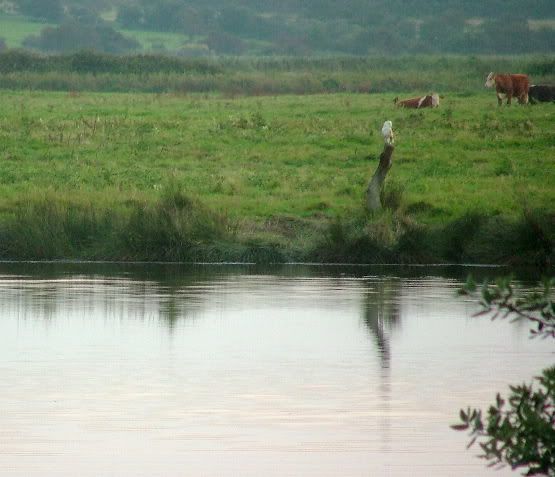 That Barn Owl again.
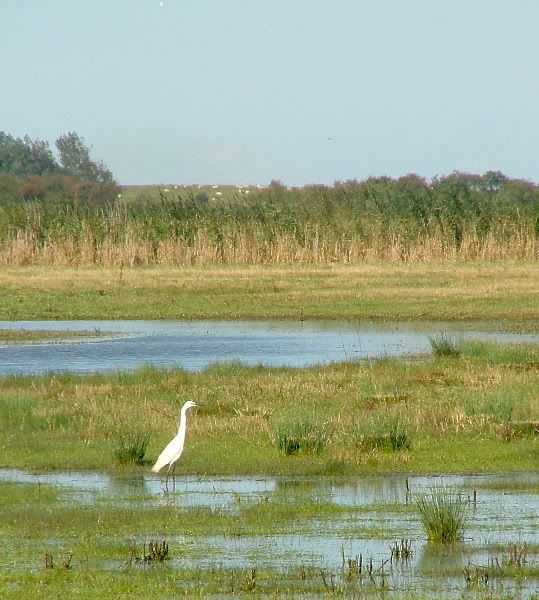 Little Egret at Holkham.
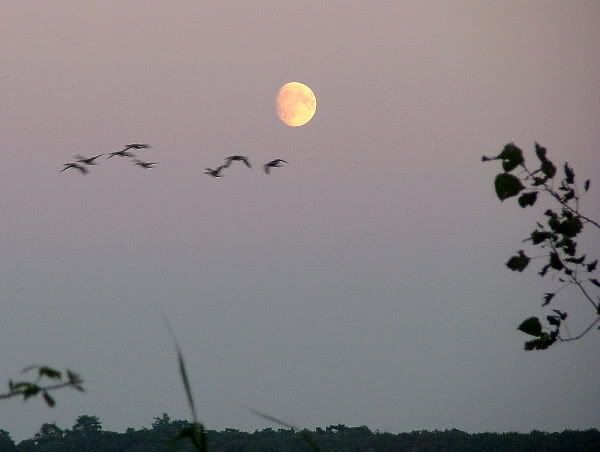 Greylag Geese at Holkham, many groups of 4-10 birds passed over heading east, presumably for a roost.
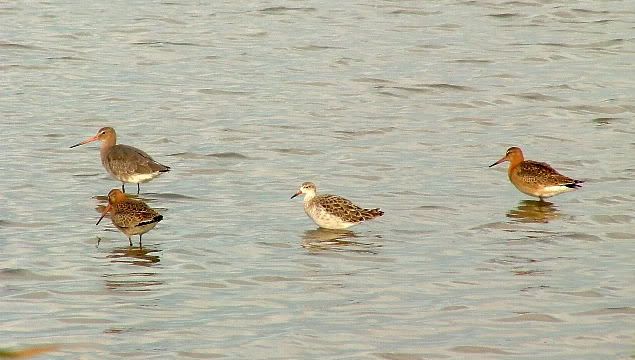 3 Black-tailed Godwit and a Ruff, at Titchwell.
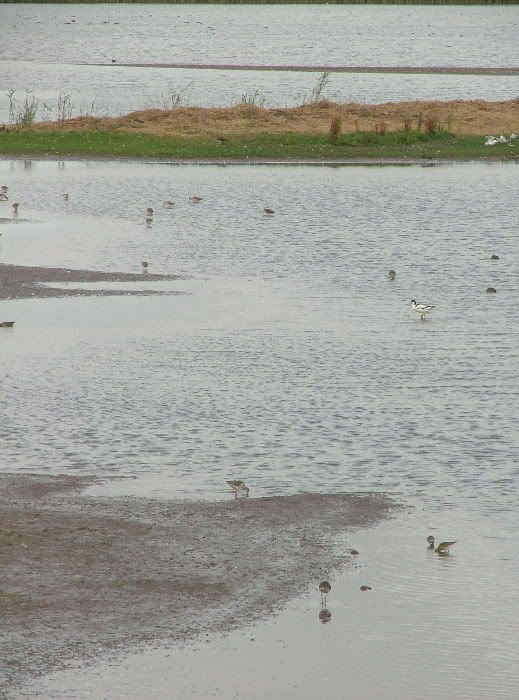 The Titchwell scene.
And a couple of digi-scoped videos by the girlfriend:
Video 1 - Ruff at Titchwell
Video 2 - Little Egret Roost at Titchwell
Video 3 - More of the Holkham Barn Owl
Finally on the drive back home through the Norfolk farmland a Barn Owl was illuminated in our headlights. Fortunately veered right into the field beside the road and then kept pace with us for a 50 yards or so. Impressive really, because we were zooming along at a steady 40pmh at the time. Pretty swift stuff for a delicate owl.
Norfolk, it never disappoints.
Video 1 - Ruff at Titchwell
Video 2 - Little Egret Roost at Titchwell
Video 3 - More of the Holkham Barn Owl
Finally on the drive back home through the Norfolk farmland a Barn Owl was illuminated in our headlights. Fortunately veered right into the field beside the road and then kept pace with us for a 50 yards or so. Impressive really, because we were zooming along at a steady 40pmh at the time. Pretty swift stuff for a delicate owl.
Norfolk, it never disappoints.