Friday, 28 November 2008
Gone, but never to be forgotten
Last video and final words on the Steppe Grey Shrike, as news came today of only feathers being found in the area the bird had been favouring. I saw a Merlin work the ditches myself while on site, Peregrine and Hen Harrier were around too, among commoner predators, so chances are it was snatched by a raptor. A sad demise for an amazing bird, but what a bird!
(By the way, that certainly wasn't me feeding the bird corned beef!)


Thursday, 27 November 2008
Shrike: A Pose
Steppy again, perched on my scope.
No report of the bird today, although midweek birders may have been thin on the ground with the rainy forecast. One theory for why the bird looks so untidy goes that its native habitat are the arid plains of areas like Kazahkstan, leaving this bird naturally unaccustomed to hunting for prey in wet grass. As good a theory as any I suppose, particularly as I read in the Lincolnshire Bird Club forum a list of discoveries found in one of the shrike's pellets:
Remains of at least 11 Pterostichus melanarius (Carabidae – ground beetle family)
Remains of at least 3 Pterostichus niger (Carabidae)
Remains of 1 Ocypus olens (Devil’s coach horse beetle – Staphylinidae/rove beetles)
One aedeagus (male sexual organ) of Catops tristis (Coleoptera – Leiodidae)
Remains of unidentified species of beetle elytra (wing cases)
Miscellaneous heads of non-Coleoptera invertebrates (possibly Diptera)
Heads of two different species of possible Lepidoptera
So beetles basically, which makes sense for a bird smaller than our voracious Great Greys.
Wednesday, 26 November 2008
Tail Spin
Shall be moving house fairly soon with my new home closely neighouring the nature reserve at Pleasley. The garden is full with established trees and potentially poses a squirrel problem for my bird feeders. Not a worry though, the solution is out there, and it's highly amusing...
...or perhaps not. Better advice may come from the RSPB - put chilli powder in your seed mix.
Speaking of mixes, a nice mix of birds during yesterday's Carsington ABB where we hit 40 different species from the Wildlife Centre for the first time for quite a while. A Kingfisher was the star for most visitors, plus the Great Northern Diver - these winters Carsington wouldn't be Carsington without one of those.
...or perhaps not. Better advice may come from the RSPB - put chilli powder in your seed mix.
Speaking of mixes, a nice mix of birds during yesterday's Carsington ABB where we hit 40 different species from the Wildlife Centre for the first time for quite a while. A Kingfisher was the star for most visitors, plus the Great Northern Diver - these winters Carsington wouldn't be Carsington without one of those.
Monday, 24 November 2008
Steppe To It
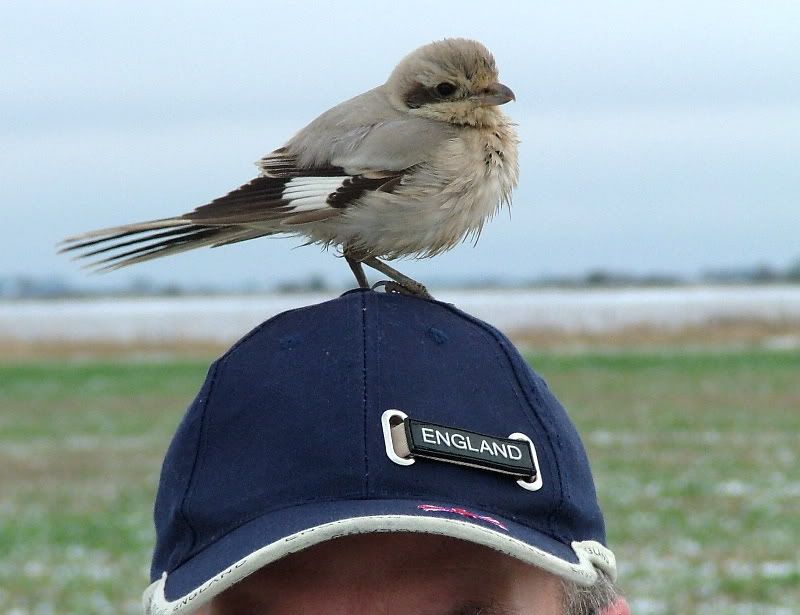 Location, location, location.
Broke my 50-mile local twitch limit yesterday, but surely worth it for one of the rarest and showiest birds to hit Britain all year. Over the last few years I've had maybe half a dozen Great Grey Shrike sightings, almost always at a range of 100 yards or so, try to comprehend therefore how it felt to have a Steppe Grey Shrike land on my head - I'm still trying myself.
To briefly explain Steppe Grey Shrike is either a different species or different race (in taxonomy terms these birds are rather in the wild west*) to the very similar the Great Greys, just a touch paler in one of two places . We see perhaps 50-100 GGS during the winter in the UK, however the Steppes breed much further east than Greys - from N Iran across to Uzbekistan and should spend their winters in the tropics well east of us. Now human habitation is sparse in these areas so the Steppe Grey Shrike is a bird that should seldom come across mankind and therefore the birds seem to have developed no fear of us. Hence pictures of this one on people's scopes, cameras, cars, heads, etc.
It's only the second or third record of Steppe Grey Shrike in the last ten years, and a real treat still drawing in good crowds into its third week of residence in the Lincs flatlands south of Grimsby. Likelihood is this is probably the most photographed bird.... ever.
In some birding circles concerns raised have been raised over birders and photographers chasing this bird which too high a vigour, but truly it is more a case of the bird following us - maybe it believes we'll stir up worms or beetles. The temptation therefore is to feed it, not something I'd personally want to do - I reason it's been there 3 weeks now and been seen to find its own food which is probably healthier all round than anything people could give it.
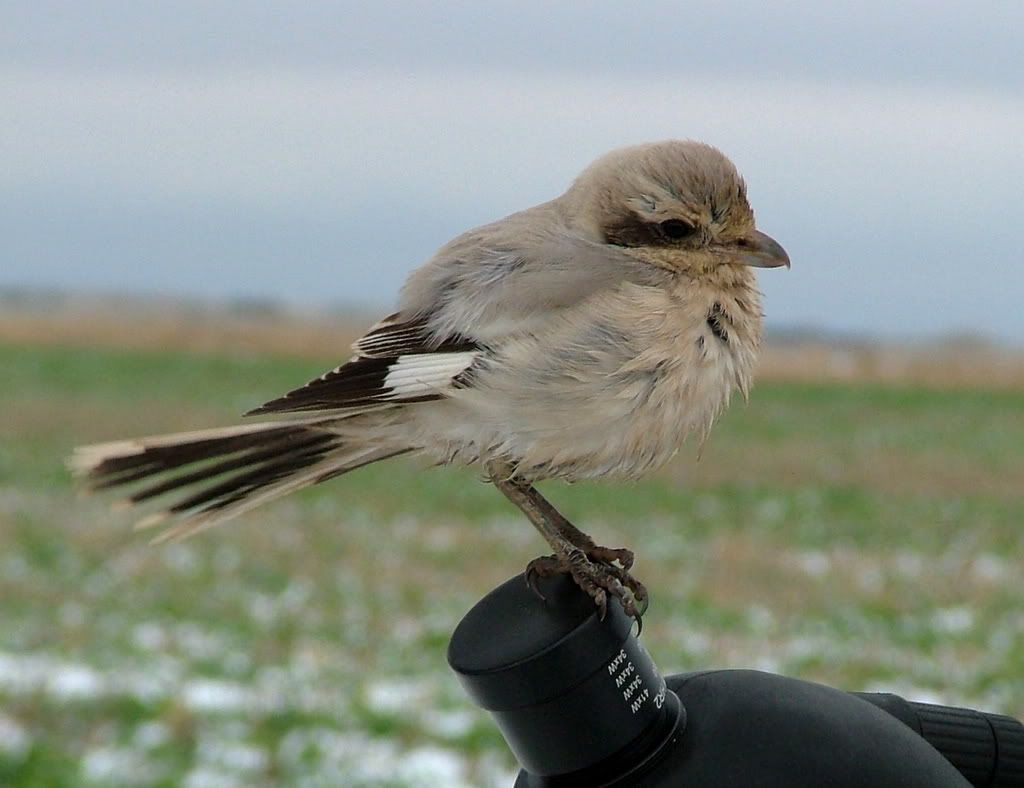 Hogging the eyepiece

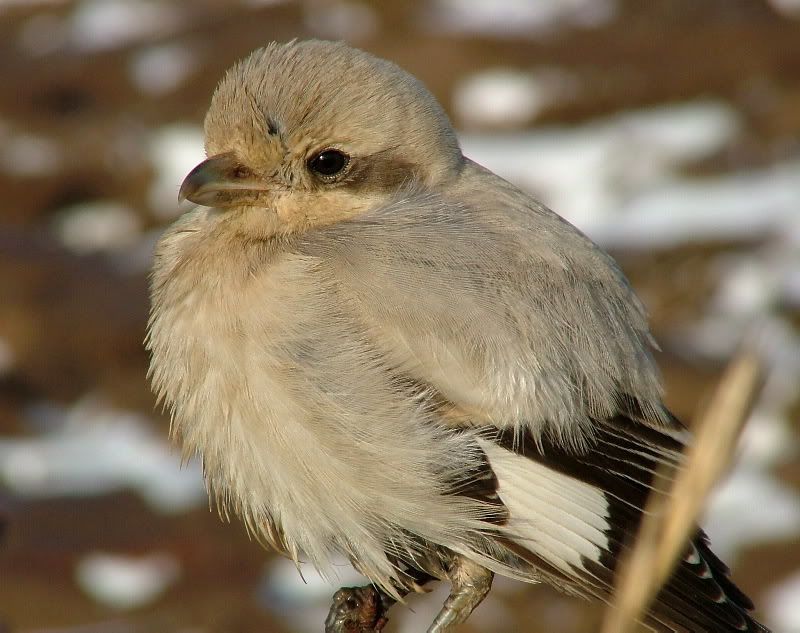
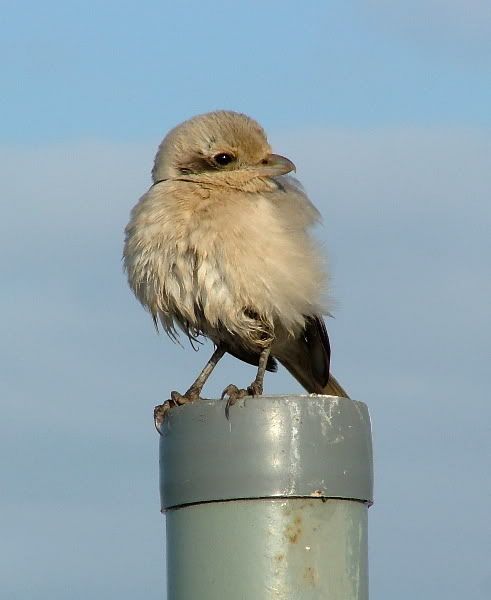


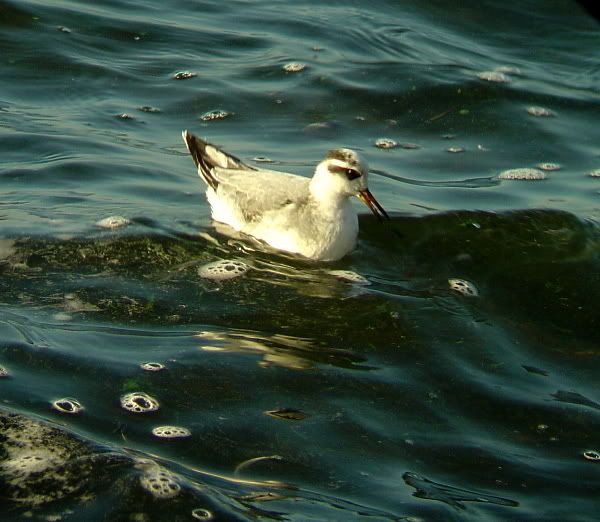 Also picked up a Grey Pharalope at Covenham Reservoir on that long drive home, another highly confiding thoughie.
Rates as the best birding day the girlfriend and I have ever had. Peregrine, Merlin, tonnes of winter thrushes and Curlews, Brent Geese all fly-overs while we tried not to step on the Steppe,
 plus a Barn Owl near miss (phew!) on the way back. Videos to post soon.
*technically, the species we're dealing with here appears to be a Southern Grey Shrike
Wednesday, 29 October 2008
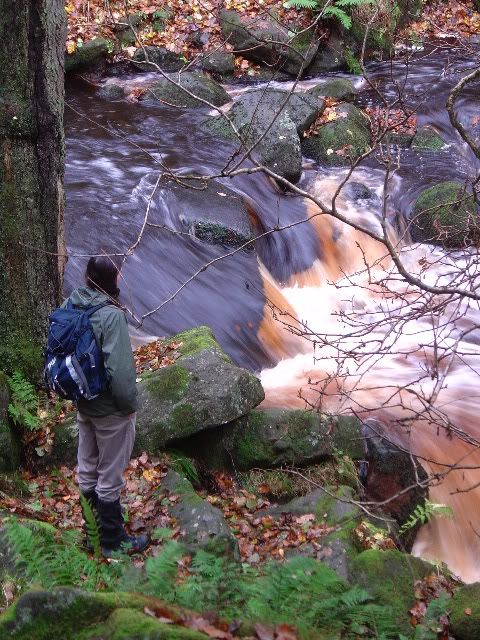
Padley Gorge
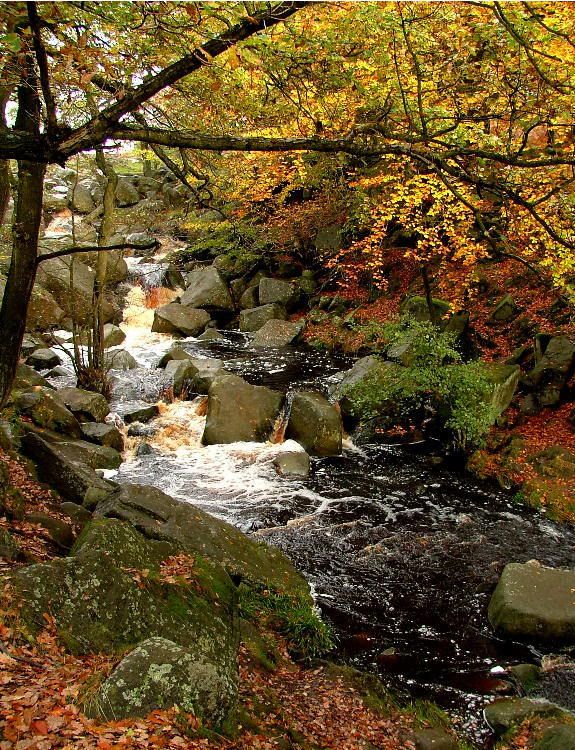
Padley Gorge has been on the list of long forgotten birdwatching destinations I never quite seem to make it to, like other birding sites of local reknown well within easy reach, Lound, Holme Pierrepont and Willington Gravel Pits, to name just three, much heard of but never given time to. So it makes me rather happy to type up a post about my visit to Padley Gorge.
In the far east of the Peak District this is more walking than birdwatching country, and few walks could offer more splendour for less strain than the one we chose from Grindleford. Less than four miles, it packs in oak woodland, the drama of the gorge and some fringes of moorland.
Now autumn really isn't the time to go birdwatching here, aim for the spring and dapper characters like Pied Flycatchers and Redstart are on the menu. Still, for now there are the warm colours and crisp aromas of the fall season to enliven the senses.
Stonechat up on the open stretch of the walk was about as exciting as the birdlife got, stout birds though, let's not devalue them please!
Late in the day, the drive home neatly led us via Leash Fen, an area of wet moorland interspersed with scatterings of birch hitherto unknown to many a Derbyshire birdwatcher until the delightful news of the convergence of up to 8 Short-eared Owls, attracted by an explosion in the vole population this year, or 'mole' population as another source might have it. I'm sure it's voles though. 4 birds are still there, regular as clockwork they quarter the area, just after four 0'clock when the weather suits. Nice birds, the peeved expression, generated by the patterns on their facial disk, gives them a real air of attitude, there is almost something of the Demon Headmaster in them when they look directly at you.
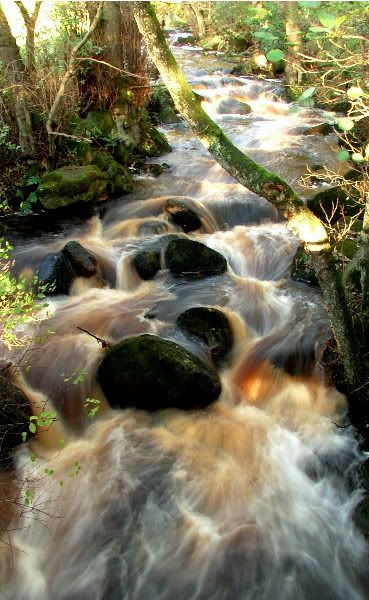
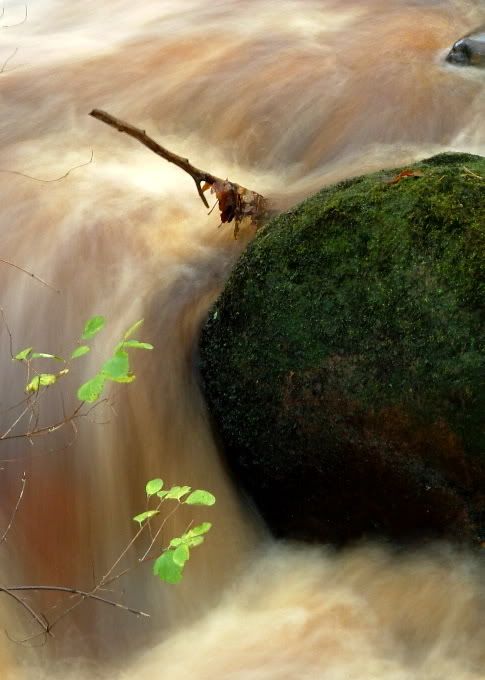
 Who you looking at?
Thursday, 2 October 2008
Notts birds in the news (and Senegal)
Two small birds thought to have drowned at a Nottinghamshire nature reserve last summer have been found nearly 3,000 miles (4828 km) away - in Africa.
The pair of Common Terns - which were too young to fly - were among chicks living on a specially-built platform at Attenborough Nature Centre.
When rising flood water covered the area last year it was thought all the chicks, which were ringed, had died.
But records from March show two survived and migrated to Senegal.(BBC NEWS link)
Saturday, 27 September 2008
Carsington Wins Energy?
The big news at Carsington, bigger than shags, peregrines or any bird for that matter, and in some ways quite literally big, is that Carsington Wind Energy has won its appeal against Derbyshire Dales District Council's decision not to allow the wind farm to be built.
Now the project seems destined to go ahead it is perhaps times for those of us associated with the site to welcome the new development. Carsington is so brilliant because it provides such a wealth of biodiversity for Derbyshire (plus a wide range of recreational pursuits for Joe Public), and now the opportunity arises to contribute toward a sustainable future for the region. Perhaps that is the view chosen by the RSPB, the organisation has dropped its objection to the plans.
The impact of wildlife and rights of way are still concerning, and even the most loyal windfarm advocate would have to confess they are something of a blot on the landscape - turbines higher than Big Ben is the oft quoted comparison at Carsington. So are they desirable? No, no at all. Will planting them in Carsington Pastures mean we're taking one for the team in the name of sustainable development and action against climate change? Yes, and what a tremendous thing to do.
Let's face it, better us having the wind farm than Lewis.
A high worldwide demand for wind turbines may delay the development until 2010. Try to stave off the pessimism during the wait, all right folks?
Now the project seems destined to go ahead it is perhaps times for those of us associated with the site to welcome the new development. Carsington is so brilliant because it provides such a wealth of biodiversity for Derbyshire (plus a wide range of recreational pursuits for Joe Public), and now the opportunity arises to contribute toward a sustainable future for the region. Perhaps that is the view chosen by the RSPB, the organisation has dropped its objection to the plans.
The impact of wildlife and rights of way are still concerning, and even the most loyal windfarm advocate would have to confess they are something of a blot on the landscape - turbines higher than Big Ben is the oft quoted comparison at Carsington. So are they desirable? No, no at all. Will planting them in Carsington Pastures mean we're taking one for the team in the name of sustainable development and action against climate change? Yes, and what a tremendous thing to do.
Let's face it, better us having the wind farm than Lewis.
A high worldwide demand for wind turbines may delay the development until 2010. Try to stave off the pessimism during the wait, all right folks?
Subscribe to:
Posts (Atom)


